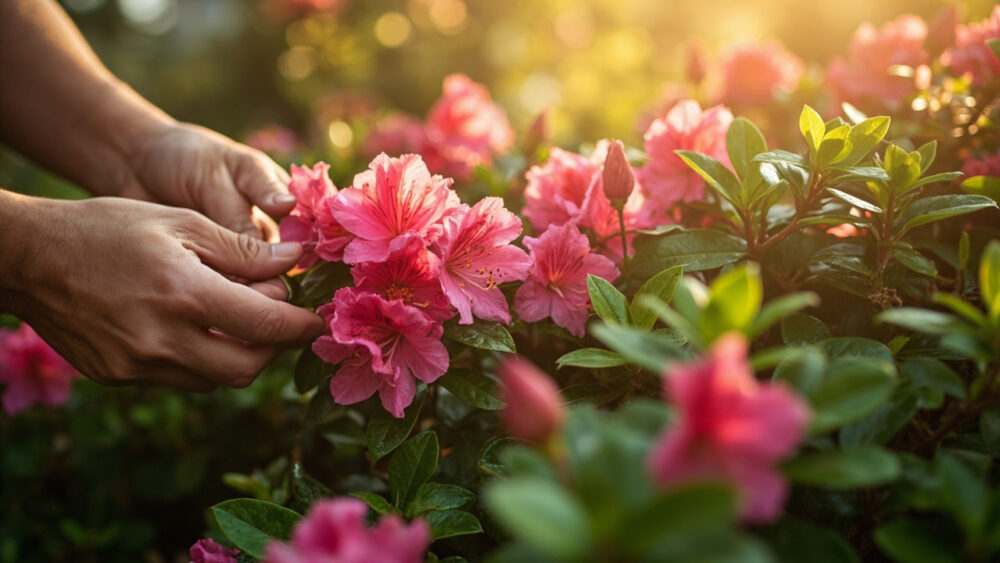
Azaleas want dappled shade, acidic soil that never fully dries out, and a light hand with fertilizer and pruning shears. Get those three things right and the plant mostly runs itself. Learning how to care for azaleas really comes down to respecting what they hate: hot afternoon sun, soggy roots, and alkaline soil.
The mistake that kills most azaleas has nothing to do with watering or light. It is planting them too deep, or piling mulch against the stem, so the root ball slowly suffocates over a year or two while you blame something else entirely.
There is also a sign nearly everyone misreads: yellowing leaves with green veins, which looks exactly like a watering problem but almost never is. And if you are wondering whether that spring flush of blooms means you are done for the season, the honest answer surprises most people. Stick around, because the save-able Azaleas at a Glance card at the bottom covers watering, light, soil pH, and bloom timing in one place.
Light, Placement, and Temperature
Azaleas are understory shrubs by nature, so they want dappled or filtered light, roughly four to six hours of gentle morning sun with afternoon shade. Full, hot afternoon sun scorches the leaves and dries the shallow roots faster than you can keep up with watering.
Too much deep shade is its own problem, though. Plants get leggy, leaf drop increases, and flowering drops off noticeably.
Most landscape azaleas are hardy through USDA zones 6 to 9, with some varieties tolerating zone 5 with winter protection. Cold snaps below about 0°F can damage buds and evergreen foliage on tender types, so know your variety before you plant near an exposed north wall.
Placement decides almost everything else you will fight for the rest of the plant’s life.
Watering: How Much, How Often, and How to Tell
Azaleas have shallow, fibrous root systems that dry out fast but also rot fast if drainage is poor. The goal is soil that stays evenly moist, like a wrung-out sponge, never bone dry and never waterlogged.
Check by feel, not by schedule. Push a finger two inches into the soil near the root zone. If it is dry at that depth, water deeply until it runs from the drainage holes or soaks the root zone in the ground.
In summer heat, container azaleas may need water every two to three days. In the ground with a good mulch layer, once or twice a week is common, less if you get regular rain.
Here is the twist on that yellow-leaves worry from the intro. Yellow leaves with green veins on azaleas usually signal iron deficiency caused by soil that is not acidic enough, not thirst. Pouring on more water when the real issue is pH just adds root rot to the list.
That distinction matters just as much when you get to soil and feeding.
Soil, Potting Mix, and Feeding
Azaleas need acidic soil, ideally a pH between 4.5 and 6.0. This is non-negotiable. In alkaline soil, the plant cannot take up iron and manganese no matter how well you water or fertilize, and you get that green-veined yellowing every time.
Amend planting soil with peat moss, pine bark fines, or a purpose-made acidic planting mix. In containers, use an acidic, well-draining mix formulated for azaleas, camellias, or rhododendrons rather than generic potting soil.
Feed lightly, and only during active growth. A fertilizer formulated for acid-loving plants, applied in early spring as new growth starts and again right after flowering, is plenty. Skip feeding from midsummer on, since late fertilizer pushes soft new growth that winter will punish.
Mulch two to three inches deep with pine bark or pine needles, but keep it a couple inches clear of the main stem.
Get the pH right first, because no amount of fertilizer fixes soil the plant cannot use.
Pruning, Repotting, and Cleanup Timing
Prune azaleas right after they finish blooming, never in fall or winter. Azaleas set next year’s flower buds during summer, so pruning late removes the very buds you were waiting for.
Remove dead, crossing, or leggy stems, and shape lightly rather than shearing hard. Old, overgrown azaleas can take a harder rejuvenation cut, but do it in stages over two seasons rather than all at once.
Repot container azaleas every two to three years, right after flowering, moving up only one pot size and refreshing the acidic mix. Bare-root or nursery azaleas go in the ground in early spring or early fall, when soil is workable and temperatures are mild, planted at the same depth they sat in the pot, never deeper.
Clear fallen leaves and spent blooms from around the base regularly, since trapped moisture there invites the fungal problems covered next.
Timing the cut wrong costs you a full year of flowers, so mark bloom-end on your calendar the first year and prune within days.
The Problems Most Likely to Strike
Lace bugs are the most common azalea pest, leaving leaves stippled pale and speckled with dark droppings on the undersides. Check the leaf undersides monthly through the growing season, and treat with an insecticidal soap or a labeled insecticide, following the product label exactly.
Root rot shows up as wilting despite moist soil, often in heavy or poorly drained ground. There is no cure once it is advanced; prevention through good drainage is the only real fix.
Petal blight turns flowers slimy and brown fast in humid weather. Remove affected blooms promptly and improve air circulation.
- Pale, stippled leaves: check for lace bugs on the undersides.
- Yellow leaves, green veins: suspect iron chlorosis from high soil pH, not thirst.
- Wilting in wet soil: suspect root rot, improve drainage going forward.
- Mushy, brown flowers fast: petal blight, remove blooms and improve airflow.
Azaleas are toxic to dogs, cats, and horses if chewed or eaten, causing symptoms like vomiting, drooling, and weakness. If you suspect a pet has eaten any part of the plant, call your veterinarian right away rather than waiting to see what happens.
Most azalea trouble traces back to soil moisture or pH, which is worth remembering before you assume pests.
How to Tell an Azalea Is Genuinely Thriving
A healthy azalea holds glossy, deep green leaves with no yellowing between the veins. New growth appears as soft, lighter green tips at the branch ends during spring and again lightly after bloom.
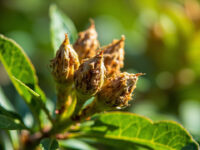
Flower buds form as small, tight nubs at branch tips by late summer or fall, sitting quietly through winter before opening the following spring. If your plant flowered heavily this spring and looks a little bare on blooms next year, that alone does not mean something is wrong.
Azaleas naturally alternate between a heavier bloom year and a lighter one, especially after a stressful season of drought or a hard prune. One light year with otherwise healthy green growth is normal, not a failure.
Steady leaf color, new growth at the right times, and buds forming on schedule are the real report card.
Azaleas at a Glance
- When to plant: early spring or early fall, when soil is cool and workable, not during summer heat.
- Light: dappled or morning sun with afternoon shade, four to six hours ideally.
- Watering: keep soil evenly moist, check two inches down, water deeply when it feels dry.
- Soil: acidic, pH 4.5 to 6.0, well-draining, amended with peat moss or pine bark.
- Feeding: acid-plant fertilizer in early spring and right after bloom, stop by midsummer.
- Pruning: right after flowering only, never in fall or winter.
- Pet safety: toxic to dogs, cats, and horses, call a vet immediately if ingestion is suspected.
If you remember nothing else, remember this: acidic soil and consistent moisture solve more azalea problems than any product you could buy.
Everything else, from bloom size to leaf color, follows from getting those two things right.