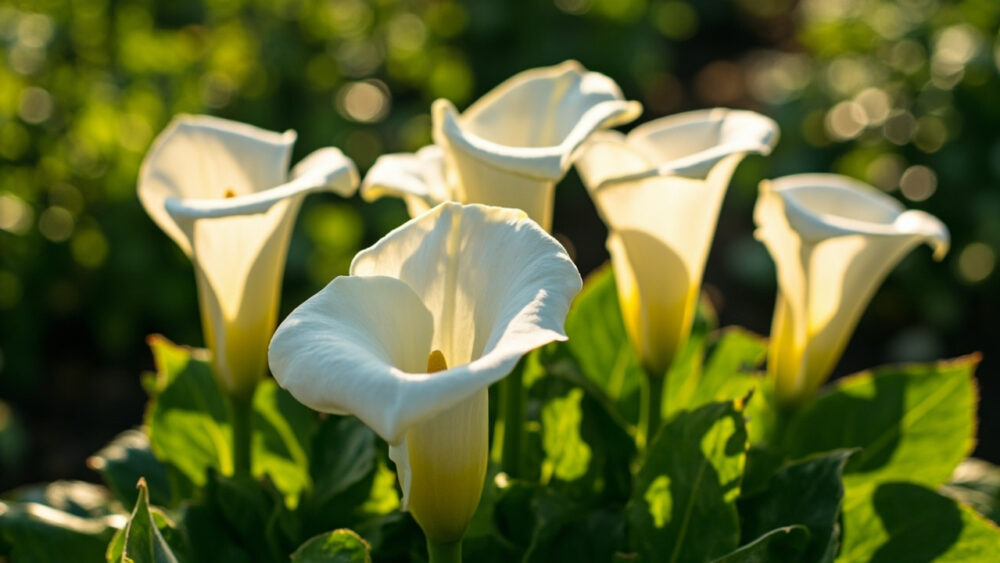
Calla lilies come back every year on their own if you garden in USDA zones 8 through 10, where the rhizome survives winter right in the ground. Anywhere colder than that, they act like an annual outdoors unless you dig up the rhizome and store it, in which case it comes back too, just with your help instead of the ground’s.
So the real question hiding inside “do calla lilies come back every year” is which category your yard falls into, and most readers clicking this are about to find out the hard way if they don’t check first. There’s also a guess a lot of people make that trips them up: assuming a calla that didn’t come back just died from cold, when just as often it rotted from wet soil instead. That distinction changes what you do differently next year.
Stick around for the part on reading your own soil and climate, how to store rhizomes if you’re not in a warm zone, and a save-able quick-reference card at the bottom with the exact numbers.
The Plain Answer, by Zone
In zones 8 to 10, calla lilies are true perennials. The rhizome overwinters in the ground and sends up new growth on its own once soil warms in spring, no digging required.
In zones 7 and colder, the rhizome usually can’t survive a winter in open ground. Frozen, saturated soil rots it before spring. In those zones calla lilies are grown as annuals unless you lift and store the rhizomes yourself.
Zone 7 is the gray area. A mild winter with excellent drainage and a heavy mulch layer sometimes lets calla rhizomes squeak through, but it’s not reliable enough to bet on.
Knowing your zone tells you what to expect, but what actually happens over winter is where most of the confusion starts.
What Happens Over Winter (and Why It Looks Like the Plant Died)
After the first real frost, calla lily foliage collapses fast. It goes from upright and green to blackened and mushy within a day or two, and it looks alarming even when everything is fine.
That foliage die-back is normal, not a diagnosis. Below ground, the rhizome is either sitting dormant and unharmed, or it’s the part actually in trouble, and you can’t tell which just by looking at the collapsed leaves.
In warm zones, the rhizome simply rests underground through the cooler, drier months and resumes growth when the soil warms back up in spring. In cold zones with no protection, that same rhizome usually freezes and turns soft and rotten, and nothing comes back from it.
The foliage always looks dead in winter, so the real tell is what the rhizome feels like when you check it, not what the leaves are doing.
How to Help Yours Come Back Next Season
If you’re in zone 8 or warmer, you mostly leave it alone. Cut back the collapsed foliage, add a couple inches of mulch over the crown for insulation, and let the rhizome do the rest.
If you’re in zone 7 or colder and want the same plant back next year, you dig it up. Wait until foliage has died back naturally after the first light frost, then lift the rhizome with a garden fork, being careful not to slice into it.
Shake off the loose soil, but don’t wash it, and let the rhizome air-dry in a shady, ventilated spot for a few days until the outer skin feels papery rather than damp.
Store it in a paper bag or a box of dry peat moss or vermiculite, somewhere cool and dark in the 45 to 55°F range, like a basement or an unheated closet that doesn’t freeze. Check on it monthly. Any rhizome that turns soft or moldy gets tossed before it spreads to the others.
Replant outdoors, or start indoors in pots, once soil has warmed and all frost danger has passed in spring.
Done right, that same rhizome can come back for many years, but there’s an honest case for skipping all of it.
When Treating Calla Lilies as Annuals Is Just Smarter
If you garden in zone 6 or colder, or you simply don’t want to manage a storage box in the basement all winter, buying fresh rhizomes or potted callas each spring is a completely reasonable call. Nothing about it is a failure.
Calla lily rhizomes are inexpensive enough that the labor of digging, drying, and storing them often isn’t worth it for a casual grower who just wants blooms in the bed each summer.
The one place this calculus changes is if you’re growing an unusual or gifted variety you can’t easily rebuy. In that case, storage is worth the effort even if it’s a hassle, because you can’t just replace it at the garden center.
Either path gets you calla lilies again next year, the difference is just whether the rhizome is old or new.
Getting Better Blooms, Whichever Way You Grow Them
Calla lilies bloom best with consistent moisture through the growing season and a spot that gets morning sun with some afternoon shade in hot climates, full sun in cooler ones.
Soggy, waterlogged soil is the single most common killer, whether the plant is in ground or in a pot, so drainage matters as much as watering frequency.
A dose of balanced or bloom-boosting fertilizer when growth starts in spring, and again about halfway through the season, pushes more flower stalks than a plant left to fend for itself. Deadheading spent blooms redirects energy into the rhizome rather than into seed production, which helps whether you’re overwintering it or growing it fresh next year anyway.
Get those basics right and the rest of the yes-or-no answer becomes mostly academic, because the plant will perform well either way.
Calla Lilies: Quick Reference
- Perennial or annual: perennial outdoors in zones 8 through 10, grown as an annual in zones 7 and colder unless the rhizome is dug up and stored.
- Winter appearance: foliage blackens and collapses after first frost, this is normal and not a sign the rhizome is dead.
- Storage temperature: keep dug rhizomes cool and dark, roughly 45 to 55°F, in dry peat moss or vermiculite.
- Storage timing: lift after foliage dies back naturally in fall, replant after soil warms and frost risk passes in spring.
- Biggest risk factor: wet, poorly drained soil kills rhizomes faster than cold alone, both in ground and in pots.
- Best return on effort: if you’re in zone 6 or colder and growing a common variety, buying fresh rhizomes each spring is often easier than storing them.
Save that list, tape it inside the potting shed door if you have to.
Either way you grow them, calla lilies reward attention more than luck.