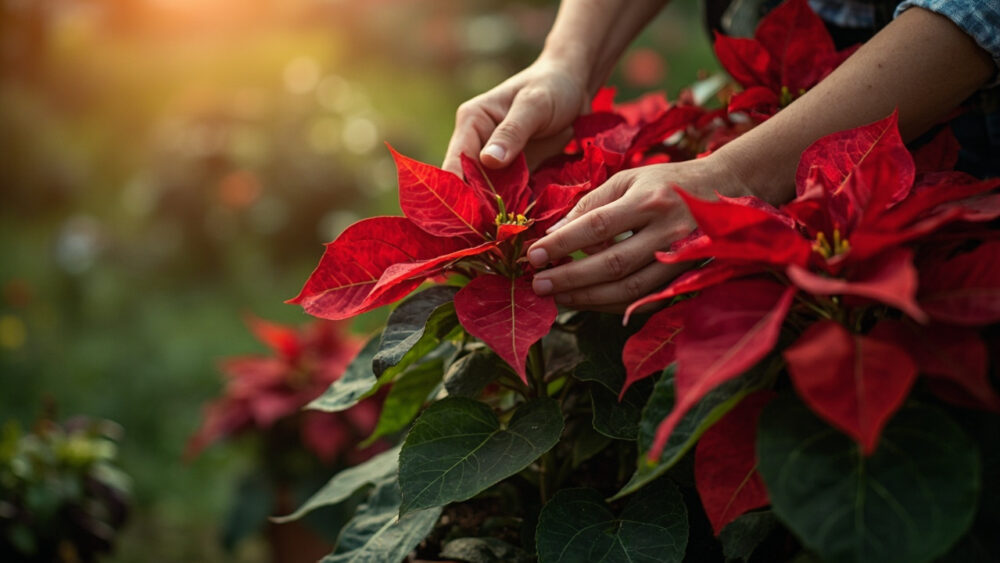
Caring for poinsettias comes down to three things: bright indirect light, water only when the soil surface feels dry, and keeping them away from cold drafts and heat vents. Get those right and the bracts (that’s what the colored “petals” actually are) hold their color for months, not weeks. Miss any one of them and you get the classic poinsettia death spiral: yellow leaves, bare stems, and a plant in the trash by New Year’s.
Most people kill these plants in the first 48 hours, before they even get them home. There’s also a widely misread sign that has nothing to do with light, a watering habit that drowns more poinsettias than drought ever dries out, and an honest answer about whether you can actually get one to rebloom next December without a greenhouse.
All of that is below, and at the bottom you’ll find a save-able Poinsettias at a Glance card with the numbers you’ll actually want to remember.
Light, Placement, and Temperature
Poinsettias want bright, indirect light for at least six hours a day, ideally near an east or south-facing window where sun doesn’t bake the leaves directly. Direct, hot afternoon sun through glass will scorch the bracts. Too little light and the lower leaves yellow and drop, which is usually blamed on watering when it’s actually a placement problem.
Temperature matters more than most people expect. Poinsettias want a steady 65 to 70°F during the day and no lower than 60°F at night. The single most common death sentence isn’t the cold outside, it’s the walk from the store to the car. Even a few minutes of exposure below 50°F damages the leaves, and the damage shows up two or three days later as blackened, curled edges you can’t undo.
Keep the plant away from cold windowpanes, drafty doors, and heat vents or fireplaces, both of which dry it out fast.
Placement solves most problems before they start, but water is where the real damage usually happens.
Watering: The Habit That Actually Kills Them
If you assumed poinsettias are thirsty and need frequent watering, that guess is exactly backwards. Overwateringnot underwatering, is the number one killer of poinsettias, because most of them are sold in decorative foil-wrapped pots with no drainage hole, and water pools at the bottom and rots the roots without anyone noticing until the plant is already collapsing.
Check the soil by pressing a finger about an inch down. Water only when it feels dry at that depth, not on a schedule. When you do water, poke a hole in the foil or pull the pot out of it entirely, water until it runs from the drainage hole, and let it drain fully before setting it back.
Never let the pot sit in standing water. That’s the quiet killer.
Get the water right and you’ve already dodged the mistake that ends most poinsettias before Christmas even arrives.
Soil, Feeding, and When to Start Fertilizing
A standard, well-draining potting mix is fine, poinsettias aren’t fussy about soil chemistry. What they can’t tolerate is soil that stays soggy, so drainage matters more than any nutrient.
Skip fertilizer entirely while the plant is in bloom and being displayed for the holidays. There’s no upside to feeding a plant that’s putting all its energy into holding color, not growing.
Once the bracts fade and you’re keeping the plant as a houseplant into spring, feed it every two to four weeks with a balanced, all-purpose liquid houseplant fertilizer at half the label strength. Stop feeding again by late summer if you’re hoping to push it toward reblooming.
Feeding is a spring-and-summer job, and that timing connects directly to the pruning and repotting most people never do.
Pruning, Repotting, and the Reblooming Question
Right after the holidays, once bracts fade and drop, cut the stems back to about 4 to 6 inches tall. This forces new, bushier growth rather than leaving you with a leggy, bare-stemmed plant by summer.
Repot in spring, once you see new growth, into a pot one size up with fresh potting mix. Through summer, treat it like an ordinary houseplant: pinch back new growth once or twice to keep it full, and it can even go outside in a shaded spot once nights stay above 50°F.
Here’s the honest answer about reblooming: it’s possible, but it takes real commitment. Poinsettias need 14 or more hours of complete, uninterrupted darkness every night for about eight to ten weeks straight, starting in early fall, with zero light leaks from streetlights, lamps, or even a hallway light. One missed night can reset the whole process.
It’s doable on a closet or a covered box, but most people find it easier to enjoy the plant as a houseplant and buy a fresh one next season.
Whether you rebloom it or not, watch for the problems that show up long before bract color ever becomes the issue.
Common Problems and How to Fix Them
Most poinsettia trouble traces back to one of a few causes, and the fixes are straightforward once you know which symptom you’re looking at.
- Yellow, dropping lower leaves: usually low light or overwatering; move it somewhere brighter and check soil moisture before watering again.
- Wilting despite moist soil: a sign of root rot from standing water; unpot and check for black, mushy roots, and improve drainage going forward.
- Curled, blackened leaf edges: cold damage from a draft or a cold car ride. Damaged leaves won’t recover, but new growth will be fine if you fix placement.
- Sticky residue or tiny white flecks on leaves: whitefly or mealybug, common on poinsettias. Treat with an insecticidal soap or horticultural oil, following the product label exactly.
- Bract color fading fast: often just too much direct sun or a naturally shorter bloom window. Not usually fixable, but not a sign you’re doing anything wrong.
One more thing worth knowing plainly: poinsettias are mildly toxic to pets and can cause drooling, vomiting, or mouth irritation if chewed. If a cat or dog eats a significant amount, call your veterinarian rather than waiting to see what happens.
Once you’ve ruled out these issues, the plant should settle into a long, steady stretch of looking genuinely good.
How to Tell It’s Actually Thriving
A healthy poinsettia holds its color for eight to twelve weeks or longer, with bracts staying vivid and leaves staying dark green and firm, not floppy. New leaf growth at the stem tips is the clearest sign the plant is happy, not just surviving.
The soil should dry slightly between waterings without the plant wilting in between, which tells you the roots are healthy and doing their job. No yellow leaves dropping on their own, no curling, no sticky residue.
If you’re seeing all of that, you’re not just keeping it alive, you’re doing it right.
Poinsettias at a Glance
- Light: bright, indirect light for 6 or more hours a day, no direct hot afternoon sun.
- Temperature: 65 to 70°F during the day, no lower than 60°F at night, away from drafts and vents.
- Watering: only when the top inch of soil feels dry, always with drainage, never left sitting in water.
- Feeding: none while blooming, then a balanced liquid fertilizer every 2 to 4 weeks from spring through late summer.
- Pruning: cut stems back to 4 to 6 inches after bracts fade, repot in spring once new growth appears.
- Reblooming: requires 14-plus hours of total darkness nightly for 8 to 10 weeks starting in early fall.
- Pet safety: mildly toxic if chewed or eaten, contact your veterinarian for any suspected ingestion.
Get the light and watering right and everything else is just maintenance.
That’s the whole plant, no guesswork required.