Bigleaf hydrangeas care comes down to four things: morning sun with afternoon shade, soil that stays evenly moist but never soggy, pruning at the right time (not every time is right), and winter protection for the flower buds in colder zones. Get those four right and the plant does the rest. Get the pruning timing wrong even once and you can lose an entire season of blooms without killing the plant at all.
That last part trips up more people than any pest or disease ever will. There is also a watering mistake almost everyone makes because the plant’s own name tells them to do it, and it is exactly backwards. And if your hydrangea bloomed pink last year and blue this year, or turned an odd shade of purple nobody planted on purpose, there is a specific, boring, chemistry-driven reason for that too.
Stick with me through the sections below and I will walk through light, water, soil, pruning, problems, and how to read a genuinely happy plant. Save the “Bigleaf Hydrangeas at a Glance” card at the very bottom to your phone before you head back out to the garden.
Light, Placement, and Temperature
Morning sun and afternoon shade is the placement that works almost everywhere. Give a bigleaf hydrangea four to six hours of gentle morning light, then let it sit in dappled or full shade once the afternoon heat arrives. Full sun all day scorches the big leaves and wilts the blooms fast, especially in zones 7 and warmer.
In cooler zones (5 and 6), you can push toward more sun since heat stress is less of a threat there. These plants are hardy roughly in zones 5 through 9, but the flower buds are far less cold-hardy than the plant itself. A late spring frost after buds have swelled can wipe out blooms even though the shrub survives fine.
Wind matters too. A spot next to a house wall or fence that blocks harsh wind protects both the big leaves and the flower heads from snapping.
Get the light right and watering gets a lot more forgiving.
Watering: How Much, How Often, and the Mistake the Name Encourages
If you assumed “hydrangea” means the plant wants constantly wet soil, that guess is exactly what kills a lot of them through root rot. The name refers to the flower’s thirst for water in the air and soil, not a demand for waterlogged roots sitting in a puddle.
Water deeply two to three times a week in the growing season, enough to soak the top 8 to 10 inches of soil, then let the surface dry slightly before the next watering. In hot climates or containers, that can mean daily watering in peak summer.
Check by pushing a finger 2 inches down. If it is dry, water. If it is still damp, wait a day.
The visual tell everyone misreads is wilting leaves at midday. That is often just heat stress, not thirst, and the plant perks back up by evening on its own. Water based on soil feel, not on how droopy the leaves look at 2pm.
Once watering is dialed in, soil chemistry is the next thing worth understanding.
Soil, pH, and Feeding (Where the Color-Changing Comes From)
Bigleaf hydrangeas want rich, well-draining soil that holds moisture without staying wet, amended with compost at planting time. But the detail everyone asks about eventually is color.
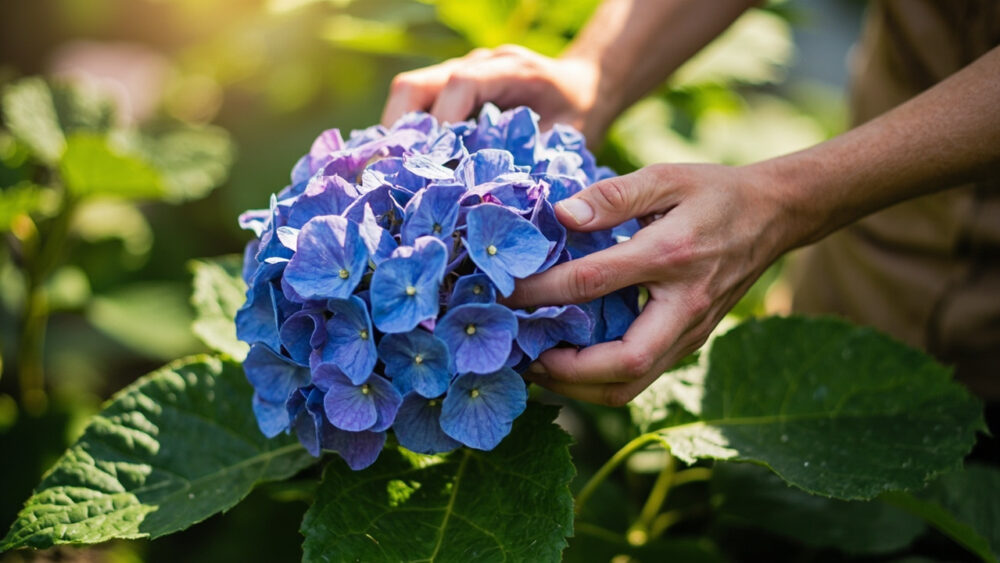
Soil pH controls flower color in most bigleaf varieties, not the soil’s fertility and not the weather. Acidic soil (pH below 6) produces blue blooms because aluminum becomes available to the roots. Alkaline soil (pH above 7) locks that aluminum out and pushes flowers toward pink. Around pH 6.5 to 7 you often get muddy purples, which is the “odd shade nobody planted on purpose” from the intro.
You can nudge color with garden sulfur to acidify or garden lime to raise pH, applied over a full season, but white-flowered varieties will not turn blue or pink no matter what you do to the soil.
Feed lightly in early spring with a balanced, slow-release fertilizer. Skip heavy nitrogen feeds, which push leafy growth at the expense of blooms.
Soil chemistry is slow to shift, but pruning mistakes can cost you a season overnight.
Pruning, Deadheading, and the Timing Mistake That Erases a Season
Most bigleaf hydrangeas bloom on old wood, meaning the buds for next year’s flowers form on the current season’s growth by late summer or early fall. Prune in fall, winter, or early spring and you cut off next year’s flowers before they ever open. This is the single most common way people accidentally skip a bloom season entirely, and the plant looks completely healthy while doing it.
The safe window to prune is right after flowering finishes in mid to late summer, and only to shape the plant or remove dead and crossing branches. Cut spent blooms back to the first healthy set of leaves below the flower head.
Remove dead wood anytime you see it, in any season, since dead canes do not carry buds worth protecting.
Some newer reblooming varieties (often sold as “endless summer” type hydrangeas) flower on both old and new wood, which gives you more room for error, but check your plant tag before assuming yours is one of them.
Get pruning timing right and most of the season’s disappointments disappear before they start.
Common Problems and Honest Fixes
No blooms this year is almost always pruning timing or a late frost that killed the buds, not a soil or watering failure. There is no fix mid-season; you wait for next year and adjust pruning timing.
Wilting despite wet soil points to root rot from soil that never drains. Pull back on watering and improve drainage before the roots die completely.
Powdery mildew shows up as a white, dusty coating on leaves in humid, still air. Improve air circulation by thinning crowded stems and treat with a fungicide labeled for powdery mildew, following the product label exactly.
Leaf spot diseases cause brown or purple-ringed spots, usually from wet foliage sitting overnight. Water the soil, not the leaves, and clean up fallen leaves in autumn to reduce reinfection.
Bigleaf hydrangea foliage and flowers are considered toxic to dogs, cats, and horses if ingested in quantity. Watch for vomiting, diarrhea, or lethargy, and call your veterinarian if you suspect your pet has eaten any part of the plant.
Once problems are handled, here is what a genuinely thriving plant actually looks like.
Signs Your Bigleaf Hydrangea Is Actually Thriving
Large, deep green leaves that stay firm through the afternoon (aside from brief midday heat droop) mean the roots are healthy and watering is on target. New growth pushing from the base each spring is the clearest sign the plant made it through winter in good shape.
Flower heads that grow dense and heavy, sometimes heavy enough to need staking, are a good problem to have. It means the plant has energy to spare.
Consistent bud set through summer, rather than a plant that flowers hard one year and skips the next, tells you your pruning timing has finally settled into rhythm with the plant.
Save the details below so you never have to second-guess this plant again.
Bigleaf Hydrangeas at a Glance
- Light: morning sun, afternoon shade, four to six hours of gentle direct light daily.
- Water: deep watering two to three times weekly, soil moist but never soggy, check 2 inches down before watering.
- Soil and pH: rich, well-draining soil, pH below 6 for blue blooms, pH above 7 for pink, white varieties stay white regardless.
- Feeding: light, balanced, slow-release fertilizer in early spring only.
- Pruning: right after flowering finishes in mid to late summer, never in fall, winter, or early spring on old-wood varieties.
- Hardiness: zones 5 through 9, but flower buds are more frost-sensitive than the plant itself.
- Pet safety: toxic to dogs, cats, and horses if ingested; contact your veterinarian if you suspect this.
If you remember one thing, remember the pruning window. Everything else about this plant forgives you far more easily than a badly timed cut does.