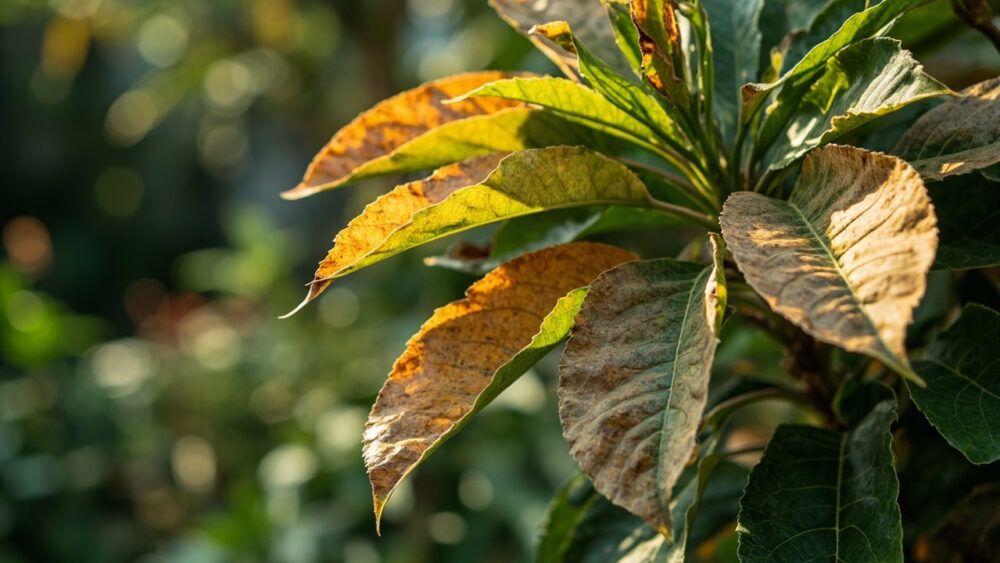
The most common cause is overwatering, plain and simple. A money tree (Pachira aquatica) with brown leaves is usually sitting in soil that never gets to dry out, and the roots are starting to suffocate or rot. Pull it out of its decorative pot, check the soil moisture with your finger, and if it feels wet more than an inch down, you have your answer and your first fix.
Here is the part that trips people up: almost everyone blames “not enough water” first, because brown crispy leaves look like drought stress. On a money tree it is nearly always the opposite problem. The direction the browning travels, and whether it starts at the leaf tip or the leaf edge, is the detail that actually tells you which of the several real causes you’re dealing with.
Below is every likely cause in order, how to confirm each one on your actual plant in under a minute, the fix, an honest recovery outlook, and a save-able diagnosis checklist at the very bottom you can run through right now, standing next to the pot.
Causes, Most to Least Likely
1. Overwatering and root rot
Confirm it: soil stays damp for more than 4 to 5 days between waterings, the pot feels heavy, and lower or inner leaves turn brown or yellow-brown with a slightly mushy feel before they crisp. Slide the plant out and check the roots. Healthy roots are white to tan and firm. Rotted roots are brown, black, or gray and mushy, often with a sour smell.
Fix it: trim away any dark, mushy roots with clean shears, repot into fresh, fast-draining potting mix (a mix with perlite or orchid bark added is ideal), and use a pot with a drainage hole. Water only when the top 2 to 3 inches of soil are dry.
This is the one everyone gets backwards, so check it first.
2. Underwatering and drought stress
Confirm it: soil is bone dry more than knuckle-deep, the pot feels light, and leaves brown starting at the tips and edges, curling and going crisp rather than mushy. Older leaves usually go first, but during a real dry spell new growth droops too.
Fix it: water thoroughly until it runs from the drainage holes, let the excess drain fully, and get on a schedule of checking soil moisture weekly rather than watering on autopilot. Money trees like a thorough soak followed by a real dry-down, not a sip every few days.
Tip browning versus mushy inner-leaf browning is your first fork in the road, and the next section shows you exactly how to read it.
3. Low humidity or dry air
Confirm it: leaf edges turn brown and papery while the rest of the leaf stays green, often on the newest growth, and it tends to show up near heating vents, radiators, or drafty winter windows.
Fix it: move the plant away from vents and cold drafts, group it with other plants, or run a humidifier nearby. A money tree is fine at normal household humidity but suffers in air that is constantly dry and moving.
If the browning is a thin crispy margin and nothing else looks wrong, keep reading, because this one is easy to miss.
4. Too much direct sun or heat scorch
Confirm it: brown, bleached-looking patches appear on the leaves facing a sunny window, usually as blotches in the middle of the leaf rather than a clean edge, and only on the sun-facing side of the plant.
Fix it: move it a few feet back from an intense south or west window, or add a sheer curtain to filter direct afternoon sun. Money trees want bright, indirect light, not hours of direct summer sun through glass.
Scorch has a shape to it, and once you see it you will not confuse it with anything else on this list.
5. Fertilizer or mineral salt buildup
Confirm it: you see a white or gray crust on the soil surface or pot rim, you fertilize on a regular schedule, and leaf tips or edges brown evenly across the whole plant rather than on just one side or one age of leaf.
Fix it: flush the pot with plain water equal to about three times the pot’s volume, letting it drain freely each time, and cut fertilizer back to a diluted half-strength feeding every 4 to 6 weeks during active growth, none in winter.
This cause is quiet and easy to overlook because the plant otherwise looks perfectly healthy.
6. Cold drafts or temperature shock
Confirm it: the plant sits near a frequently opened door, a drafty single-pane window, or an AC vent, and browning showed up suddenly after a cold snap or a move, rather than developing gradually.
Fix it: relocate it to a spot that stays above 60°F consistently, away from cold glass and direct AC or heater blasts. Money trees are tropical and do not forgive sudden temperature swings.
Sudden and localized damage points here, while slow and spreading damage points somewhere else entirely.
How to Tell the Causes Apart
Where it starts matters most. Overwatering and root rot show up on lower, older, or inner leaves first, and those leaves often feel soft before they turn brown. Underwatering and low humidity tend to hit leaf tips and edges first, with a crisp, papery feel from day one.
Sun scorch is the outlier. It shows up as blotches in the middle of the leaf, only on the side facing the light, never on the shaded side of the same plant.
Fertilizer salt damage is the most even and symmetrical of the group, browning tips or edges across nearly every leaf at once rather than picking a side or an age group.
Once you know where on the plant to look, the next question is whether any of this is fixable.
Will It Recover?
Brown leaves themselves never turn green again. Whatever is brown now stays brown or eventually drops. Recovery means the plant stops making new brown leaves and pushes healthy new growth, not that the old damage reverses.
Overwatering with early-stage root rot recovers well once repotted into dry, well-draining soil, usually showing new growth within 3 to 6 weeks. If the rot has reached the main stem and it is soft or dark at the base, the outlook is poor and starting a new plant from a cutting is often the more realistic move.
Underwatering, low humidity, and cold drafts all have good recovery odds once the condition is corrected, typically within a few weeks. Sun scorch and salt buildup stop progressing as soon as you fix the cause, but the existing scorched or crusted-edge leaves will not clear up. They just get replaced over time by clean new leaves as the plant continues growing.
Knowing which cause you have tells you how patient to be, and prevention is what keeps you from doing this diagnosis again next season.
How to Keep It From Happening Again
Water by feel, not by calendar. Check the top 2 to 3 inches of soil with a finger before every watering, and only water when it is dry there. This single habit prevents both overwatering and underwatering, the two most common causes on this list.
Use a pot with a drainage hole, always. A decorative outer pot with no hole and standing water at the bottom is behind a large share of root rot cases.
Keep the plant in bright, indirect light, a few feet back from intense direct sun, and away from vents, radiators, and drafty doors.
Feed lightly during spring and summer only, skip fertilizer entirely in fall and winter, and flush the soil with plain water every few months to prevent salt buildup.
Run through the checklist below right now to pin down exactly which cause you are dealing with today.
Diagnosis Checklist
- Check soil moisture 2 to 3 inches down with a finger: if it is wet, suspect overwatering, if bone dry, suspect underwatering.
- Note which leaves are browning: older, lower, or inner leaves point to overwatering, newest or edge growth points to dry air or drought.
- Feel the brown tissue: soft or mushy means root or water trouble, crisp and papery means humidity or drought.
- Look at the shape of the damage: blotches in the leaf’s middle on the sun-facing side only mean scorch, not water.
- Check for a white or gray crust on the soil surface or pot rim: if present, suspect fertilizer salt buildup.
- If soil is wet, unpot and inspect the roots: firm and tan is fine, dark and mushy means rot, trim and repot immediately.
- Check the plant’s location: near a vent, drafty window, or AC unit points to temperature stress rather than watering.
- Confirm your fertilizer schedule: feeding through fall or winter, or at full strength, points to salt buildup as the cause.
Most money tree browning traces back to a watering habit, not a mystery disease, so fixing the routine fixes the plant.
Give it well-draining soil, a pot with a hole, and water only when it asks for it, and the new growth will tell you when you have it right.