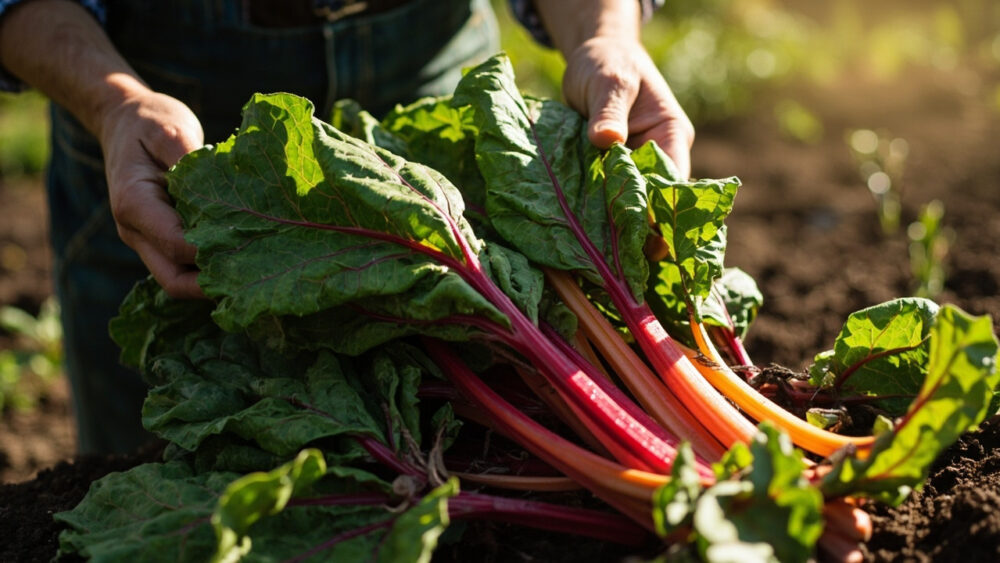
The right way to store swiss chard is unwashed, wrapped loosely in a damp paper towel or dry kitchen towel, tucked inside a plastic bag with the air pressed out, and kept in the crisper drawer of your fridge. Done that way, it holds up well for five to seven days, sometimes closer to ten if the leaves were young and the humidity in your fridge is high. That’s the short answer, but there is a lot riding on the details.
Most people who lose a bunch of chard within two days made one of a handful of predictable mistakes, and none of them are the ones you’d expect. It isn’t washing the leaves ahead of time that gets blamed the most, though that plays a role too. The bigger culprit is something almost nobody checks before they bag it up.
There’s also the question you’re probably already forming: can you freeze it, and does it actually taste okay afterward? The honest answer surprises people who assume freezing ruins greens the way it ruins lettuce. Stick around for the exact method, the real shelf-life numbers for every storage option, and the save-able Swiss Chard at a Glance card at the very bottom of this page.
The Best Method: Fridge Storage Step by Step
Start by sorting the bunch. Pull out any leaves that are already yellowing, slimy, or torn and use those first or compost them, they’ll drag the good leaves down if left in the bag.
Leave the rest unwashed unless you’re using it within the hour. Wet leaves in storage are the fastest route to rot, more on that below.
Wrap the stems and leaves loosely in a paper towel or clean kitchen towel that’s been dampened and wrung out, not soaking. Slide the whole bundle into a plastic bag or reusable produce bag, and press most of the air out before sealing.
Store it in the crisper drawer set to high humidity if your fridge has that option. Chard wants moisture in the air around it, unlike onions or garlic, which want dry.
That’s the whole method, but how long it actually buys you depends on a few things you can control.
How Long Swiss Chard Keeps, By Method
On the counter, chard is a short-timer. Even in a glass of water like a bouquet, it holds decent quality for maybe one to two days before the leaves go limp. Fine for the same afternoon you picked or bought it, not a real storage plan.
In the fridge, wrapped and bagged the way described above, expect five to seven days from most grocery-store bunches. Garden-fresh chard picked young and handled gently can stretch to ten days, though the leaves will lose some crispness by day seven or eight even if they haven’t turned.
In the freezer, after blanching, chard keeps well for eight to twelve months. It won’t be crisp-eating chard anymore, but for soups, saag, or sautés it holds flavor and color for the better part of a year.
There’s no real curing method for chard the way there is for onions or winter squash. It’s a leafy green, not a storage crop, and treating it like one is where the next mistake starts.
Should You Wash It First? The Answer Everyone Gets Backwards
If you assumed washing chard before storage keeps it cleaner and therefore fresher, that’s the exact habit that shortens its life the most. Water sitting on the leaf surface in a closed bag is what invites rot, mold, and that slimy stem texture within 48 hours.
Wash it right before you cook it, not before you store it. Dirt and garden grit are far less damaging sitting in the fridge than moisture is.
The one exception: if your chard came in muddy from the garden with soil actually clinging to the leaves, a quick rinse and a thorough pat-dry with a towel before storing is worth it. The key word is thorough. Damp is fine, wet is not.
Getting the moisture level right sets up everything else, including whether freezing is even worth doing.
Freezing Chard: Blanch First, and Don’t Skip This Step
You can freeze chard raw, but you’ll regret it. Unblanched chard turns tough, bitter, and grayish after a month or two in the freezer, because the enzymes that break the leaf down don’t stop just because it’s frozen.
Blanching stops that process cold, literally. Drop washed, stemmed leaves into boiling water for 30 to 60 seconds, then straight into an ice bath for the same amount of time. This locks in color and flavor for the long haul.
Squeeze out as much water as you can, pack into freezer bags with the air pressed out, and lay flat to freeze. Flat bags thaw faster and stack better.
Stems are edible too and worth saving separately, chopped small, since they take a minute or two longer to blanch than the leaves.
That step is also where most people quietly give up, which brings us to the mistakes that ruin a batch even when the method looks right on paper.
The Signs Chard Has Turned
Chard tells you plainly when it’s done. Yellowing leaves are the earliest sign, and a few yellow leaves in an otherwise good bunch just mean pull those and use the rest promptly.
A slimy or slick feel on the leaf surface, especially near the stem base, means bacterial breakdown has started. That’s not a rinse-and-save situation, that leaf goes in the compost.
Dark, wet-looking soft spots on the stems are another clear stop sign, as is a sour or ammonia-like smell when you open the bag. Fresh chard smells green and mild, almost like nothing at all.
Wilting alone isn’t a death sentence. A leaf that’s gone soft but still smells clean can often be revived with a 10 to 15 minute soak in ice water before cooking.
Knowing what “turned” looks like only helps if you catch it before it spreads through the whole bag, which is where the real mistakes come in.
The Mistakes That Ruin a Batch
- Sealing it up wet: washing before storage instead of before cooking is the single biggest cause of early rot.
- Trapping it in a fully sealed bag with no air pressed out: trapped humidity plus trapped ethylene speeds up yellowing.
- Storing it near apples, pears, or bananas: those release ethylene gas and will yellow chard within a day or two.
- Skipping the blanch before freezing: raw-frozen chard turns bitter and tough within weeks.
- Leaving damaged leaves mixed in with good ones: one rotting leaf accelerates decay in everything touching it.
- Forgetting it’s in the crisper drawer: chard bought fresh is often better than chard that’s technically not spoiled yet but has been sitting three weeks.
Fix those six habits and most chard storage problems disappear on their own.
Swiss Chard at a Glance
- Best fridge method: unwashed, wrapped loosely in a damp towel, sealed in a bag with air pressed out, stored in the humid crisper drawer.
- Fridge shelf life: five to seven days typically, up to ten days for young, gently handled leaves.
- Counter shelf life: one to two days, best treated as same-day use.
- Freezer shelf life: eight to twelve months, but only after blanching for 30 to 60 seconds and ice-bathing.
- Wash timing: right before cooking, never before storing, unless the leaves came in muddy and need a quick rinse and full pat-dry first.
- Signs it’s gone: slimy texture, sour or ammonia smell, dark wet spots on stems, widespread yellowing.
- Keep it away from: apples, pears, bananas, and other ethylene-heavy fruit in the same drawer.
Moisture control is the whole game with chard, keep it damp in the air around it but dry on the leaf itself.
Get that one balance right and everything else on this list takes care of itself.