From seed, onions take about 90 to 120 days to reach harvest size, and from a nursery set or transplant, more like 60 to 90 days. That is the honest range, and where you land in it depends on which method you started with and how your season goes. If you clicked this wondering how long does it take to grow onions from what is currently sitting in your garden bed, the answer changes quite a bit depending on whether you’re counting from seed, set, or transplant.
There is a sizing trap almost everyone falls into around week eight, when the tops look great but the bulb underneath is still doing almost nothing. There is also a daylight rule that matters more than your soil, your fertilizer, or your watering schedule combined, and most first-time onion growers have never heard of it.
Stick around and I will show you how to read your own onion patch and tell if you are actually on schedule. The save-able quick-reference card is at the bottom once we get through the real timeline.
The Real Timeline, Start to Finish
Seed-started onions need 90 to 120 days total, but that includes 8 to 10 weeks growing indoors as seedlings before they ever touch garden soil. Set-grown or transplant-grown onions, which is how most home gardeners do it, take 60 to 100 days in the ground depending on variety and whether you want scallion-size or full bulbs.
Bulb onions grown for storage sit at the long end of that range. Sweet, fast varieties and bunching onions sit at the short end.
Either way, the calendar number only tells you the average, not what is happening in your specific bed.
What Actually Controls the Speed
Daylight length matters more than temperature once your onions are established, because bulbing is triggered by day length, not heat. Long-day varieties need 14 to 16 hours of daylight to start bulbing and are the right choice for northern gardens. Short-day varieties bulb on 10 to 12 hours and belong in southern gardens; plant a long-day onion too far south and it bulbs too early and stays small.
Beyond daylight, soil temperature, consistent moisture, and nitrogen early in the season all speed or stall growth. Cold, wet, compacted soil is the most common reason a patch runs weeks behind its packet promise.
Get the daylight match wrong and no amount of good care fixes it.
Stage by Stage: What You Should Actually See
Here is roughly what to expect if you started from sets or transplants, which is the most common home method.
- Weeks 1 to 3: roots establish, a few thin green shoots appear, growth looks slow and unimpressive.
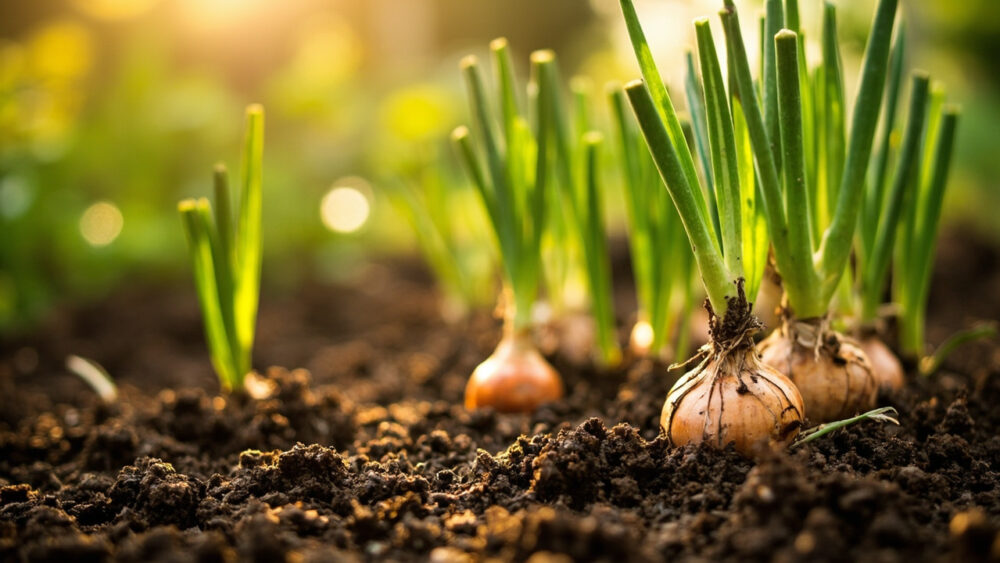
- Weeks 4 to 7: tops thicken and multiply, this is leaf-building time and the bulb is barely swelling yet.
- Weeks 8 to 10: bulbing begins, you will actually see the base swell above the soil line.
- Weeks 10 to 14: bulbs size up fast, tops eventually flop over and start yellowing.
If you assumed big healthy tops in week six mean a big bulb is coming any day now, that is the trap: tops and bulb growth are two separate phases, and rushing the harvest before bulbing even starts just gets you a fat green onion with nothing underneath.
Knowing which stage you’re in tells you whether to be patient or worried, and that distinction matters next.
How to Actually Speed It Up (and What Wastes Your Time)
Starting from sets or transplants instead of seed is the single biggest legitimate shortcut, saving you four to six weeks compared to direct-seeding. Consistent moisture during bulb swell and steady, moderate nitrogen early on (backing off nitrogen once bulbing starts) also genuinely helps size and speed.
What does not help: extra fertilizer once bulbing has begun, crowding plants closer hoping for more total yield, or trying to force size with heavy late watering. Onions want spacing of about 4 to 6 inches between plants; crowd them tighter and every bulb stays smaller no matter how long you wait.
More space and earlier planting beat any product or trick you’ll find for pushing bulbs bigger.
Slow Onion: Normal Patience or Actual Problem?
Slow top growth in the first three weeks is completely normal, onions are famously unhurried at the start. Slow bulb swell before week eight is also normal, since that is simply not bulbing season yet for the plant.
What is not normal is yellowing, thin, floppy tops in week three or four, which usually points to cold wet soil, nitrogen deficiency, or onion maggot damage at the roots. Stunted growth paired with soft or mushy bulbs suggests rot from waterlogged soil rather than a timing issue at all.
If you pull one and the roots are dark, slimy, or absent, that is a soil drainage and disease problem, not a patience problem, and no extra time will fix it.
Once you know which kind of slow you’re looking at, the rest is just tracking your own calendar against the ranges below.
Onions: Quick Reference
- Direct answer: 90 to 120 days from seed, 60 to 100 days from sets or transplants, depending on variety and target size.
- Daylight type: long-day varieties need 14 to 16 hours of daylight, short-day varieties need 10 to 12 hours, match to your latitude or bulbs stay small.
- Spacing: 4 to 6 inches between plants, tighter spacing shrinks every bulb in the row.
- Bulbing trigger: daylight length, not heat, typically starting around week 8 to 10 after transplanting.
- Nitrogen timing: feed early and moderately, stop once bulbing begins or you’ll grow tops at the bulb’s expense.
- Harvest signal: tops yellow and fall over on their own, do not pull early just because the tops look full.
That range holds for nearly every backyard setup you’ll find. Match your variety to your daylight, be patient through the slow weeks, and the bulbs will show up right on schedule.