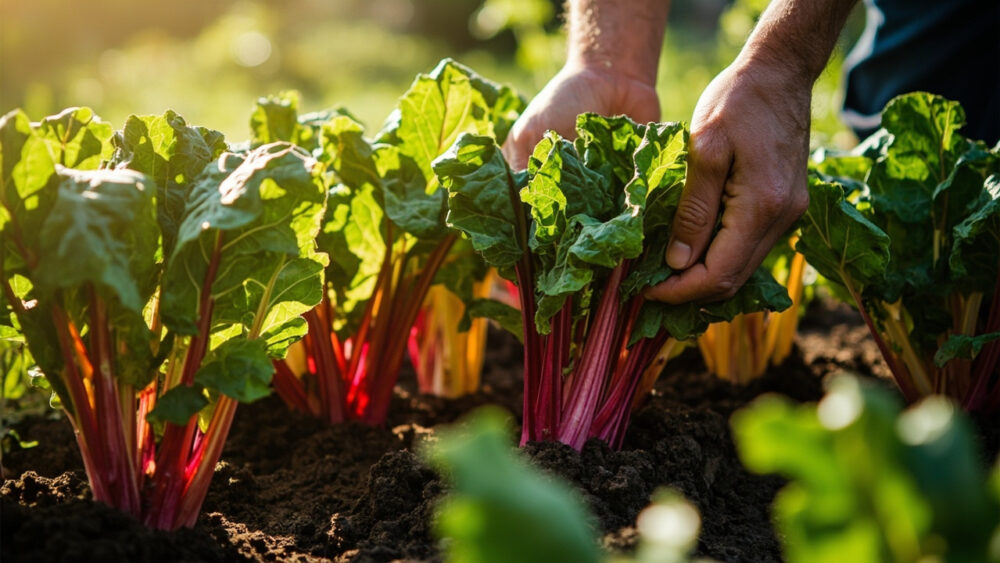
Swiss chard is one of the easiest vegetables you can put in the ground, and if you’re learning how to grow Swiss chard for the first time, here’s the short version: sow seeds a half inch deep, 4 to 6 inches apart, two to three weeks before your last frost, in a spot with full sun and loose, rich soil. Thin to 8 to 12 inches once seedlings have a few true leaves, and start cutting outer leaves in 6 to 8 weeks. That’s the whole plant, honestly. It rewards you for months.
But there are a few things almost nobody gets right on the first try. There’s a spacing mistake that quietly stunts an entire row without ever looking like a problem. There’s a harvesting habit that kills productive plants early, and most people don’t connect the two until the row goes downhill. And there’s a heat question everybody eventually asks around midsummer that has a more honest answer than most articles give you.
Stick with me through the sections below and I’ll walk through timing, soil, planting, feeding, problems, and harvest in order. At the very bottom is a save-able Swiss Chard at a Glance card with the numbers you’ll actually want pulled up on your phone at the garden center or kneeling in the dirt.
When to Plant Swiss Chard
Chard is a cool-season crop with warm-season patience, which makes it unusually flexible. Direct sow outdoors two to three weeks before your average last frost, once soil temperature is at least 50°F, ideally 60 to 70°F for the fastest, most even germination. It tolerates a light frost once established, and mature plants shrug off temperatures down into the mid-20s.
You get a second window too. In most zones you can sow again in mid to late summer, roughly 8 to 10 weeks before your first fall frost, for a fall and even winter harvest in milder climates (zones 7 and warmer often overwinter chard outdoors under a bit of mulch).
If your springs are short, starting seed indoors 3 to 4 weeks before transplanting gives you a head start, but chard’s taproot resents heavy disturbance, so use biodegradable pots or plug trays you can pop out intact.
Get the timing right and the rest of the season gets a lot easier.
Choosing the Spot and Prepping the Soil
Chard wants full sun, 6 or more hours a day, though in hot climates it actually appreciates light afternoon shade once summer temperatures climb past 85°F. It’ll grow in partial shade too, just slower and leggier.
Soil matters more than people expect for a plant this forgiving. Work in an inch or two of compost or aged manure before planting, aim for a pH between 6.0 and 7.0, and make sure the bed drains well. Chard sitting in soggy soil rots at the crown before it ever gets going.
This is also a plant that appreciates being fed before it’s even in the ground, since it’s going to be cutting leaves for you for months. A slow-release balanced fertilizer worked into the top few inches at planting time sets it up well.
Once the bed is ready, the actual planting takes minutes.
Step-by-Step Planting
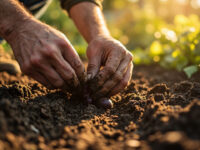
- Depth: sow seeds about 1/2 inch deep. Any shallower and they dry out before germinating, which is the single most common reason chard “doesn’t come up.”
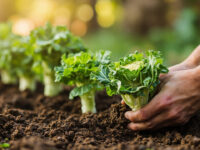
- Spacing: plant seeds 4 to 6 inches apart, or a few seeds per hole if you’re clustering, in rows 18 to 24 inches apart.
- Water in: soak the bed right after sowing and keep the surface consistently moist, not soggy, until germination, which takes 7 to 14 days depending on soil temperature.
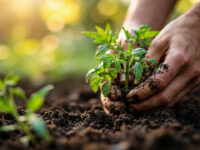
- Thin early: once seedlings have 2 to 3 true leaves, thin to one plant every 8 to 12 inches. Don’t skip this.
That thinning step is the mistake I mentioned earlier, and it’s a quiet one. Chard left crowded doesn’t die, it just stays small, stringy, and stressed all season, competing for root room in a way that never shows up as an obvious symptom until you compare it to a properly spaced plant next to it.
Thin harder than feels necessary, the plants you keep will thank you by midsummer.
Watering and Feeding Through the Season
Chard’s roots run deep for a leafy green, and established plants handle short dry spells better than lettuce or spinach. Even so, for the best texture and the least bitterness, keep soil evenly moist, aiming for about 1 to 1.5 inches of water a week between rain and irrigation.
Mulch around the base with straw or shredded leaves. It keeps soil temperature steadier, cuts down on watering frequency, and keeps splashed soil off the lower leaves, which matters for disease later.
Because you’re cutting leaves repeatedly over months rather than harvesting once, chard is a heavier feeder than a lot of gardeners assume. Side-dress with compost or a balanced fertilizer every 4 to 6 weeks through the growing season, and watch leaf color as your guide: pale, washed-out green usually means it’s hungry, not thirsty.
Feed it right and one row can genuinely keep producing from late spring into fall.
Problems That Actually Show Up
If you assumed chard is trouble-free because it’s tough, that’s a fair guess, and it’s mostly true, but a few things do show up regularly. Leaf miners tunnel pale, blotchy trails inside leaves; pick off and destroy affected leaves and consider a floating row cover early in the season to keep adults from laying eggs in the first place.
Slugs and snails go after seedlings hardest, leaving ragged holes and slime trails, worst in damp mulch and cool weather. Bait or barrier methods sold for the purpose work, applied per the product label.
Leaf spot and cercospora, both fungal, show up as small brown or tan spots with a darker ring, usually after wet, humid stretches. Improve airflow by spacing and thinning properly, water at the soil line instead of overhead, and remove badly spotted leaves promptly. If it’s severe, a fungicide labeled for leaf spot on leafy greens, used exactly per the label, is the next step.
Bolting, where the plant sends up a flower stalk and leaf quality crashes, is triggered by prolonged heat combined with long daylight, more common in spring-planted chard that hits a hot spell. Once it bolts, leaf quality doesn’t recover, so if you see a thick central stalk rising fast, harvest what you can and treat that planting as done.
None of these are the plant’s fault exactly, they’re mostly weather and spacing catching up with it.
When and How to Harvest
Here’s the honest answer to the question you’re probably already forming: no, you don’t wait for chard to reach some final size the way you’d wait on a cabbage head. Chard doesn’t really have a “done” point. It’s a cut-and-come-again crop, and that’s the whole appeal.
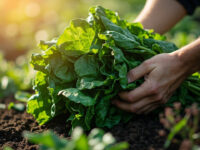
Start harvesting once outer leaves reach 6 to 8 inches long, usually 6 to 8 weeks after sowing. Cut or snap the oldest outer leaves near the base, leaving the inner young leaves and growing point untouched.
Take no more than a third of the plant’s leaves at any one time. Strip a plant harder than that and you stall it out for a week or two while it recovers, which is the harvesting mistake that quietly shortens a lot of people’s chard season.
Harvested this way, a healthy plant keeps producing new leaves from the center for months, right up until hard freezes in fall or bolting in extreme heat ends the run.
Leaves are best used within a few days, though the plant itself will happily hold more in reserve for your next cutting.
Swiss Chard at a Glance
- When to plant: two to three weeks before last frost, soil at least 50°F, with a second sowing in midsummer for a fall crop.
- Depth and spacing: sow 1/2 inch deep, thin to 8 to 12 inches apart in rows 18 to 24 inches apart.
- Light and soil: full sun, compost-rich, well-drained soil, pH 6.0 to 7.0.
- Water: about 1 to 1.5 inches per week, kept consistent rather than feast or famine.
- Feeding: side-dress every 4 to 6 weeks, since you’re harvesting repeatedly rather than once.
- Harvest: outer leaves at 6 to 8 inches long, starting 6 to 8 weeks after sowing, taking no more than a third of the plant at a time.
- Watch for: leaf miners, slugs on seedlings, fungal leaf spot in humid weather, and bolting in extended heat.
Get the spacing and the light-handed harvesting right, and everything else about chard tends to sort itself out. It’s one of the few vegetables that forgives almost every other mistake you’ll make.