The real answer: plant arugula two to three weeks before your last spring frost date, as soon as soil temperature hits about 40°F, and plant it again six to eight weeks before your first fall frost. That’s the window that actually matters, and it’s shorter than most people think because arugula bolts hard once heat shows up.
Miss it in either direction and you don’t get a smaller harvest, you get a different plant. Too early into cold, wet soil and half your seed rots before it germinates. Too late into summer heat and you get skinny, fast-flowering plants with leaves too hot and bitter to eat.
Here’s what most people get wrong: they treat arugula like a summer vegetable and plant it alongside tomatoes and peppers. It’s not. It’s one of the fastest, coldest-tolerant crops you can grow, and treating it gently instead of urgently is the mistake that costs people their whole crop. Stick around, because the full at-a-glance card with every number you need is saved at the bottom of this page.
The Actual Planting Window, Anchored to Frost and Soil
Arugula germinates in soil as cool as 40°F, though it comes up faster and more evenly once soil hits 50 to 65°F. That means you can get seed in the ground two to three weeks before your average last frost, well before you’d risk anything more tender.
In practice, that’s early spring for most of the country, and it can mean late winter in mild-winter zones (7 and warmer) where the ground barely freezes. The fall window matters just as much and gets ignored: count back six to eight weeks from your first fall frost and plant again then, since arugula actually sweetens with a light frost instead of being hurt by it.
Most gardeners only think about spring and miss half their possible harvest.
How to Read Your Own Yard Instead of a Calendar Date
Calendar dates are a guess. Your soil is the truth. Push a soil thermometer 2 inches down; if you don’t have one, a kitchen meat thermometer works fine.
If you assumed you just wait for the last frost date to pass, that guess wastes two or three good weeks of growing time arugula doesn’t need to skip. It handles a light frost on emerging leaves just fine. What it can’t handle is soil so cold and soggy that seed sits and rots before it sprouts, so check moisture too.
Squeeze a handful of soil: it should hold together loosely and crumble, not drip or form a solid mud ball.
Once it crumbles and reads 40°F or warmer, your window is open regardless of what the calendar says.
Plant Too Early, and This Is What You’ll See
Seed sitting in cold, saturated soil below about 40°F either doesn’t germinate at all or rots outright, especially in heavy clay that stays wet. You’ll wait two weeks, see nothing, and have to reseed anyway, so you haven’t actually gained time.
A hard freeze on tiny seedlings, especially anything colder than the mid-20s F without any snow cover, can knock back or kill young arugula even though mature plants shrug off frost fine. The seedling stage is the vulnerable stage, not the mature plant.
Wait for that soil temperature number instead of guessing from the air temperature.
Plant Too Late, and This Is the Honest Outcome
This is the mistake that actually ruins most people’s arugula, more than planting too early ever does. Push planting into late spring, once days are reliably warm, and the plants race straight to flower.
Arugula bolts once soil and air both stay warm, generally once you’re seeing consistent highs above 75 to 80°F. Bolted arugula gets tough, sparse, and sharply bitter, more hot mustard than salad green.
There’s no fixing bolted arugula. You can’t cut it back and get tender leaves again; the plant has committed to seed production. Your only real move at that point is to pull it and replant for fall instead.
That’s exactly why the fall window exists, and why it’s worth marking on your calendar now.
What to Do Before the Window Opens
Prep the bed while you’re still waiting on soil temperature so you can move fast the day it’s ready. Work in an inch of compost. Arugula isn’t a heavy feeder, but it rewards loose, fast-draining soil.
Rake the bed smooth and have your seed on hand rather than ordering it once the window is already open, since a week’s delay here is a week of harvest lost.
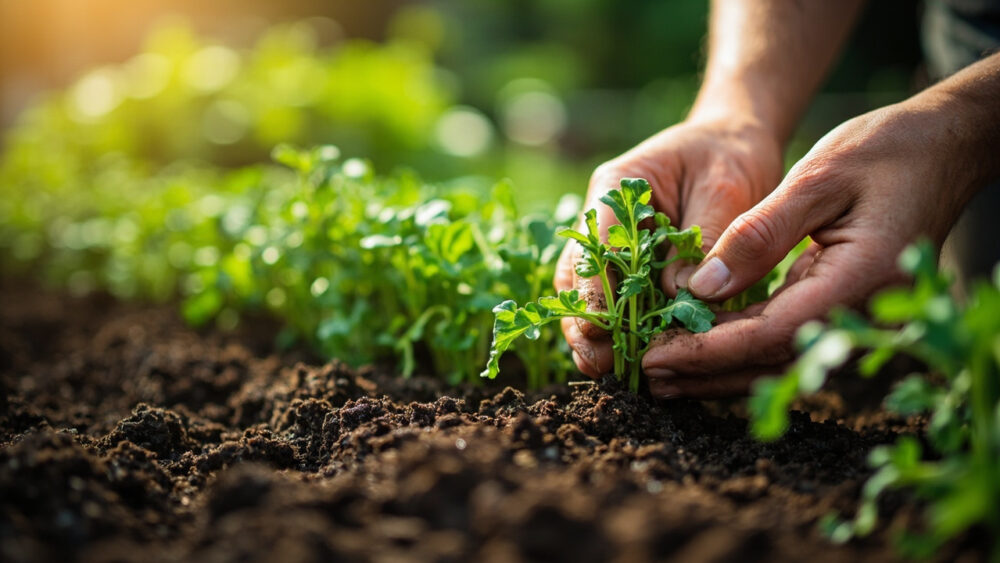
Sow seed a quarter to half an inch deep, about 1 inch apart, in rows spaced 6 to 10 inches apart, then thin seedlings to 3 to 4 inches once they have their first true leaves. Keep the bed evenly moist until germination, which usually takes 5 to 10 days depending on soil temperature.
With the bed ready in advance, you plant the moment conditions say go instead of losing days to prep.
Succession Planting and Zone Notes
Because arugula matures in just 20 to 40 days, don’t plant it all at once. Sow a short row every 10 to 14 days through the spring window to stretch your harvest instead of getting one big flush that all bolts together.
In zones 3 through 6, that spring window is short and fall planting after summer heat breaks is often the more reliable of the two.
In zones 7 through 9, you get a wider spring window and can often grow arugula straight through fall and into winter with minimal protection, sometimes even a mild winter crop under a row cover.
In zone 10 and warmer, skip summer planting altogether and treat arugula as a cool-season crop for fall, winter, and early spring instead.
Your zone tells you how wide the window is, not whether one exists.
Arugula at a Glance
- When to plant: two to three weeks before your last spring frost, and again six to eight weeks before your first fall frost.
- Soil temperature needed: at least 40°F to germinate, 50 to 65°F for fast, even sprouting.
- Planting depth: a quarter to half an inch deep.
- Spacing: 1 inch between seeds, thinned to 3 to 4 inches, rows 6 to 10 inches apart.
- Days to harvest: 20 to 40 days depending on variety and temperature.
- Bolt trigger: consistent highs above 75 to 80°F, at which point flavor turns bitter and there’s no reversing it.
- Best move for more harvest: succession sow every 10 to 14 days through the spring window instead of one big planting.
Arugula rewards speed, not patience. Get seed into cool soil the moment it hits 40°F, and get a second round in before fall’s first frost.