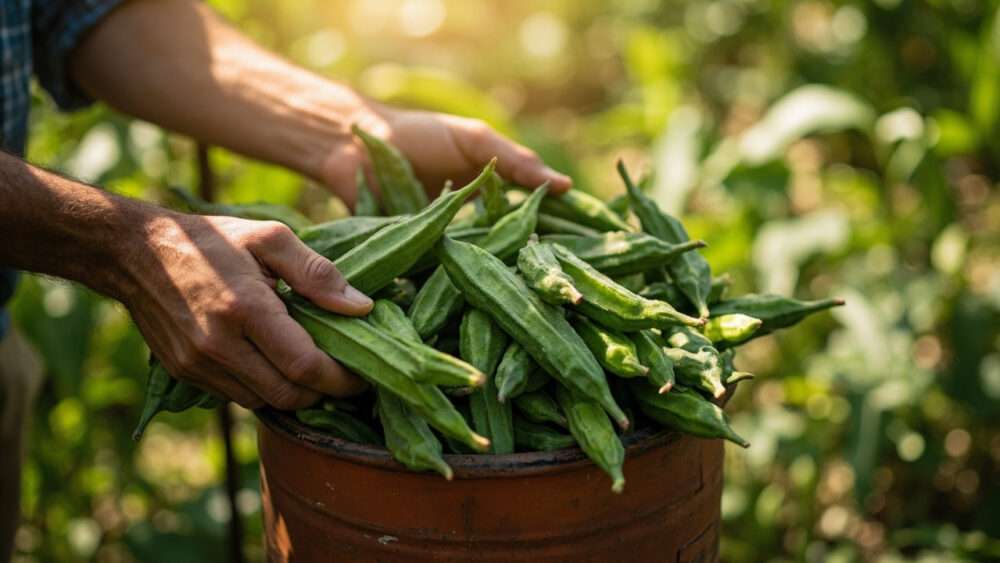
Fresh okra keeps best unwashed, in a paper bag or loosely wrapped in a dry paper towel, tucked into the fridge’s crisper drawer at around 45 to 50°F. Stored this way it holds up for 3 to 5 days before it starts going soft and dark at the tips. If you want it for months instead of days, you blanch and freeze it, and that is where most people quietly get one step wrong.
Here is the thing nobody tells you when you’re standing in the kitchen with a bowl of pods you just picked: how to store okra changes completely depending on whether you plan to eat it this week or pull it out in January. Treat fridge okra like freezer okra, or vice versa, and you end up with slime, mush, or pods that taste like the inside of a freezer bag.
There’s also a sign of spoilage everyone misreads as “still fine,” a prep step that ruins texture more than any storage method ever could, and a mistake with water that turns a whole batch slick within a day. All three are below, and so is the save-it-to-your-phone Okra at a Glance card at the very bottom, the one with the numbers you’ll actually want next time you’re staring at a full basket wondering what to do first.
The Right Way to Store Fresh Okra
Skip washing it until right before you cook it. Water on the skin speeds up the exact slime and soft spots you’re trying to avoid.
Do this instead: pat off any garden dirt with a dry cloth, leave the pods whole, and slide them into a paper bag or wrap them loosely in a dry paper towel. Set that inside a perforated plastic bag if your crisper runs dry.
Store it in the crisper drawer, ideally 45 to 50°F. Okra is a warm-season crop and it actually dislikes standard fridge cold in the high 30s, which is part of why people think their fridge is “ruining” it when really it’s just too cold.
That temperature detail matters more than most people realize, and it explains a texture problem you’ve probably blamed on freshness.
How Long Okra Actually Keeps, Method by Method
On the counter, at room temperature, okra holds maybe a day, sometimes less in a warm kitchen. It’s not a counter vegetable.
In the fridge, done the paper bag way above, expect 3 to 5 days at peak quality. Some pods will stretch to a week, but the texture starts sliding by day 5 or 6.
Blanched and frozen, whole or sliced, okra keeps 8 to 12 months at a steady 0°F with no real quality loss, and it’s still safe well beyond that if your freezer never fluctuates.
Pickled in a proper vinegar brine and refrigerated, expect it to hold 1 to 2 months, sometimes longer, though it softens gradually the whole time.
Dried or “cured” okra, sliced and dehydrated until brittle, will keep 6 to 12 months in an airtight container in a cool, dark spot.
Each method has its own failure point, and the freezer one is where most people lose a whole batch without realizing why until they thaw it.
The Prep Step That Makes or Breaks Frozen Okra
If you assumed you can just wash, bag, and freeze raw okra like you might with peppers, that guess is exactly what ruins most people’s frozen okra. Raw-frozen okra turns mushy, waterlogged, and slimy the second it thaws, because the enzymes inside the pod keep working in the freezer and break the texture down.
Blanching stops that. Drop whole or sliced pods into boiling water for 2 to 3 minutes (3 to 4 minutes for larger whole pods), then plunge them immediately into ice water for the same amount of time. That shock halts the enzyme activity cold, literally.
Drain thoroughly and pat dry. Wet okra going into the freezer clumps into a solid brick and grows ice crystals that shred the flesh.
Spread pods on a tray, freeze until solid for an hour or two, then transfer to a freezer bag with the air pressed out. That single tray step is what gives you pods you can pour out a handful of instead of chiseling out the whole bag.
Skip blanching once, and you’ll understand instantly why every serious okra grower insists on it.
The Sign of Spoilage Everyone Reads Wrong
Most people think soft okra means spoiled okra, and while soft is bad, it isn’t the real tell. Okra can go a little soft from cold damage and still be perfectly fine to trim and cook.
The actual sign to watch for is slime. Run a finger along the pod. If it feels tacky, wet, or slick rather than dry and slightly fuzzy, bacteria have taken over and that pod is done.
Dark, sunken, watery spots are the other real red flag, especially near the stem end. A pod with a few tiny brown flecks on the ridges is usually still fine; a pod that’s gone translucent and wet is not.
Smell matters too. Fresh okra smells faintly green and grassy. A sour or fermented smell means toss it, no amount of trimming saves that pod.
Knowing what to look for only helps if you avoid the handful of mistakes that create these problems early.
The Mistakes That Ruin a Batch
- Washing before storing: extra surface moisture is the single fastest route to slime in the fridge.
- Storing it in a sealed, non-perforated bag: trapped humidity with no airflow breeds bacteria within a day or two.
- Skipping the ice bath after blanching: pods keep cooking from residual heat and turn mushy before they even reach the freezer.
- Freezing raw, unblanched okra: guarantees a slimy thaw every time, no exceptions.
- Cramming the fridge drawer full: pods bruise against each other, and bruised spots rot first.
- Letting picked okra sit out too long before storing: okra loses quality fast once picked, so get it into storage within a few hours of harvest, not the next morning.
Fix those six and you’ve solved the vast majority of “why did my okra go bad so fast” complaints.
Okra at a Glance
- Fresh in the fridge: unwashed, in a paper bag or paper towel, in the crisper at 45 to 50°F, good for 3 to 5 days.
- On the counter: about 1 day, only as a short-term holding spot before you refrigerate or cook.
- Frozen: blanch 2 to 3 minutes, ice bath, dry, flash-freeze on a tray, then bag; keeps 8 to 12 months at 0°F.
- Pickled: proper vinegar brine, refrigerated, holds 1 to 2 months with gradual softening.
- Dried: slice thin, dehydrate until brittle, store airtight in a cool dark spot for 6 to 12 months.
- Signs it’s spoiled: tacky or slick surface, dark sunken wet spots, sour or fermented smell.
- Biggest mistake to avoid: washing before storage and skipping the blanch before freezing.
Store it dry, blanch it before it ever touches the freezer, and trust slime over softness as your real warning sign.
Get those three right and okra stops being the vegetable that goes bad the day after you buy it.