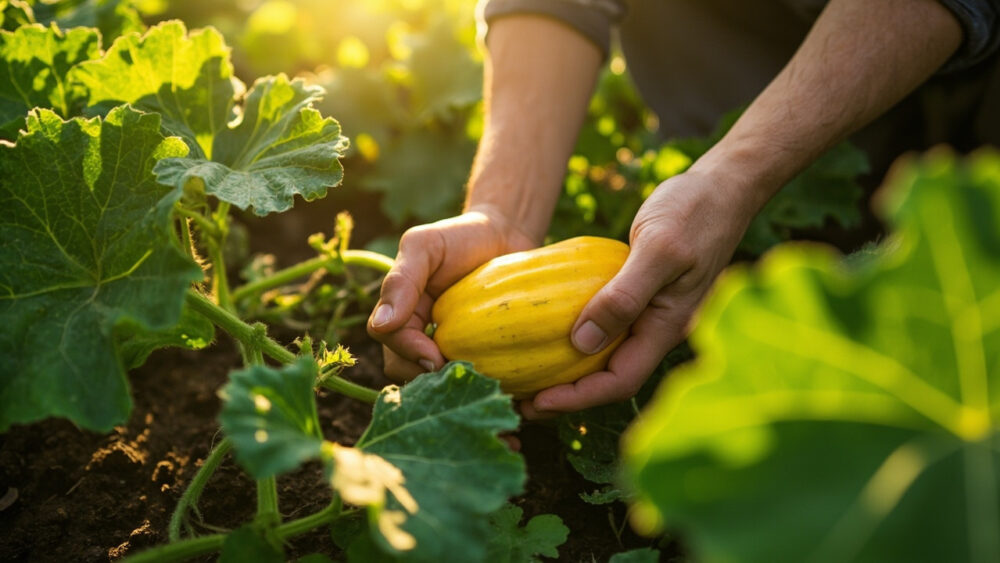
The answer for when to harvest yellow squash is when the fruit is about 6 to 8 inches long, the skin is glossy and easy to pierce with a fingernail, and the color is still bright, not dull yellow-orange. That usually happens 4 to 8 days after the flower drops off, and once plants start producing, you should be checking them every day or two. Squash that sits on the vine even one extra day past this point turns from tender to tough fast.
Here is the part almost nobody expects: the biggest mistake isn’t harvesting too early, it’s the opposite. Most home gardeners let squash go too long because a small zucchini-sized fruit doesn’t look “done” yet, and by the time it looks impressive, it’s already seedy and bland.
There’s also a sign everyone misreads on the plant itself, and a real answer to the question you’re about to ask next, which is whether picking too early actually hurts your total yield. Stick around for the size chart too. Save-able Yellow Squash at a Glance card is waiting at the bottom of this page, screenshot it before you head back out to the garden.
The Real Ready Signs, Not Just “It Looks Big Enough”
Size is the least reliable sign, even though it’s the one everyone leans on. Skin firmness tells you more than length ever will.
The fingernail test
Press a fingernail gently into the skin near the stem end. If it slides in with light pressure and the skin has a slight give, it’s ready. If you have to push hard and the skin resists like a cucumber rind, it’s past its best window.
Color and shine
A ready squash has a glossy, almost waxy shine and a bright, even yellow. Once the color starts to dull or develop a slight orange or tan cast, especially near the blossom end, the squash is overmature and the skin is toughening underneath that dull look.
Size, as a rough guide only
For straightneck and crookneck types, 6 to 8 inches long and about 1.5 to 2 inches across the widest point is the sweet spot. Patty pan types are ready at 2 to 4 inches across. Anything larger is still edible, but it’s working against you texturally.
Once you know what to feel for, the timing window makes a lot more sense.
The Timing Window, and What You Lose on Either Side of It
From flower drop to harvest is typically 4 to 8 days depending on heat. In hot weather, squash can go from perfect to oversized in 48 hours, which is why daily checks aren’t overkill once plants hit full production. Cooler stretches slow that clock down closer to a week.
Pick too early, meaning under 4 inches, and you lose total pounds per plant for no real gain in quality, tiny squash isn’t more tender in any way you’d notice at the table. There’s no yield penalty for picking at the right size, only for picking oversized.
Pick too late, and you get spongy flesh, large hard seeds, and a bitter edge that no amount of cooking fixes. Worse, a plant that’s allowed to mature even two or three fruits to full size will slow down or stop setting new flowers, because it reads those big fruits as “seed made, job done.”
That’s the sign everyone misreads on the plant: a squash plant that suddenly stops flowering usually isn’t stressed or diseased, it’s just carrying oversized fruit you forgot to pick.
Clear out anything overgrown and the plant typically starts flowering again within a week to ten days.
How to Harvest Without Wrecking the Plant
Yellow squash stems are hollow and brittle, and a yank instead of a cut is how people tear the main vine, not just the fruit stem.
- Find the stem where the fruit attaches to the main vine, not the fruit itself.
- Cut with a knife or pruners about half an inch to an inch above where the fruit meets the stem, leaving a short stub on the squash.
- Support the vine with your free hand while you cut so you’re not pulling against it.
- Watch for prickly leaf stems and spines on the plant itself, wearing light gloves saves your forearms during a big harvest session.
Never twist or snap a squash off by hand, it almost always tears leaf stalks or the main stem along with it, and a wounded main stem is an open door for stem rot and squash vine borers.
Once it’s cut, what you do in the next hour actually matters.
What to Do With It Right After Cutting
Yellow squash is mostly water, and it starts losing moisture the second it’s off the vine. Get it out of direct sun immediately, don’t leave a harvest basket sitting in a hot garden while you keep picking.
Don’t wash it until you’re ready to use or store it. Excess surface moisture speeds up soft spots in the fridge.
Refrigerated in a loose or perforated bag, fresh yellow squash holds well for about 5 to 7 days. After that it starts softening and pitting even if it looks fine on the outside.
If you’re overwhelmed with squash, this is where a lot of people panic, and the fix is simpler than canning gear.
Keeping the Harvest Coming All Summer
Consistent picking is the single best thing you can do for total yield. Every fruit you leave to mature past its window is a signal to the plant to slow down, so harvesting frequently is itself a productivity technique, not just a timing rule.
Feed with a balanced or slightly nitrogen-lower fertilizer every 3 to 4 weeks during heavy production, since squash plants are working hard and can stall out on depleted soil.
Water consistently, about 1 to 1.5 inches per week, keeping it at the soil level rather than overhead, since wet leaves invite powdery mildew.
If you can’t keep up with fresh eating, yellow squash freezes well sliced and blanched, and it also shreds and freezes raw for baking later. It does not can safely as a plain low-acid vegetable at home without a pressure canner and a tested recipe, so don’t try water-bath canning it on its own.
Keep picking every couple of days and a healthy plant will keep flowering until the weather or squash vine borers eventually take it down.
Yellow Squash at a Glance
- When to plant: after soil warms to at least 60 to 65°F, typically 1 to 2 weeks after your last frost date.
- Spacing and depth: seeds sown 1 inch deep, plants thinned to 18 to 24 inches apart in rows 3 feet apart.
- Days to first harvest: 45 to 55 days from seed, and 4 to 8 days from flower drop to a pickable fruit.
- Ready size: 6 to 8 inches long for straightneck and crookneck types, 2 to 4 inches across for patty pans.
- Ready feel: glossy skin, bright even color, gives slightly to a fingernail press.
- How to cut: clip the stem half an inch to an inch above the fruit, never twist it off by hand.
- Storage: unwashed in a loose bag in the fridge, good for about 5 to 7 days.
Pick a little smaller and a little more often than feels necessary, that single habit does more for your squash harvest than any fertilizer or watering schedule.
When in doubt, go by feel and shine, not by size.