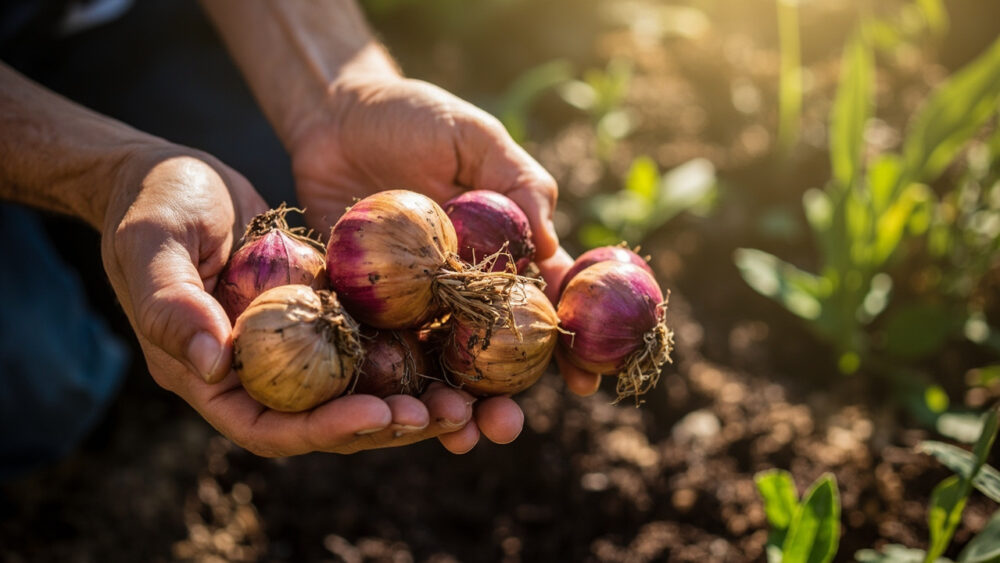
The right way to store shallots is to cure them first, then keep them somewhere cool, dry, and dark, around 40 to 60 F with good airflow, where they will hold for four to eight months. Skip the curing step and you are lucky to get a few weeks before they go soft. Toss them in the fridge crisper thinking that is “safer” and you will actually shorten their life and probably start them sprouting.
There is one mistake that ruins more shallot harvests than anything else, and it is not what most people expect. It is not moisture, exactly, and it is not the cold, exactly either. It is a timing error made before storage even starts, and by the time you notice, it is already too late to fix.
There is also a sign of rot that gets misread as normal aging almost every time, and knowing the difference saves an entire batch instead of losing it one bulb at a time. Stick around for the Shallots at a Glance card at the bottom, it is the one-screen version of everything below, worth saving to your phone before you walk back out to the garden.
Curing: The Step That Decides Everything
Curing is non-negotiable and it is the step most people skip or rush. After harvest, lay shallots out somewhere warm, dry, and airy, out of direct sun, for two to three weeks. A garage floor, a covered porch, or a screened table all work.
You are waiting for the outer skins to turn papery and the necks to tighten and dry down completely. Push on a neck. If it still feels soft or juicy, it needs more time.
Rushing this is the timing mistake that quietly ends most storage attempts before they begin.
Do You Wash Shallots Before Storing? The Honest Answer
No. This is the question everyone has right after curing, and the guess that feels responsible, washing off the garden dirt, is exactly backward.
Water on the skin invites rot and mold during storage, even after curing. Brush off loose dirt with your hands or a soft brush once bulbs are dry. Leave the papery skin intact, it is the bulb’s own protection.
Only wash a shallot right before you cook with it, never before it goes into storage.
Where and How to Store Cured Shallots
Once cured, trim tops to about an inch if you are not braiding them, or leave the tops long and braid several together for hanging storage, which is the traditional method and it works well because it keeps air moving around every bulb.
Loose bulbs go in a mesh bag, a shallow basket, or an old onion sack, single layer if possible so bulbs are not crushing each other.
Store at 40 to 60 F, in the dark, with humidity on the lower side, around 60 to 70 percent. A pantry shelf, unheated closet, or cool basement corner all beat a kitchen counter.
Get the environment right and the rest of storage takes care of itself.
How Long Shallots Actually Keep, Method by Method
- Cured, cool dark storage (40 to 60 F): four to eight months, the best and longest option for whole bulbs.
- Room temperature counter (65 to 75 F): three to six weeks, fine for what you will use soon, not for long-term keeping.
- Refrigerator crisper, uncured or cured: two to three months, but humidity there often causes soft spots and early sprouting.
- Peeled and frozen, chopped or whole: eight to twelve months, texture softens on thawing so best for cooked dishes, not raw use.
- Refrigerated after cutting, in a sealed container: five to seven days, after that flavor and texture drop fast.
Notice the fridge is not actually the long-game answer, which surprises most people the first time.
The Sign of Rot Everyone Misreads
If you assumed a soft, wrinkled shallot just means it is old and drying out naturally, that guess is why people keep bad bulbs in the bag until the smell gives it away. Natural aging looks like a firm bulb slowly losing a little weight and tightness over months.
Rot looks different: a wet, dark, mushy spot near the neck or root end, sometimes with a sour smell, sometimes with visible mold. That bulb is done, and it will take its neighbors down with it if you leave it in the bag.
Check stored shallots every couple of weeks and pull anything soft, discolored, or off-smelling immediately.
One bad bulb caught early is a non-event, one left in the pile is how you lose the whole batch.
The Mistakes That Ruin a Batch
- Skipping the cure: uncured shallots rot or sprout within weeks no matter how you store them after.
- Washing before storage: trapped moisture under the skin starts rot from the inside.
- Storing in plastic bags or sealed containers: no airflow means trapped humidity and fast mold.
- Piling bulbs deep: weight and lack of air cause soft spots on bulbs at the bottom.
- Storing near potatoes: potatoes release moisture and gases that speed up sprouting in alliums.
- Ignoring the pile: one rotting bulb spreads to whatever it touches within days.
Fix these five things and shallots that once lasted three weeks will comfortably outlast the season.
Shallots at a Glance
- Best storage method: cure two to three weeks, then keep in a mesh bag or braid in a cool, dark, airy spot.
- Ideal storage conditions: 40 to 60 F, moderate humidity around 60 to 70 percent, good airflow, no direct light.
- How long cured shallots keep: four to eight months in proper storage, three to six weeks at room temperature.
- Fridge storage: two to three months in the crisper, but expect earlier softening and sprouting than cool dark storage.
- Freezer storage: eight to twelve months peeled and frozen, best reserved for cooked dishes.
- Wash before storing: never, brush off dirt only, wash right before cooking.
- Check for rot: every couple of weeks, remove any soft, wet, or moldy bulb immediately.
Cure them properly and keep them dry and dark, that single combination does more for shelf life than anything else you can do. Everything else on this list just protects that one decision.