How to prune spirea depends entirely on which kind you have. Spring-blooming spireas like Bridal Wreath get cut right after their flowers fade, while summer bloomers like the Japanese and bumald types (Goldflame, Anthony Waterer, Little Princess) get pruned in late winter or early spring before new growth starts. Get that timing backwards and you will not kill the shrub, but you will cut off an entire year of flowers.
That is the mistake that trips up more gardeners than any other, and it is an easy one to make because “prune in spring” sounds right for almost everything else in the yard. It is not right here, not for half the spireas people grow.
There is also a sign most people misread completely: a spirea that looks like a tangled brown mess in March is not dying, it is just overdue for a haircut. And there is a follow-up question everyone has right after the first cut: how much is too much, since spirea can supposedly take a hard cut back and bounce right back. That last part is true, and it is more useful than most people realize. Stick around for the Spirea at a Glance card at the bottom, it is the version of this you will actually want saved on your phone before you walk out to the shrub.
Figure Out Which Spirea You Have First
This decision drives everything else, so nail it before you make a single cut. Spring bloomers flower in April or May on wood that grew the previous year, and they tend to have an arching, fountain-like shape with white flower clusters. Bridal Wreath and Vanhoutte spirea are the common ones.
Summer bloomers flower in June through August on new growth from this season, with flat-topped pink, red, or white flower clusters and a lower, mounding habit. Goldflame, Anthony Waterer, and Little Princess fall here.
If you genuinely do not know which one is in your yard, wait and watch it bloom this season before you cut anything.
When to Prune, and When to Leave the Shears Alone
For spring bloomers, prune within two to three weeks after the flowers fade, typically late spring. Wait longer than that and you start cutting into the buds that would have become next year’s flowers.
For summer bloomers, prune in late winter to early spring, while the plant is still dormant and before you see new leaf growth, usually four to six weeks before your last frost date. Cutting them back hard in late winter does not cost you flowers, it actually encourages more of the new growth they bloom on.
Do not prune either type in late summer or fall. Fresh cuts push tender new growth that will not harden off before frost, and on spring bloomers you will be cutting off next year’s flower buds regardless of season.
Timing is the whole game with spirea, everything else below is just technique.
Tools and the One Prep Step That Actually Matters
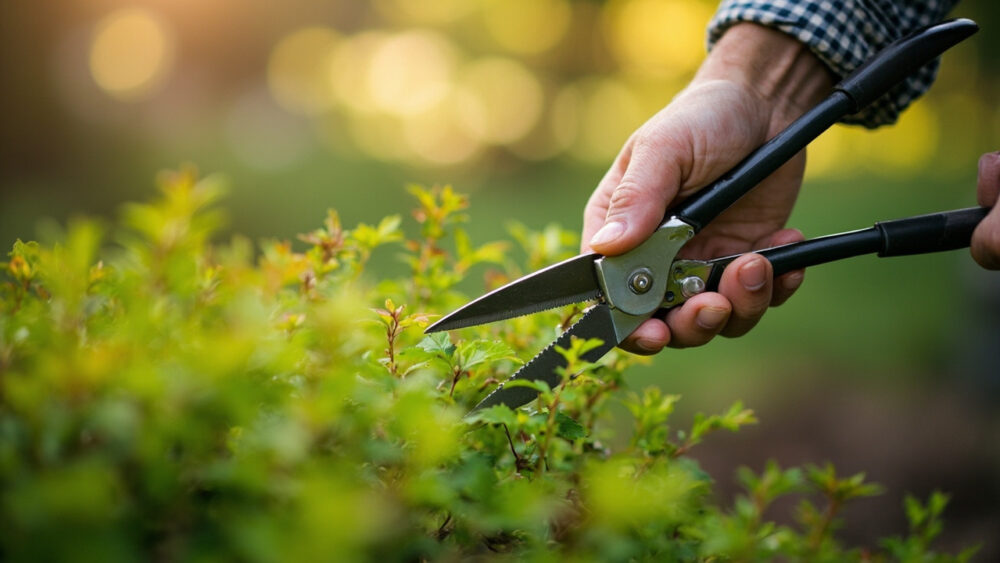
You need bypass hand pruners for anything under half an inch thick, loppers for thicker old wood, and a clean pair of hedge shears if you are doing a light shape-up rather than a hard renewal cut. That is the entire tool list, nothing exotic.
The prep step people skip is wiping the blades down with rubbing alcohol before you start, especially if you pruned a diseased plant earlier that day. Spirea is generally tough and resists most problems, but powdery mildew and leaf spot spread easily on dirty blades.
Sharp blades matter more than people think too. A dull pruner crushes stems instead of slicing them, and a crushed cut heals slower and invites rot.
Once your blades are clean and sharp, the actual cutting is straightforward.
How to Prune Spirea Step by Step
Step 1: Remove the dead, damaged, and crossing wood first
Before shaping anything, cut out any branch that is dead, broken, or rubbing against another branch. Cut these back to the base or to a healthy junction. This alone often opens up the shrub dramatically.
Step 2: Decide between a light shape-up and a hard renewal cut
If your spirea bloomed well and just needs tidying, take off one third of the oldest stems at ground level and lightly shape the rest. If it is overgrown, woody at the base, or blooming poorly in the center, this is where the “can it take a hard cut” question gets answered honestly: yes, spirea tolerates renewal pruning better than almost any other flowering shrub.
Cut the entire plant back to 4 to 6 inches above the ground. It looks brutal for a few weeks and then comes back fast, usually fuller than before.
Step 3: Shape summer bloomers with a slight dome
For bumald and Japanese types, cut stems to varying heights rather than one flat line, favoring a natural rounded shape over a sheared hedge look. A sheared flat top tends to bloom only on the outer surface, while a shaped dome blooms all over.
Step 4: Deadhead spent blooms through the season on repeat bloomers
Many summer-blooming spireas will rebloom if you snip off spent flower clusters just below the flower head through the summer. This is optional maintenance, not a required cut, but it noticeably extends the bloom window.
Once the cuts are made, the plant needs a little patience before you judge the results.
What Spirea Looks Like After a Real Pruning
Expect new shoots within two to three weeks during active growing conditions, once soil temperatures are reliably above 50°F. A hard renewal cut will look stark and stubby at first, and that is normal, not a sign of trouble.
If you pruned a spring bloomer right after flowering, it will spend the rest of the season growing the wood that becomes next year’s flower show. No blooms now, but that is the deal you made and it pays off next spring.
If you pruned a summer bloomer in late winter, you will see fresh green growth first and flower buds forming on that new growth by early to mid summer.
Water a newly pruned spirea normally, about an inch a week if rain is not providing it, and skip heavy fertilizer right after a hard cut since it pushes weak, floppy growth instead of strong stems.
The recovery is honestly the easy part, the mistakes usually happened before you ever picked up the pruners.
The Mistakes That Actually Cost You Flowers
Pruning spring bloomers in late winter is the single most common flower-killing mistake, because it feels like the responsible, tidy thing to do before the growing season starts. It removes the buds that were already set on last year’s wood.
Shearing into a tight ball every single year, rather than occasionally thinning at the base, eventually turns spirea into a dense twiggy shell with flowers only on the surface and a hollow, leggy interior. Thin some old stems out at ground level every year or two to keep the whole plant productive.
Being afraid to cut hard is the flip side, and it costs people just as much. Spirea is forgiving, and an old overgrown shrub almost always responds better to one aggressive renewal cut than to years of timid trimming that never fixes the shape.
Pruning in fall invites winter dieback on the tender new growth those cuts stimulate, weakening the plant right before its hardest season.
Get the timing and the cut size right, and spirea is genuinely one of the most forgiving shrubs you can own.
Spirea at a Glance
- When to prune spring bloomers: right after flowers fade, within two to three weeks, typically late spring.
- When to prune summer bloomers: late winter to early spring, before new growth starts, four to six weeks before your last frost.
- Never prune: in late summer or fall, on either type, to avoid tender growth that will not harden off.
- Light maintenance cut: remove about one third of the oldest stems at ground level, shape the rest lightly.
- Hard renewal cut: cut the whole shrub back to 4 to 6 inches above ground if it is overgrown or woody at the base.
- Recovery time: new shoots in two to three weeks once soil is above 50°F, full shape back within one growing season.
- Aftercare: about an inch of water weekly, no heavy fertilizer right after a hard cut.
Match the cut to the bloom type and the season, and spirea will forgive almost anything else you do wrong.
That is the one thing worth remembering the next time you walk up to it with pruners in hand.