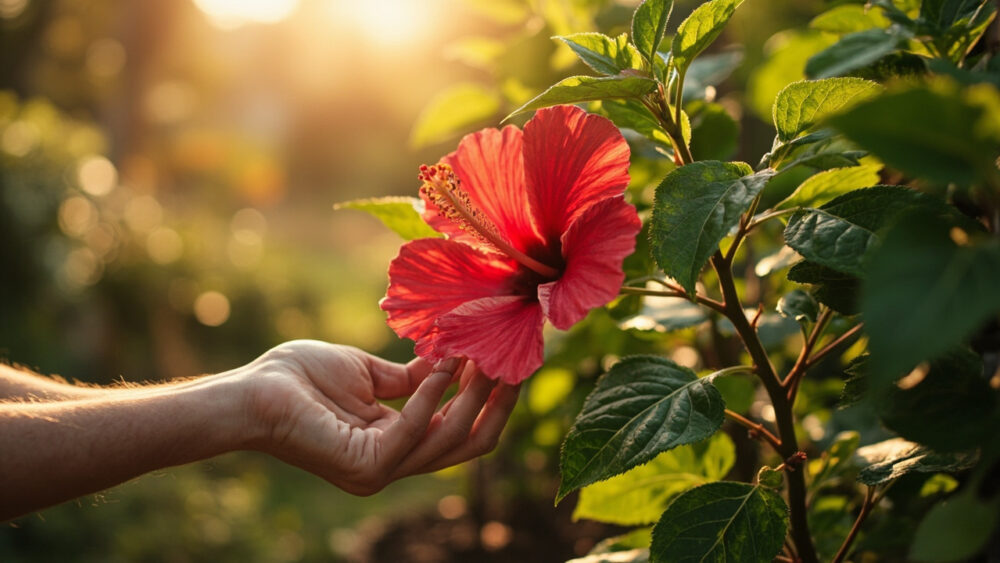
A hibiscus tree wants three things nonstop: at least six hours of direct sun, water before the soil goes fully dry but never sitting in a saucer, and warmth above 50°F. Give it those and it will bloom for months. Miss any one of them and you get the same complaint over and over, a healthy-looking plant that drops every flower bud before it opens.
That bud drop is the mistake that trips up most people learning how to care for hibiscus tree specimens, and almost everyone blames the wrong cause. Later in this guide you’ll find out what’s actually behind it, plus the watering habit that quietly kills more hibiscus trees than drought ever does, and the honest answer to whether that woody, leggy growth means you’ve ruined the shape for good.
Stick with me to the end and save the Hibiscus Tree at a Glance card at the bottom. It’s the one you’ll want pulled up on your phone the next time you’re standing in front of the plant wondering what it needs.
Light, Placement, and Temperature
Hibiscus trees are sun hogs. Six to eight hours of direct light a day is the minimum for steady blooming, and a south or west-facing spot outdoors or in front of your sunniest window is the right call. Less than that and the plant survives but flowers sparsely, if at all.
Outdoors, they thrive in USDA zones 9 through 11 year-round. Everywhere else, treat it as a patio plant that summers outside and comes in before nights drop into the 40s.
Below 50°F the plant stalls and can drop leaves. Below freezing, above-ground growth is likely to die outright, though a hard-frozen hibiscus tree sometimes regrows from the base come spring if the roots were protected.
Where you park this plant matters almost as much as how you water it.
Watering: The Habit That Actually Kills Them
Water when the top **1 to 2 inches** of soil feel dry to a finger poked in, then water thoroughly until it runs from the drainage holes. In hot weather with a lot of sun, that can mean every 2 to 3 days. In cooler months, it might stretch to once a week.
If you assumed the plant wants to be kept constantly moist because it looks tropical, that guess is exactly what causes root rot. Soggy, waterlogged soil is far more dangerous to a hibiscus tree than a dry stretch it can recover from in a day.
The real tell isn’t the calendar, it’s the pot. Lift it. A hibiscus that needs water feels noticeably lighter than one that’s still holding moisture.
Always dump the saucer within an hour of watering. Standing water at the roots for even a day or two is the single habit that ends more hibiscus trees than neglect does.
Get the water right and the next thing to nail down is what it’s drinking through.
Soil, Pots, and Feeding
Use a well-draining potting mix, ideally one built for citrus or hibiscus, or a standard potting soil cut with perlite. Heavy garden soil compacts and holds too much water around the roots.
In the ground, amend clay-heavy soil with compost before planting and skip low spots where water pools after rain.
Feed during the active growing season, roughly spring through early fall, with a fertilizer formulated for hibiscus or one labeled for blooming plants, applied per the product label. A formula with more potassium than nitrogen tends to push flowers rather than just leafy growth. Ease off or stop entirely in winter when the plant isn’t actively growing.
Feeding on a schedule the plant isn’t ready for is almost as common a mistake as overwatering, and it shows up the same way.
The Bud Drop Mystery, Solved
Here’s the loop from the intro: hibiscus flower buds form fast, sometimes in under a week, and they’ll drop just as fast if anything stresses the plant during that window.
The usual suspects are a sudden move to a darker spot, a temperature swing, letting the soil go bone dry, or overfeeding with nitrogen-heavy fertilizer. It is rarely one dramatic event, usually just an abrupt change from whatever the plant had gotten used to.
The fix is consistency, not more attention. Pick a sunny spot and leave it there. Water on a check-the-soil rhythm instead of a strict schedule, and keep temperature swings gentle if you’re moving the plant in or out for the season.
Once bud drop stops, the next job is keeping the plant’s shape and size in check.
Pruning, Repotting, and Routine Care
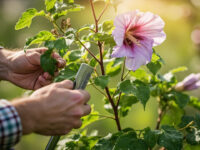
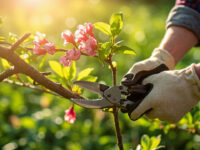
Prune in late winter or early spring, before new growth kicks in, cutting stems back by about a third. This is also when you shape a leggy, top-heavy hibiscus tree back into form.
If yours has gone woody and sparse at the base, that’s not a ruined plant, it’s an overdue pruning. Hibiscus trees respond well to a hard cutback and typically leaf out fuller within a few weeks of active growth.
Repot every 2 to 3 years, or sooner if roots are circling the pot’s edge or growth has stalled despite good light and feeding. Go up one pot size, not several.
Wipe dusty leaves occasionally and pinch spent blooms to keep the plant tidy and airflow good around the foliage.
Even with all of this right, pests and disease still show up eventually.
Problems Most Likely to Strike
Yellow leaves with no other symptoms usually mean either overwatering or a nutrient gap, most often iron or nitrogen. Check soil moisture first before reaching for fertilizer.
Aphids and whiteflies cluster on new growth and the undersides of leaves, especially indoors in winter with poor airflow. Insecticidal soap applied per the label, along with a strong rinse from the hose, handles most infestations.
Spider mites show up as fine speckling and faint webbing in hot, dry conditions, and a shower of the foliage plus increased humidity around the plant usually knocks them back.
- Yellow, dropping leaves: check soil moisture before anything else.
- Sticky residue or curled new growth: look for aphids on the undersides.
- Fine speckling, dusty look: suspect spider mites, raise humidity.
- Buds forming then falling: revisit light and watering consistency.
Once you know what’s normal wear and what’s an actual problem, spotting real thriving gets easy.
Signs Your Hibiscus Tree Is Actually Thriving
A thriving hibiscus tree pushes new glossy leaf growth continuously through the warm months and holds flower buds through to bloom instead of dropping them. Each flower typically lasts just a day or two, but a healthy plant keeps a steady rotation coming.
Stems should feel firm, not soft or blackened at the base. New growth should be a clean green, not pale or yellow-tinged.
Steady blooming over weeks, not one big flush followed by nothing, is the real marker that light, water, and feeding are all dialed in together.
That’s the whole system working in balance, and here’s the card that sums it all up.
Hibiscus Tree at a Glance
- Light needed: six to eight hours of direct sun daily, a south or west-facing spot is ideal.
- Watering rule: water when the top 1 to 2 inches of soil are dry, then soak thoroughly and empty the saucer within the hour.
- Temperature range: thrives above 50°F, bring indoors or protect below that, hardy outdoors year-round only in zones 9 through 11.
- Feeding schedule: fertilize spring through early fall with a bloom-formulated feed, taper off in winter.
- Pruning time: late winter to early spring, cut stems back by about a third to shape and encourage fuller growth.
- Repotting frequency: every 2 to 3 years, or when roots crowd the pot, sizing up just one pot size.
- Biggest risk: soggy, waterlogged soil, which causes root rot faster than a dry spell ever will.
If you remember nothing else, remember this: consistent sun and a soil check with your finger beat any schedule you could write down.
Everything else on this plant, blooms, shape, and health, follows from getting just those two things right.