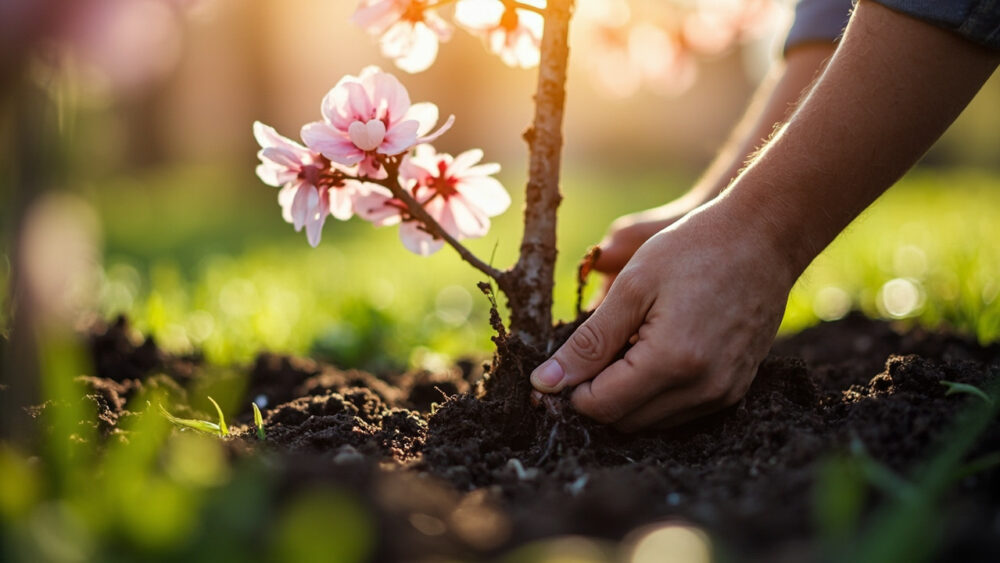
The core of how to grow cherry blossom trees comes down to three things: plant a bare-root or container tree in late fall to early spring while it’s dormant, give it full sun and soil that drains fast, and then wait. These are ornamental flowering cherries, not fruiting cherries, so there’s no harvest of cherries to speak of, the “harvest” is the bloom itself, and most varieties take 3 to 5 years to flower well and 10 to 15 years to look like the postcard version in your head.
Here’s what trips people up before they even get that far. Most first attempts fail from one of two mistakes: planting too deep, or planting in soil that stays wet after rain, both of which quietly rot the roots over a season or two while the tree looks fine on top.
There’s also a bloom myth almost everyone believes and gets backwards, plus an honest answer to the question you’re probably about to ask, which is why your tree isn’t flowering yet even though it looks healthy. Stick around, because the save-and-screenshot Cherry Blossom Trees at a Glance card is waiting at the bottom once you’ve got the full picture.
When to Plant a Cherry Blossom Tree
Plant bare-root trees while dormantfrom late fall after leaf drop through early spring before buds swell, whenever the ground isn’t frozen or waterlogged. Container-grown trees are more forgiving and can go in almost any time the soil is workable, though early spring or fall still beats the heat of summer.
Cold-climate gardeners, roughly zones 4 and 5, do best planting in early spring once the soil hits about 45 to 50°F, so the tree has a full season to root in before winter. Zones 6 through 8 have the wider window and can plant successfully in fall, which often gives better first-year establishment because roots grow through winter with no leaf demand pulling on them.
Avoid planting into ground that’s still muddy from snowmelt or spring rain, that’s the same wet-soil trap that kills trees later.
Choosing the Spot and Prepping the Soil
Cherry blossoms want full sunat least 6 hours a day, and soil that drains well even after a heavy rain. If water still sits on the surface 3 to 4 hours after a downpour, that spot will eventually kill the roots no matter how good everything else looks.
Test drainage before you plant: dig a hole a foot deep and a foot wide, fill it with water, and see how fast it disappears. An hour or two is fine. Overnight standing water means pick another spot or plant on a raised mound.
Skip low points in the yard and anywhere near downspouts. Slightly acidic to neutral soil, around pH 6.0 to 6.5, is ideal, but cherries tolerate a wider range than that as long as drainage is solid.
The planting hole itself matters just as much as the spot you pick.
Step-by-Step Planting
- Dig wide, not deep: the hole should be 2 to 3 times the width of the root ball but no deeper than the roots themselves.
- Find the root flare: that’s the point where the trunk widens into roots. It must sit at or slightly above the surrounding soil line, never buried.
- Set the tree in and check the angle: lay a stick across the hole to confirm the flare lines up with grade before you commit to backfilling.
- Backfill with the native soil you dug out, breaking up clumps, tamping gently as you go to remove air pockets without compacting it hard.
- Water in immediatelyslow and deep, to settle soil around the roots.
- Mulch 2 to 3 inches deep in a ring out to at least 2 feet, keeping it pulled back several inches from the trunk itself.
Space trees 15 to 25 feet apart depending on the variety’s mature spread, and keep them at least that far from the house foundation or septic lines.
If you assumed planting a little deep gives the roots more protection, that assumption is what smothers most young cherries within two or three years.
Watering and Feeding Through the Season
A newly planted cherry needs consistent moisture for its first full year, roughly 1 inch of water a week between rain and irrigation, checking the soil 2 to 3 inches down with a finger before adding more. Water deeply and less often rather than a little every day, which trains roots to grow downward instead of staying shallow.
Once established, usually by year two, cherries handle short dry spells fine and only need supplemental water during real drought stretches.
Skip heavy nitrogen fertilizer, especially in the first year. A light feeding with a balanced, slow-release fertilizer in early spring is enough, and too much nitrogen pushes soft leafy growth at the expense of the flower buds you’re actually growing this tree for.
Good watering habits get you a healthy tree, but they don’t guard against everything working against it.
Problems That Actually Take Down Cherry Trees
The biggest threat isn’t insects, it’s fungal disease, especially in humid climates or wet springs. Watch for these:
- Brown rot and blossom blight: flowers and young shoots turn brown and collapse; remove and destroy affected parts, improve air circulation by pruning for an open center.
- Black knot: dark, rough swellings on branches; prune out affected wood well below the swelling during dormancy and dispose of it away from the tree.
- Aphids and scale: curling leaves or sticky residue. Usually manageable with a strong hose spray or horticultural oil, following the product label exactly.
- Root rot from wet soil: yellowing leaves, dieback, and a trunk that feels soft near the base. There’s often no fix once it’s advanced, which is why drainage at planting time matters so much.
Deer and rabbits will also strip bark and young branches over winter, so a trunk guard for the first few years is cheap insurance.
Most of these problems announce themselves early if you know where to look, which brings us to the part everyone actually clicked for.
When Your Cherry Blossom Tree Will Actually Bloom
Here’s the honest answer nobody wants: a young tree, even a healthy one, commonly takes 3 to 5 years to produce its first real bloom, and won’t hit its full, photo-worthy flush until somewhere around year 7 to 10, depending on variety and how it was grown. Trees grown from grafted nursery stock bloom noticeably faster than ones grown from seed, which can take a decade or more.
If you assumed a tree that isn’t flowering yet must be sick or planted wrong, that’s usually not it. Young cherry trees put their energy into root and structural growth firstand flowering is one of the last things they prioritize.
Once blooming starts, expect it in early to mid spring, timed to a stretch of consistent warmth after the last hard freeze, and lasting only 1 to 2 weeks per bloom cycle depending on wind and rain. A late, hard frost after buds open is the one weather event that can wipe out a whole season’s flowers overnight, and there’s no saving that year’s bloom once it happens.
None of that changes what you do day to day, which is exactly what the card below is for.
Cherry Blossom Trees at a Glance
- When to plant: dormant bare-root trees from late fall through early spring, container trees anytime the soil isn’t frozen or soaked, avoiding muddy spring ground.
- Sun and soil: full sun, at least 6 hours daily, fast-draining soil with a pH around 6.0 to 6.5.
- Planting depth: root flare level with or slightly above the surrounding soil, never buried.
- Spacing: 15 to 25 feet apart depending on mature spread, and away from foundations or septic lines.
- Watering: about 1 inch a week the first year, deep and infrequent, tapering off once established.
- Feeding: light, balanced, slow-release fertilizer in early spring only, skip heavy nitrogen.
- Time to bloom: first flowers in 3 to 5 years, full mature bloom around 7 to 10 years.
Get the planting depth and drainage right on day one, everything after that is patience.
The tree does the rest on its own schedule, not yours.