The short answer: most crape myrtles need little to no fertilizer at all, and the fastest way to ruin flowering on an established tree is to feed it like a hungry annual. If your soil is decent, an established crape myrtle (planted more than two years) usually needs just a light feeding once in early spring, right as new growth breaks, using a balanced or bloom-leaning fertilizer at the rate on the label. Young trees in their first two seasons and crape myrtles in poor, sandy, or heavily leached soil are the exceptions that actually benefit from a bit more attention.
Here’s where most people go sideways. They see a crape myrtle blooming light and assume it’s starved, so they dump on nitrogen. That single move is the mistake that costs an entire summer of flowers, and I’ll explain exactly why below.
There’s also a sign almost everyone misreads as a fertilizer problem when it isn’t one, and an honest answer to the question you’re probably about to ask next: can you fix a crape myrtle that already looks rough this year, or is it a wait-till-next-spring situation. Stick around, because the printable Crape Myrtle at a Glance card at the bottom pulls all of this into one quick-check list you can save to your phone before you walk back outside.
Why Too Much Fertilizer Is the Real Enemy Here
Crape myrtles bloom on new wood, and they bloom best under a bit of stress, not luxury. Excess nitrogen pushes the plant into leaf and stem production instead of flower production, so you get a lush, green, good-looking tree that barely blooms.
This is the number one reason people write in convinced their crape myrtle is “dying” when it’s actually just overfed. Lawn fertilizer runoff is a common hidden culprit, since crape myrtles planted near turf grass pick up nitrogen every time you feed the lawn.
If your tree is planted in a fertilized lawn area, it may need zero additional feeding, ever.
When to Actually Feed It
For established trees, one application in early spring, once you see the first leaf buds swelling, is plenty. Skip fall and summer feeding entirely.
Late-season nitrogen pushes soft new growth right before the plant should be hardening off for winter, and that tender growth is the first thing frost damages. Young crape myrtles, planted within the last one to two growing seasons, can handle a second light feeding in late spring to help root and structural establishment, but taper this off once the tree is settled.
A soil that’s naturally rich or has had compost worked in over the years often needs no fertilizer at all, just a check every spring to see if growth and bloom look strong.
Timing matters less than most people think, but overdoing it matters a lot, and that leads straight into how much is actually enough.
How Much Fertilizer, and What Kind
Use a balanced fertilizer (something like a 10-10-10 or a formula marketed for flowering shrubs and trees) and follow the label rate for the trunk diameter or plant size, don’t eyeball it heavier “to be safe.” Overfeeding is the mistake, not underfeeding.
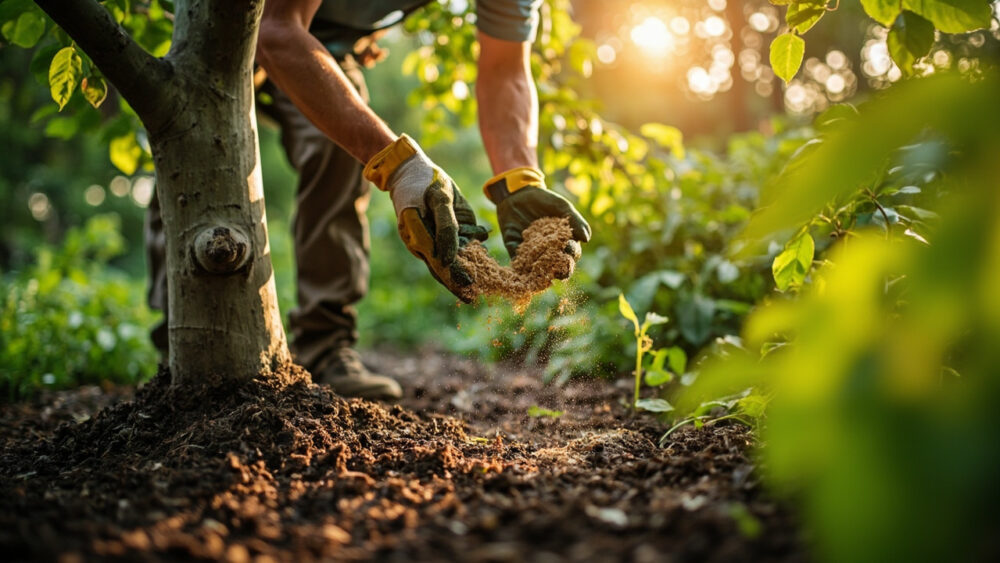
A slow-release granular scattered in a ring around the base, starting about 12 inches out from the trunk and extending to the edge of the canopy, works better than a fast-release liquid because it feeds gradually instead of shocking the roots.
Water it in well after application so nutrients move down to the root zone instead of sitting on top and burning surface roots.
Skip fertilizer entirely the year you plant a new crape myrtle, since fresh roots can’t use it well and it’s easy to burn them.
Getting the amount right is only half the job, the other half is reading what the soil and roots actually need before you feed anything.
Soil, Watering, and Why That Matters More Than Fertilizer
Crape myrtles want well-drained soil and don’t tolerate wet feet, especially in clay that holds water. Check the soil about 3 to 4 inches down before watering a new tree, if it’s still moist, wait.
Established trees are genuinely drought-tolerant once their roots are settled, usually after the first full year, and need supplemental water only during extended dry spells.
Poor bloom is far more often a watering, sunlight, or pruning problem than a nutrient one, which is the honest answer to the follow-up question most readers are already forming: no, more fertilizer usually isn’t the fix. If your tree gets less than six hours of direct sun a day, that alone will suppress flowering no matter what you feed it.
Full sun and steady but not excessive moisture do more for bloom than any bag of fertilizer ever will.
Pruning: The Task That Actually Controls Bloom
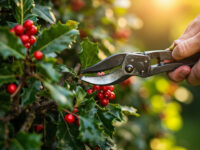
Since crape myrtles bloom on new wood, pruning timing shapes flowering far more than feeding does. Prune in late winter, while the tree is still dormant and before new growth starts, removing crossing branches, suckers at the base, and any twiggy growth thinner than a pencil.
Skip the practice known as “crape murder,” the hard, blunt topping cut back to stubs every year. It weakens the trunk over time and produces floppy, top-heavy growth that can’t support the blooms.
Light, selective pruning for shape almost always beats a hard whack-back.
Get pruning right and the tree tells you almost immediately, which brings us to the problems that actually do need intervention.
Common Problems and What They Really Mean
Powdery mildew shows up as a white, dusty coating on leaves and buds, usually in humid weather with poor air circulation. Thin out crowded branches to improve airflow, and if it’s severe, a labeled fungicide for powdery mildew can help, applied exactly per the product label.
Aphids and the sticky black sooty mold that follows them are common on new growth, especially on overfed trees pushing soft leaves. This is another reason to go easy on nitrogen, since lush growth attracts aphids.
- Yellowing leaves with green veins: usually an iron or micronutrient issue in alkaline soil, not a nitrogen shortage.
- Bark that looks like it’s peeling in strips: completely normal, crape myrtles shed old bark as part of their look.
- No blooms at all despite a healthy-looking tree: check sun exposure and pruning timing before touching fertilizer.
Most of these fixes have nothing to do with the fertilizer schedule, which is the point.
How to Tell It’s Actually Thriving
A thriving crape myrtle pushes new growth with a slight reddish tint in spring, holds dark green leaves through summer, and produces full, dense flower clusters at the branch tips from early to late summer depending on climate. Bark should be smooth and mottled in tan, gray, and cinnamon tones once mature.
If you’re seeing strong bloom but modest leaf growth, that’s a good sign, not a deficiency. It means the tree is putting energy into flowers instead of foliage, which is exactly the balance you want.
A tree that looks a little lean and blooms hard is doing better than one that looks lush and blooms light.
Crape Myrtle at a Glance
- When to fertilize: once in early spring at first bud break, established trees rarely need more than that.
- What to use: a balanced fertilizer like 10-10-10 or a bloom-formulated feed, applied at the label rate.
- Where to apply: in a ring starting 12 inches from the trunk out to the canopy edge, watered in well.
- New trees: skip fertilizer the planting year, then feed lightly in spring and late spring for the first two seasons only.
- Watering: check soil 3 to 4 inches down, water only when dry, established trees are drought tolerant.
- Sunlight: at least six hours of direct sun daily for strong bloom, nonnegotiable.
- Pruning: light shaping cuts in late winter dormancy, never hard topping.
If you remember one thing, remember that a hungry-looking crape myrtle is usually a sun or pruning problem, not a fertilizer problem.
Feed it lightly once a year, water it when it’s actually dry, and let it bloom under a little stress.