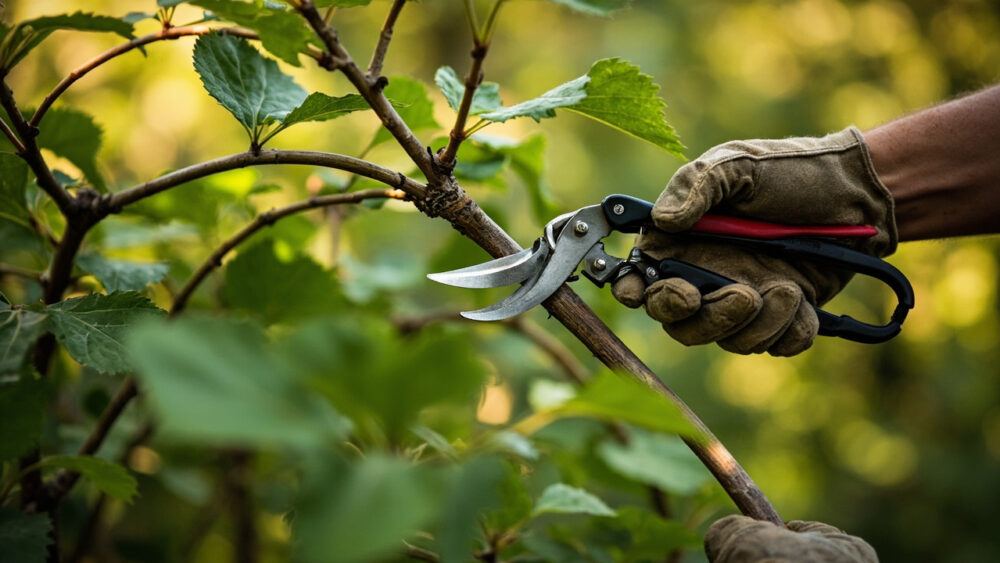
The right time to prune weigela is right after it finishes blooming, typically late spring to early summer depending on your zone, while the flowers are fading but before the shrub sets next year’s buds. Miss that window and prune in fall or winter instead, and you will cut off the flowers before you ever see them. That single timing mistake is why so many weigela owners swear their shrub “stopped blooming” when really they just pruned at the wrong moment.
There is a second mistake almost as common: shearing the whole shrub into a tidy ball like a boxwood. Weigela does not read that as a haircut, it reads it as an amputation of its flowering wood, and you will pay for it next spring.
Below I will walk through exactly where to cut, how much is too much, and the honest answer to the question that comes right after “when”: what an overgrown, leggy, ten-year-old weigela actually needs to look good again. Save-able specifics, including the full Weigela at a Glance card, are waiting at the bottom.
When to Prune, and the Seasons to Leave It Alone
Prune within two to three weeks of the last flowers dropping. For most gardeners that lands sometime between late May and early July, sooner in warm zones, later in cool ones. Weigela blooms on wood it grew the previous year, so it starts forming next year’s flower buds almost immediately after this year’s show ends.
That is why fall and winter pruning is the classic misstep. The shrub looks dormant and safe to cut, but you are removing the very stems that were about to carry flowers. Late winter structural work is fine on a shrub that has gotten completely out of control, but understand you are trading that year’s bloom for a reset.
Never prune in late summer or early fall either, since fresh cuts push tender new growth that will not harden off before frost.
Timing is the whole game here, and once you have it right, the actual cutting is simple.
Tools and the One Prep Step Most People Skip
You need bypass pruners for anything pencil-thick or smaller, loppers for branches up to about an inch, and a pruning saw for old, thick basal canes on a neglected shrub. Clean, sharp blades matter more than the brand in your hand, a dull cut crushes stems instead of slicing them.
Wipe the blades with rubbing alcohol before you start, especially if you pruned a diseased plant recently. It takes thirty seconds and it is the step almost everyone skips, right up until they spread a fungal problem from one shrub to the next.
Before the first cut, actually walk around the whole shrub. Look at its shape from two or three angles, not just the side facing the sidewalk.
Once you can see the whole plant in your head, you are ready to start cutting with intent instead of guessing.
How to Prune Weigela, Step by Step
Step 1: Remove the dead, damaged, and crossing wood first
Cut any dead, broken, or diseased stems back to healthy tissue or all the way to the ground. Remove branches that cross and rub against each other, keeping the one with the better angle. This alone often opens up a shrub dramatically before you make a single shaping cut.
Step 2: Take out the oldest canes at the base
Find the thickest, grayest, least productive stems, usually a quarter or more of the total canes on a mature shrub, and cut them off at ground level. This is renewal pruning, and it is what keeps a weigela blooming well instead of turning into a tangle of unproductive wood.
Step 3: Shorten the rest for shape, not for size
On remaining stems, cut back to just above a healthy bud or side shoot, following the plant’s natural arching form. Never cut straight across the top of the whole shrub, that is what creates the sheared look that ruins next year’s flower display.
Step 4: Know your limit
In a normal maintenance year, remove no more than about a third of the shrub’s total growth. On a severely overgrown weigela you can take it back harder, even to 12 to 18 inches from the ground, but expect a bloom-free recovery year in exchange.
That tradeoff, a missed bloom season for a completely rebuilt shrub, is the honest answer nobody tells you upfront.
What to Expect in the Weeks After Pruning
Fresh green growth typically shows up within two to three weeks of a normal maintenance prune, faster in warm, humid weather. A light feeding with a balanced, slow-release fertilizer after pruning helps push that recovery, though weigela does not demand rich soil to perform.
If you did a hard rejuvenation cut on an old, woody shrub, do not panic when it looks like a stump for a while. New shoots usually emerge from the base and lower stems within four to six weeks, and by the following spring you will have a fuller, better-shaped plant with more flowering wood than it had in years.
Water during dry stretches after a hard prune, since a shrub recovering from major cuts is more vulnerable to drought stress than one left untouched.
Next season’s flower count depends entirely on what you do, or avoid doing, this coming winter.
The Mistakes That Actually Cost You Flowers
If you assumed heavier pruning always means a better shrub, that guess is what leaves people staring at a leafy, flowerless weigela every June. More cuts are not automatically better cuts.
The real flower-killers are specific and avoidable:
- Pruning in fall or winter: removes the buds already set for next spring.
- Shearing into a ball or hedge shape: destroys the arching form and cuts off flowering tips.
- Never removing old wood: leaves the shrub increasingly twiggy and light-blooming year after year.
- Pruning too late in summer: forces soft new growth that winterkills and wastes the plant’s energy.
- Ignoring suckers and crossing branches: crowds the center, reduces airflow, and invites fungal issues in humid climates.
Fix the timing and the technique together, and weigela becomes one of the lowest-drama flowering shrubs you can own.
Weigela at a Glance
- When to prune: right after flowering ends, typically late spring to early summer, within two to three weeks of the last blooms fading.
- When to avoid pruning: fall, winter, and late summer, all of which cost you next year’s flowers or push unhardened new growth.
- How much to remove: about a third of total growth in a normal year, more only on a severe rejuvenation cut.
- Where to cut: just above a healthy bud, following the natural arching shape, never straight across the top.
- Renewal step: remove the oldest, thickest canes at ground level each year to keep flowering wood young.
- Recovery time: new growth in two to three weeks after light pruning, four to six weeks from the base after a hard rejuvenation cut.
- Hard rejuvenation tradeoff: cutting back to 12 to 18 inches rebuilds an overgrown shrub but sacrifices that year’s blooms.
Get the timing right and the rest is just common sense with sharp pruners.
A weigela pruned on schedule rewards you with more flowers, not fewer, every single spring after.