The short answer: prune viburnum right after it finishes flowering in spring, cutting no more than a third of the shrub’s total growth, and always cut individual stems back to a bud or side branch rather than shearing the whole thing into a ball. Do that and you get a fuller shrub next year with just as many flowers and berries. Get the timing wrong, and you can wipe out an entire season of bloom without laying a finger on a diseased branch.
Most people who ask how to prune viburnum are standing in front of an overgrown shrub with loppers in hand, and the shrub is about to pay for it. There’s one timing mistake that costs more flowers than any pest or disease ever will, and it happens every single autumn.
There’s also a sign on the plant right now that tells you exactly how hard you can cut, and most people read it backwards. Stick around for the exact cut locations, because “a third of the growth” means nothing until you know where those cuts actually go, and the save-able Viburnum at a Glance card is waiting at the bottom once you’ve got the whole picture.
When to Prune Viburnum, and the Season That Ruins Everything
Prune spring-blooming viburnums (which is most of them) within two to three weeks after the flowers fade, typically late spring into early summer depending on your zone. Prune summer or fall bloomers, along with any viburnum you’re growing mainly for berries, in late winter while the plant is still dormant, before new growth pushes.
Here’s the mistake that ruins most people’s viburnum: pruning in fall or late summer because the shrub looks shaggy and it’s finally cool enough to work outside. Viburnums set next year’s flower buds on the current season’s wood starting in mid to late summer. Cut in September and you’re removing the buds that were going to bloom in April.
The shrub survives fine. It just skips the flower show, and on fruiting types you also lose the berries the birds were counting on.
If you inherited an overgrown viburnum and don’t know which type you have, watch the bloom time this year before you touch it.
Tools and the One Prep Step Everyone Skips
You need a clean pair of bypass hand pruners for anything under about half an inch thick, loppers for branches up to an inch and a half, and a pruning saw for anything thicker at the base of an old, neglected shrub. Skip anvil-style pruners; they crush stems instead of slicing them.
The prep step that actually matters: wipe your blades with rubbing alcohol before you start, especially if you pruned anything else that day. Viburnums can pick up fungal issues like leaf spot or twig blight through fresh cuts, and dirty blades are a common way that spreads shrub to shrub.
Step back and look at the whole plant before the first cut. Decide which oldest, thickest stems are coming out before you’re standing in the middle of the shrub making it up as you go.
Once your tools are clean and your plan is set, the actual cuts are simpler than people expect.
Step 1: Take Out the Dead, Damaged, and Crossing Wood First
Cut dead or diseased stems all the way to the ground or back to healthy wood, wherever that living tissue starts. You’ll know it’s dead if you scratch the bark with a thumbnail and see brown underneath instead of green.
Remove any branches that cross and rub against each other, since that constant friction opens wounds that invite disease.
Step 2: Renewal-Prune the Oldest Canes at Ground Level
Pick out the thickest, oldest third of the stems, usually the ones that are gray, woody, and bare at the base, and cut them off at or near ground level. This is called renewal pruning, and it’s how you keep an overgrown viburnum full instead of letting it turn into a bare-legged tree with a green mophead on top.
Never take more than about a third of the total stems in one year. Spread a hard rejuvenation over two to three seasons instead.
Step 3: Shape the Rest With Cuts to a Bud or Branch Junction
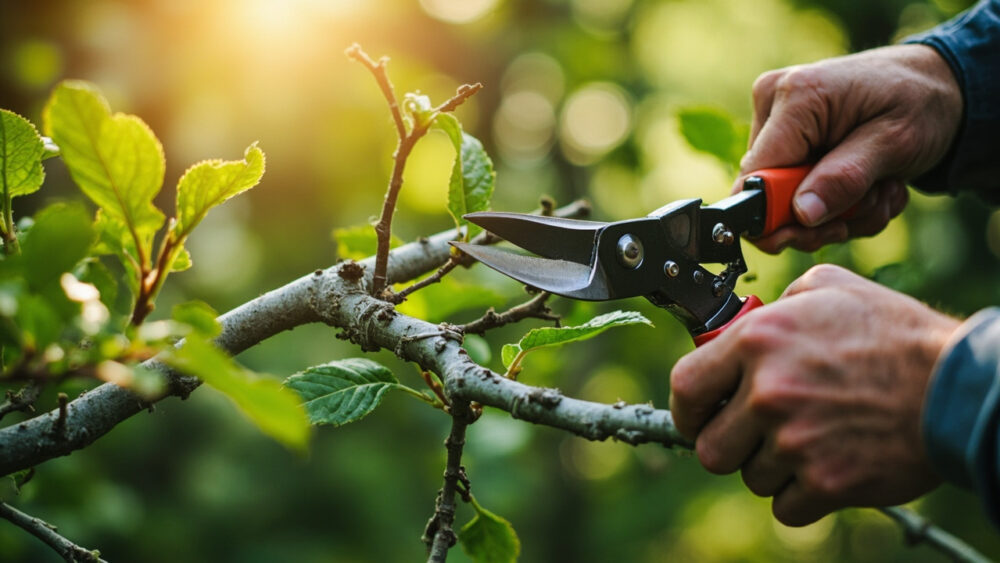
For everything you’re shortening rather than removing, cut back to just above an outward-facing bud or where it meets another branch, at a slight angle, about a quarter inch above the bud. Never leave a long bare stub; it just dies back and becomes an entry point for rot.
This is where shearing goes wrong. A hedge trimmer cuts blindly through the outer canopy, leaving a wall of leafless stubs and stripping off the very buds that were about to flower.
Viburnum can take a hard pruning, but it can’t take a mindless one, and that difference shows up next spring either way.
What the Shrub Looks Like Afterward, and the Sign Everyone Misreads
Right after a proper spring prune, the shrub looks a little sparse and asymmetrical for a few weeks. That’s normal. New shoots typically push within two to four weeks, filling in gaps from the inside out rather than just at the tips.
Here’s the sign people misread: a burst of vigorous, almost vertical new growth right where you cut is often assumed to mean the plant is stressed or that you cut it wrong. It’s actually the opposite. That upright growth, sometimes called a water sprout, is the shrub responding exactly the way renewal pruning is supposed to make it respond, and it’s what fills in the base over the next year or two.
What you should watch for instead is growth that stays stunted, yellowed, or absent for more than six to eight weeks in the growing season. That points to root stress, poor drainage, or transplant shock, not the pruning itself.
Give it one full season before judging whether you cut too much.
The Mistakes That Cost You Flowers, Fruit, or the Whole Shrub
Beyond fall pruning, a few other habits quietly wreck a viburnum’s performance.
- Pruning every single year on a schedule: viburnums don’t need annual pruning. Light shaping every year or two, plus renewal cuts every few years, is enough for most plants.
- Removing only one variety when you need two: some viburnums, particularly certain berry-producing types, need a second, genetically different plant of the same species nearby to set fruit. No amount of correct pruning fixes a fruitless shrub if there’s no pollinator partner within range.
- Cutting everything to the same height: uniform shearing creates a dense outer shell with a hollow, leggy interior. Stagger your cuts at varying lengths so light reaches the middle of the shrub.
- Over-pruning a stressed plant: a viburnum that’s drought-stressed, recently transplanted, or fighting a pest problem should get a light touch only. Heavy pruning on top of existing stress can set it back for a full year.
Every one of these is fixable next season except the pollinator problem, which is worth checking before you blame your pruning cuts at all.
Viburnum at a Glance
- When to prune spring bloomers: right after flowers fade, usually within two to three weeks of the last bloom.
- When to prune summer or fall bloomers and fruiting types: late winter, while the shrub is dormant and before new growth starts.
- How much to remove: no more than about a third of the total stems in a single year.
- Where to cut: back to a bud, side branch, or ground level, never leaving a bare stub.
- Never prune: in late summer or fall, since that’s when next year’s flower buds are already forming on this year’s wood.
- Expect afterward: a sparse look for two to four weeks, then upright new shoots filling in from the base.
- Biggest mistake to avoid: shearing the outer canopy with a hedge trimmer instead of making individual cuts to a bud or branch.
Prune at the right time and viburnum forgives almost everything else. Get the season wrong, and no cutting technique in the world brings those flowers back until next year.