Juniper bonsai care comes down to four things the tree cannot survive without: full sun outdoors, soil that dries slightly between waterings, an outdoor life year-round in most climates, and a hard no to keeping it indoors as a houseplant. Get those four right and juniper is one of the more forgiving bonsai species. Get them wrong and you get a slow, browning decline that looks like it might recover for months before it is actually dead.
Most junipers die from one specific mistake, and it is almost never underwatering. It is bringing the tree inside and treating it like a ficus or a fern.
Before you get to the bottom of this guide, where there is a save-able Juniper Bonsai at a Glance card with the numbers on watering, light, and repotting, you need to know the sign of trouble everyone reads backward, the honest truth about how often to water, and why a juniper can look green and healthy for weeks after it has already died.
Light, Placement, and Temperature
Juniper bonsai needs full sun, at least four to six hours of direct light a day, and it needs to live outdoors. This is not a plant that tolerates a windowsill as a permanent home. Indoor air is too dim and too dry, and a windowsill juniper typically declines over two to four months even with careful watering.
Junipers are cold-hardy, most varieties comfortable down to about 0 to 10 F depending on species, and they actually need a winter dormancy period to stay healthy long-term. In climates with hard freezes, protect the pot (not the tree) once temperatures drop much below 20 F, by moving it into an unheated garage, shed, or burying the pot in mulch outdoors. The foliage can handle the cold. The roots, exposed in a shallow bonsai pot, are what’s vulnerable.
You can bring a juniper indoors for a day or two for a show or a photo, but longer than that and you’re borrowing against its health.
Watering: How Much, How Often, and How to Tell
Water when the top half-inch to inch of soil feels dry to the touch, not on a fixed schedule. In summer heat that might mean daily, in cool spring or fall it might be every three to four days. There is no universal number of days that works for every pot, every climate, and every mix.
If you assumed the browning tips mean the tree is thirsty and needs more water, that guess kills more junipers than drought ever does. Overwatering, not underwatering, is the number one killer of potted juniper. A bonsai pot has almost no soil volume and poor drainage tolerance, so soil that stays soggy suffocates the roots within days.
The real test is the finger test, not the calendar: push a finger into the soil near the trunk, and water thoroughly only when it comes out dry. When you do water, soak until it runs from the drainage holes, then let it drain completely.
Here’s the part that catches almost everyone off guard.
The Sign Everyone Reads Backward
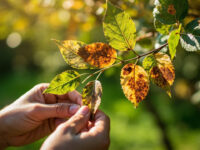
A juniper that is dying does not go brown all at once. It goes brown from the inside out, starting with the innermost, oldest foliage closest to the trunk, while the outer tips stay green for weeks or even a couple of months.
By the time the outer foliage browns and goes crispy, the tree has usually been dead at the roots for a while already. This is the honest, uncomfortable answer to the question most people ask right after “how do I water it”: no, a juniper that looks fine on the outside is not necessarily fine.
The test that actually tells you is the scratch test. Take a fingernail and lightly scratch a small area of bark on a branch. Green or white just under the surface means living tissue. Brown, dry, or crumbly means that branch, or the whole tree, is dead.
Do this check monthly if a juniper ever looks off, because it’s the only way to catch trouble before it’s unrecoverable.
Soil, Potting Mix, and Feeding
Juniper bonsai needs a fast-draining mineral mix, not standard potting soil. A common ratio is roughly equal parts akadama, pumice, and lava rock, or a similar commercial bonsai mix. Regular potting soil holds too much water and will rot the roots in a shallow pot within a season.
Feed during the active growing period, spring through late summer, with a balanced or slightly nitrogen-lower bonsai fertilizer every two to four weeks. Stop feeding in fall as growth slows, since pushing new growth right before dormancy leaves it vulnerable to cold damage.
Skip fertilizer entirely for four to six weeks after repotting, since disturbed roots can’t take up nutrients well and fertilizer salts can burn them.
Get the soil and feeding right and the routine maintenance below becomes far more forgiving.
Pruning, Repotting, and Cleaning: The Routine
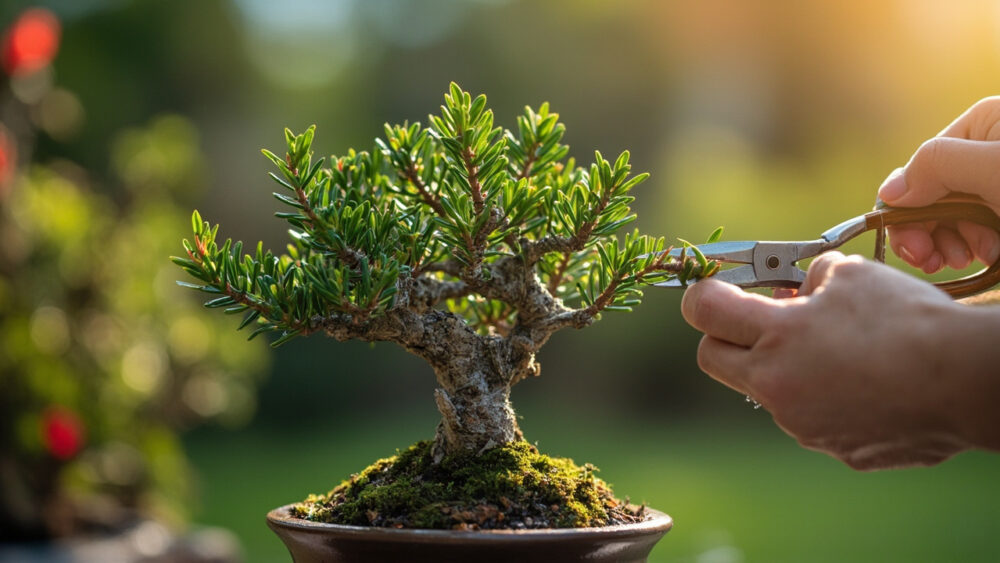
Juniper responds to two different kinds of cutting, and mixing them up is the classic beginner mistake. Pinching new growth tips with your fingers throughout the growing season keeps the silhouette tight and encourages dense foliage pads. Hard structural pruning with shears, removing whole branches, is done in late winter or early spring before new growth starts.
Never shear juniper foliage flat with scissors across the whole pad. Cut with shears into hollow, browning growth and it can die back with no way to recover, because junipers don’t reliably push new buds from bare, leafless wood the way many deciduous trees do.
Repot every two to three years for younger trees, every four to five years once mature, timed for early spring just as roots start waking up but before strong top growth begins. Trim no more than about a third of the root mass at a time.
Wipe dust off foliage occasionally and clear dead debris from the soil surface, mostly to spot pests early rather than for the tree’s sake.
Timing those three tasks right prevents most of the problems in the next section before they start.
Problems Most Likely to Strike
Spider mites are the most common pest, showing up as fine webbing and stippled, dusty-looking foliage, especially in hot, dry summer conditions. Rinse the foliage forcefully with a hose regularly to knock down populations, and if it doesn’t resolve, use a horticultural oil or insecticidal soap labeled for spider mites, following the product label exactly.
Root rot from overwatering is the most common cause of death outright, and by the time you see it in the foliage it’s usually advanced underground. The fix is prevention: correct mix, correct drainage, finger test before every watering.
Juniper scale and twig blight can also appear, usually on stressed trees kept in too much shade or too little airflow. Improve placement first; treat with a labeled fungicide or horticultural oil only if the cultural fix doesn’t resolve it.
Juniper is mildly toxic if ingested by pets or people, and can cause gastrointestinal upset. If a pet chews on the foliage and shows vomiting, drooling, or lethargy, contact a veterinarian rather than waiting it out.
Most of these problems trace back to one root cause, and it’s usually not disease at all.
How to Tell It’s Genuinely Thriving
A healthy juniper bonsai pushes visible new growth at the branch tips in spring, bright green and slightly softer than the older scale-like foliage. The foliage overall should be dense, uniformly green, and springy rather than dry or dusty.
Scratch a branch tip and you should see moist green tissue immediately, every time, with no hesitation about which parts are alive. The trunk and branches should feel firm, not soft or spongy at the base.
New growth is the real green light, not just green color, since old foliage can hold its color for a while even on a tree that’s stopped growing.
If your tree checks every one of those boxes, everything below is just the numbers to keep it there.
Juniper Bonsai at a Glance
- Light: full sun outdoors, four to six hours direct minimum, never as an indoor houseplant long-term.
- Watering: check by finger, water thoroughly when the top half-inch to inch of soil is dry, water more in summer heat and less in cool weather.
- Temperature: hardy outdoors to roughly 0 to 10 F depending on variety, protect the pot itself once temperatures drop much below 20 F.
- Soil: fast-draining mineral bonsai mix, akadama, pumice, and lava rock in roughly equal parts, never standard potting soil.
- Feeding: balanced bonsai fertilizer every two to four weeks, spring through late summer, none for four to six weeks after repotting.
- Pruning: pinch new growth tips by hand all season, save hard structural cuts with shears for late winter or early spring.
- Repotting: every two to three years young, four to five years mature, early spring, trim no more than a third of the roots.
If you remember one thing, remember the scratch test, since it tells the truth faster than the foliage does.
Keep it outside, keep the soil on the dry side of moist, and a juniper bonsai will outlast most of the houseplants you’ve ever owned.