The real answer to how to prune sago palm is: hardly ever, and only the fronds that are fully brown, yellow, or broken. Sago palms do not need shaping, thinning, or an annual haircut the way a shrub does. Cut into the green too often and you starve the plant, sometimes permanently.
Most people prune a sago wrong in the same way, and it is not the timing, it is the amount. There is also a specific frond stage everyone misreads as “ready to cut” when it is actually the one stage you should leave alone completely. And if you are wondering whether this plant even counts as a tree you should be pruning like one, that question has an honest answer too, and it changes how you should think about every cut you make.
Stick with this to the end and save the Sago Palm at a Glance card at the bottom. It has the cutting rule, the timing window, and the tool-cleaning step condensed so you can pull it up on your phone while you are standing at the plant.
When to Prune, and When to Walk Away
Prune sago palm any time a frond is fully brown, yellow, or physically broken. There is no strict seasonal window for removing dead growth, but if you are doing a fuller cleanup of multiple older fronds, do it in late winter to early spring, just before new growth pushes, rather than in fall.
Cutting heavily in fall going into cold weather leaves open wounds through winter with no active growth to seal them.
Do not prune a sago that is stressed from drought, recent transplant, or cold damage until it has clearly stabilized and is pushing new green growth. A stressed plant needs every frond it has, even the ugly ones, to keep photosynthesizing.
Next comes the part almost everyone gets backwards: how much is actually safe to remove.
The Frond Stage Everyone Misreads
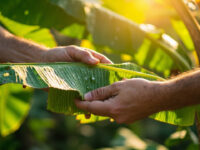
Here is the guess that costs people a season: they see fronds drooping and yellowing at the tips, curling slightly, going a dull olive color, and assume those are on their way out, so they cut them.
Yellowing but still mostly green fronds are still working. A sago palm has no real trunk-stored reserve the way some palms do; it relies heavily on its current crown of fronds to feed the plant and, over years, to build the trunk. Removing green or partly green fronds is functionally the same as removing leaves from a tomato plant before they’ve finished their job.
The only fronds that are truly done are ones that have gone uniformly brown or straw colored, or that are physically snapped, or that show soft, mushy rot at the base. Everything else stays, even if it looks rough.
Once you know which fronds are actually finished, the next question is what you’re cutting them with.
Tools and the One Prep Step That Matters
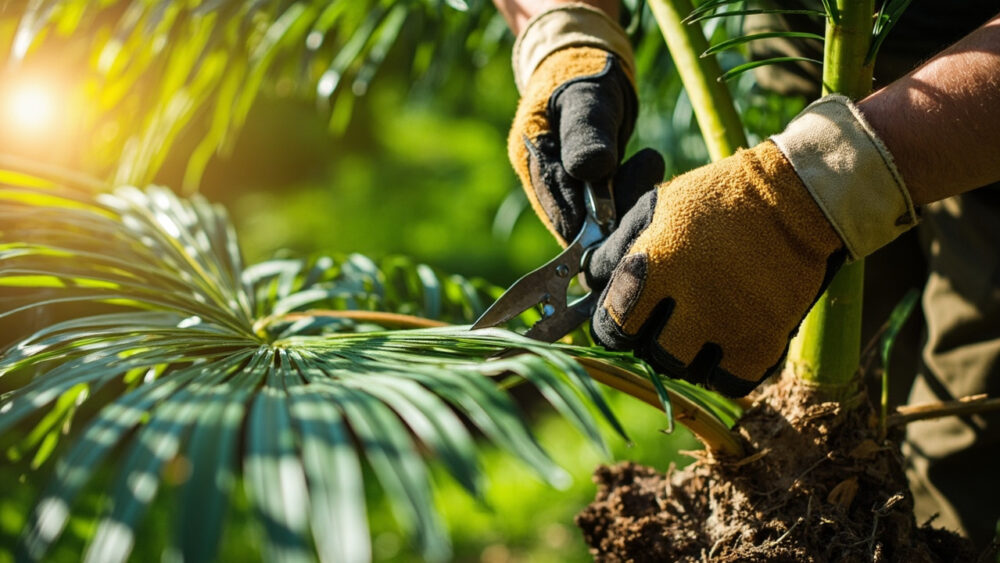
You need clean, sharp bypass loppers or a pruning saw for anything thicker than a finger, and hand pruners for smaller fronds. Sago fronds are stiff and have sharp spines along the stem, so gloves and long sleeves are not optional, the spines will puncture skin easily.
The one prep step that actually matters is sanitizing your blades before and between cuts, especially if you are working on more than one sago or have any disease concerns nearby. Wipe blades with rubbing alcohol or a diluted bleach solution.
Sago palms are vulnerable to a few serious fungal and bacterial issues, and dirty tools are one of the easiest ways to spread them from plant to plant. This single habit prevents more damage than any cutting technique will.
With tools ready and clean, here is exactly where to cut.
Step by Step: Making the Cut
- Identify the frond base: find where the frond stem meets the trunk, not partway up the stem.
- Cut close to the trunk: leave a short stub of an inch or two rather than cutting flush against the trunk itself, which can wound living trunk tissue.
- Cut one frond at a time: work around the crown methodically instead of grabbing handfuls, so you don’t accidentally remove green fronds by mistake.
- Remove only brown, yellow-through-and-through, or broken fronds: skip anything still showing real green.
- Leave the emerging center fronds alone: the newest, upright fronds in the crown’s center are never pruned, even if they look stunted or curled at first.
That is the entire technique, there is nothing more complicated hiding behind it.
What Happens After You Cut
The cut stub will brown and dry out over the following weeks, which is normal and not a sign of spreading dieback. The trunk does not “heal” the wound the way a tree seals a cut branch; it simply dries and the tissue stays as a permanent scar ring around the trunk.
This is actually useful: those old frond-base rings are how you can read a sago’s age and history once it has some trunk height.
New growth on a sago comes in flushes, not continuously. Expect one main flush of new fronds per year on an established plant, sometimes two on a happy, mature specimen in a warm climate.
If you pruned correctly and only removed dead material, you should see no setback at all in the next flush.
If the next flush comes in smaller or sparser than usual, that is your signal something else was cut too hard, which leads straight into the mistakes worth naming plainly.
The Mistakes That Actually Cost You
The single most damaging mistake is over-pruning, stripping the crown down to a tight tuft of a few fronds for a “cleaner” look. Sago palms have been pushed into decline and even killed by repeated hard pruning, because each round of cutting removes working tissue the plant needed to build its next flush.
A close second is cutting fronds flush against the trunk instead of leaving a short stub, which exposes more live trunk tissue to rot and pests than necessary.
Skipping tool sanitation is the mistake you won’t see the cost of immediately. Fungal and bacterial pathogens introduced through fresh cuts can take weeks to show symptoms, by which point it’s a much bigger problem than a wipe of alcohol would have prevented.
And one honest note on the sago’s reproductive parts: the large cone-like structure some sagos produce (female plants especially) is not a “flower” you’re pruning for bloom, sago palms are gymnosperms and don’t flower or fruit in the true sense. If you’re hoping pruning will encourage more of that structure, it won’t, timing and plant sex control that, not cutting.
One more thing worth saying plainly: sago palms are considered highly toxic to pets and to people if ingested, with the seeds being the most dangerous part. If a pet chews on fronds, seeds, or any part of the plant, contact a veterinarian promptly rather than waiting to see what happens.
Get the timing, the amount, and the sanitation right, and pruning a sago becomes one of the lowest-effort tasks in the yard.
Sago Palm at a Glance
- When to prune: anytime for dead, broken, or fully brown fronds, do bigger cleanups in late winter to early spring before new growth starts.
- What to remove: only fronds that are uniformly brown or yellow, snapped, or rotting at the base.
- What to leave: any frond with real green, and always leave the newest center fronds untouched.
- Where to cut: at the frond base, leaving a short one to two inch stub rather than cutting flush to the trunk.
- Tools needed: bypass loppers or a pruning saw, hand pruners for small fronds, gloves and long sleeves for the spines.
- Tool care: sanitize blades with rubbing alcohol or diluted bleach before and between cuts.
- Toxicity note: all parts, especially seeds, are highly toxic to pets and people if eaten, contact a veterinarian right away for any suspected ingestion.
If you only remember one rule, remember this: green stays, brown goes.
Everything else about pruning a sago is just details around that line.