Growing sago palm comes down to three things: sharp drainage, patience, and resisting the urge to baby it with water and fertilizer. Plant it in spring once nights stay reliably above 50°F, give it full sun to light shade and soil that drains fast, and then mostly leave it alone. It is one of the slowest-growing landscape plants you will ever own, and that slowness trips up almost everyone who tries it.
Here is the part nobody tells you before you buy one: sago palm is not a palm at all, it is a cycad, a plant group that predates dinosaurs, and that ancient biology is exactly why it grows on its own timeline no matter what you do to speed it up. There is also a mistake that kills more sagos than cold weather ever does, and it happens in the first thirty minutes after planting. And if you have pets or small kids around this plant, there is an honest answer about toxicity you need before it goes in the ground, not after.
Stick with me through the sections below and you will get all of it: the real planting window, the soil fix that prevents rot, the feeding schedule that actually matches how this plant grows, and the seed and pup harvest most people never realize is possible. The save-able Sago Palm at a Glance card is waiting at the very bottom once you have the full picture.
When to Plant a Sago Palm
Plant in spring, once your last frost has passed and soil temperature has warmed into the 60s Fahrenheit, usually a few weeks after your last frost date. Sago palm is hardy outdoors roughly in USDA zones 8 through 11, and in zone 8 it needs a sheltered microclimate and winter protection for young plants. Anywhere colder, grow it in a container you can move indoors.
Fall planting works too in zones 9 and up, giving roots a full season to settle before summer heat. What you want to avoid is planting into cold, wet spring soil, which is exactly the condition that invites the rot problem covered later in this guide.
Timing is the easy part of this plant.
Choosing the Spot and Prepping the Soil
Sago palm wants full sun to partial shade and, above almost everything else, soil that drains fast. In hot inland climates, afternoon shade prevents leaf scorch. Near the coast or in milder regions, full sun is fine and even preferred.
Drainage is where most first attempts go wrong. Sago roots sit in a fleshy, water-storing structure that rots quickly in soggy ground, so heavy clay or any spot where water puddles after rain is the wrong spot. Work coarse sand or fine gravel into native soil, or plant on a slight mound, if drainage is anything less than fast.
A raised bed or large container with drainage holes is often the easiest path in clay-heavy yards. Check the spot after a hard rain: if water is still standing an hour later, keep looking or amend heavily.
Get the ground right before the plant ever goes in, because you cannot fix drainage after the fact without digging it back up.
Planting Step by Step
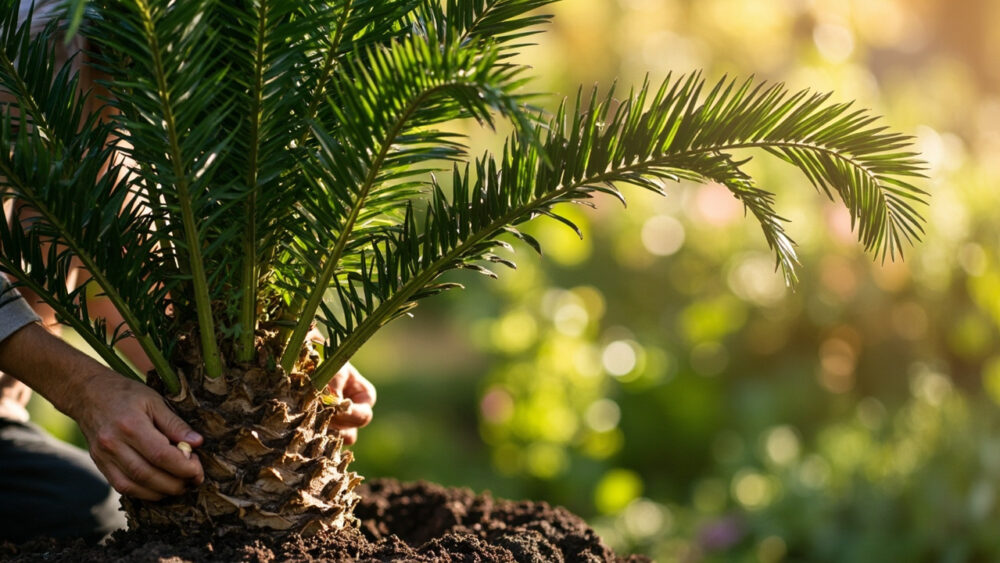
- Depth: set the sago so the top of the root ball, where trunk meets roots, sits level with or very slightly above the surrounding soil, never buried deeper.
- Spacing: allow 4 to 6 feet from structures and other large plants; mature sagos spread 3 to 5 feet wide with trunks that eventually reach 10 feet or more over many decades.
- Hole size: dig two to three times as wide as the root ball but no deeper, so the plant does not sink as loose soil settles.
- Backfill: use amended, fast-draining soil, firm it gently around the roots, and avoid stomping it down hard.
- Water in: give one thorough soaking right after planting to settle the soil, then hold off on watering again until the top few inches dry out.
That first watering is also where the season-ruining mistake happens.
The Mistake That Ruins Most Sagos
If you assumed a fresh-planted sago needs frequent watering to establish, that instinct is exactly backward and it is the single biggest killer of new plantings. Sago palm roots rot fast in soil that stays wet, and a newly planted specimen with disturbed roots is far more vulnerable than an established one.
Water deeply but infrequently. Let the top 2 to 3 inches of soil go completely dry before watering again, checking by feel with a finger, not by the calendar. In the ground, an established sago often needs supplemental water only every 10 to 14 days in summer, less in cooler weather.
Containers dry out faster and need closer attention, but the same rule holds: dry first, then water.
Get the water right and feeding becomes the next thing to dial in.
Watering and Feeding Through the Season
Once established, sago palm is genuinely drought-tolerant and would rather be underwatered than overwatered. Water during active growth in warmer months, then cut back significantly in fall and winter when growth slows or stops.
Feed lightly with a palm-formulated fertilizer, or a balanced granular fertilizer applied at a light rate, two to three times during the growing season, roughly spring through late summer. Sagos are sensitive to overfeeding, and heavy nitrogen can push distorted, floppy new growth. Manganese deficiency is common in this plant and shows up as yellow, frizzled new fronds, a sign to switch to a palm or cycad fertilizer that includes micronutrients.
Skip fertilizer entirely in the plant’s first few months in the ground while roots are still settling in.
Feeding mistakes rarely kill a sago outright, but pests and rot absolutely can.
Problems That Actually Strike Sago Palms
Asian cycad scale is the biggest pest threat almost everywhere sago palm is grown. It shows up as white, waxy specks coating the undersides of fronds, and left unchecked it can defoliate and kill a mature plant within a couple of seasons. Catch it early, isolate affected plants if possible, and treat with a horticultural oil or systemic product labeled for scale, following the product label exactly on timing and reapplication.
Root and trunk rot from wet soil is the other major threat, showing up as a soft, mushy trunk base or fronds that yellow and collapse all at once rather than gradually. There is no reliable fix once rot reaches the trunk core; prevention through drainage is the only real defense.
Manganese-deficient frizzle top, mentioned above, is common but manageable with the right fertilizer, not a sign the plant is dying.
One honest safety note: every part of the sago palm, especially the seeds, is toxic to pets and to people if ingested, and it is a common cause of serious poisoning in dogs. Watch for vomiting, lethargy, or signs of liver trouble, and get to a veterinarian immediately if you suspect a pet has chewed on any part of this plant. Keep it out of reach of dogs and young children rather than relying on training or supervision alone.
With pests, rot, and toxicity understood, the last question is what this plant actually produces.
When and How to “Harvest” a Sago Palm
Sago palm does not produce a harvest in the vegetable-garden sense, but mature plants, typically 15 to 20 years old or more, produce either a pollen cone on male plants or a seed head on female plants, usually in spring. This is the payoff most owners never see because the plant simply takes that long to reach reproductive size.
Seeds from a female plant’s seed head can be collected in fall once they turn orange-red and separate easily from the fibrous head, then cleaned of pulp and dried before storage or sowing. Note that seeds are the most toxic part of the plant, so handle them with gloves and keep them away from pets and kids during collection.
The far easier route is harvesting pups, the small offset bulbs that form at the base of the trunk on established plants. Once a pup reaches 4 to 6 inches or larger, sever it cleanly from the parent with a sharp, sterile knife, let the cut surface callus and dry for several days to a couple of weeks in a shaded spot, then pot it in fast-draining soil to root.
Pups are genetically identical to the parent and root far more reliably than seed, which makes them the practical way most gardeners actually propagate this plant.
Sago Palm at a Glance
- When to plant: spring after soil warms into the 60s Fahrenheit, or fall in zones 9 through 11.
- Hardiness: reliably outdoors in zones 8 through 11, container-grown and brought indoors everywhere colder.
- Light and soil: full sun to partial shade, fast-draining soil, never a spot where water stands after rain.
- Spacing and depth: 4 to 6 feet from structures, root ball level with or slightly above the surrounding soil.
- Watering: deep and infrequent, letting the top 2 to 3 inches dry out completely between waterings.
- Feeding: light palm or cycad fertilizer two to three times during the growing season, skipped for the first few months after planting.
- Watch for: white waxy scale on frond undersides, frizzled yellow new growth from manganese deficiency, and a soft trunk base signaling rot.
Get the drainage and the watering discipline right, and this plant will genuinely outlive you.
Everything else about growing it well is just patience wearing a gardener’s gloves.