Mimosa trees (Albizia julibrissin) are some of the fastest-growing shade trees you can plant, typically adding 3 to 5 feet a year for the first several years and reaching their full 20 to 40 foot height in as little as 10 to 15 years. Some young trees in ideal conditions push even more growth in a single season. That speed is exactly why people love them and exactly why some people regret them.
The honest range depends on where you live, how the tree started its life, and a couple of maintenance habits most people get backwards. There is also a specific mistake that stalls growth for the first year or two and makes an otherwise fast tree look like a dud.
Stick with this to the end and you will find a save-able quick reference card that lays out the whole timeline plus the conditions that change it, so you can size up your own tree in about thirty seconds.
The Realistic Growth Timeline
Year one is almost always the slow year, even for a tree that will eventually be a rocket. A newly planted mimosa is busy building roots, and top growth of only 1 to 2 feet is normal while that happens.
From year two through roughly year eight, growth accelerates hard. This is the 3 to 5 foot per year window, and in warm, humid climates with full sun, some trees do closer to 6 feet in a single strong season.
Growth slows again once the tree approaches its mature height, usually somewhere around 20 to 40 feet depending on the specimen. Mimosas are not long-lived trees by tree standards, often thriving for 10 to 20 years before decline sets in.
That timeline is the average, but averages are not what is happening in your specific yard.
What Actually Controls the Speed
Climate does more work here than anything else. Mimosas are rated for USDA zones 6 through 9, and they grow noticeably faster in the warmer, humid end of that range than they do at the cooler edge of their hardiness.
Sun exposure is the next biggest lever. A mimosa in full sun, 6 or more hours a day, will outgrow a shaded sibling by a wide margin. Part shade does not kill the tree, it just puts it firmly in the slow lane.
Soil and water matter less than you would think. Mimosas are famously tolerant of poor, dry, compacted soil, which is part of why they show up along highways and in neglected lots. Extra fertilizer will not speed things up much and can actually push weak, floppy growth that breaks in storms.
Starting size counts too. A tree grown from seed starts slower than a nursery sapling that already has an established root system.
Once you know which of these apply to your yard, you can predict your own tree’s pace instead of guessing.
Stage by Stage: What to Actually Expect
Year one is root establishment. Expect modest height gain, some leaf drop if the tree was transplanted, and patience required.
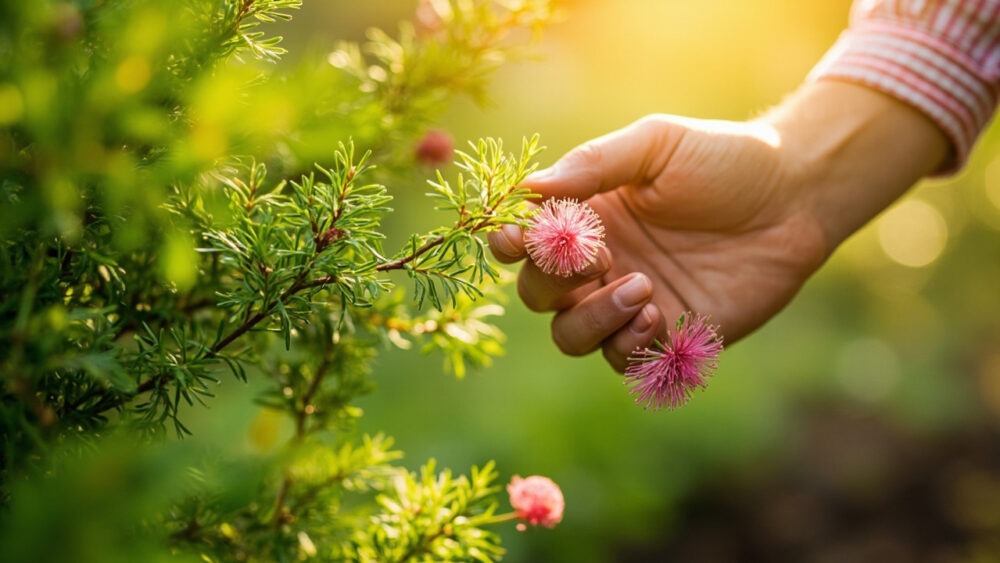
Years two through five bring the visible transformation. This is when a spindly sapling turns into a real tree with a spreading, umbrella-like canopy and the first flush of feathery pink flowers, usually starting by year three to five.
Years five through ten are peak vigor. Height and canopy width both expand fast, and this is typically when the tree starts dropping serious volumes of seed pods, which is worth knowing before you plant one near a patio or pool.
Year ten onward growth tapers as the tree nears mature size, and this is also when you start watching for the health issues that shorten a mimosa’s life.
If your tree has not hit its growth spurt yet, the next section tells you what actually moves the needle.
How to Legitimately Speed It Up
If you assumed more fertilizer means more growth, that guess backfires on mimosas specifically. Heavy nitrogen produces soft, fast wood that snaps in wind and does nothing for long-term size.
What actually helps is getting the sun exposure right from day one, planting in a spot with 6 or more hours of direct light and no competing tree canopy overhead. Consistent water for the first two seasons while roots establish makes a bigger difference than anything you add to the soil after that.
Skip heavy pruning in the early years. Mimosas branch naturally into that wide canopy shape, and cutting them back hard just forces the tree to spend a season regrowing wood instead of gaining height.
Mulching a 2 to 3 foot ring around the base, kept away from the trunk itself, holds moisture and cuts down on root competition from grass, which is often the quiet reason a young tree stalls.
None of this turns a slow-zone tree into a fast one, but it gets you the best speed your climate allows.
When Slow Growth Is Actually a Problem
A mimosa adding less than a foot a year after its second season, with pale or sparse leaves, is telling you something is wrong, not just being patient.
The usual culprits are too much shade, waterlogged soil that is rotting fine roots, or a planting site that stays compacted and dry at the same time. Mimosa wilt, a fungal disease, is the other real possibility, and it shows up as sudden wilting and dieback on one side of the canopy rather than slow, even stunting.
Uneven, one-sided dieback is worth taking seriously since mimosa wilt has no reliable cure and often means removal. Slow but even growth across the whole tree is far more likely to just be a sun or soil issue you can fix.
Either way, here is the full picture in one place.
Mimosa Trees: Quick Reference
- Average growth rate: 3 to 5 feet per year during the main growth phase, faster in warm humid climates, slower in cooler zones or part shade.
- Time to full height: roughly 10 to 15 years to reach mature size of 20 to 40 feet.
- First year: slow, often just 1 to 2 feet, while the tree builds its root system.
- Peak growth window: years two through eight, when canopy and height expand fastest.
- First flowers: typically by year three to five, feathery pink blooms in early to mid summer.
- Ideal conditions: full sun, 6 or more hours a day, USDA zones 6 through 9, tolerant of poor or dry soil.
- Red flag versus normal slowness: even, mild slowdown usually means sun or soil, sudden one-sided wilting suggests mimosa wilt disease and warrants a closer look.
Now you know exactly what your mimosa should be doing at its age, and what to fix if it is not.
Give it sun, water it through the first two seasons, and let it do what it does best.