The fastest way to grow a dogwood tree that actually thrives is to plant it in fall or early spring, in partial shade with well-drained but moisture-retentive soil, and then leave the trunk alone. That last part trips up more people than any weather problem ever will. Learning how to grow dogwood trees successfully is really about restraint: right spot, right depth, minimal fuss after that.
Here is what nobody tells you before you plant one. The mistake that kills most young dogwoods happens weeks after planting, not on planting day. There is a bark symptom almost everyone misreads as disease when it is actually mechanical damage they caused themselves. And there is an honest answer to the question you are already forming, which is whether that flowering dogwood will actually flower this year or make you wait.
Stick with me through the planting steps and the problem section, because at the bottom you will find a save-able Dogwood Trees at a Glance card with the numbers worth keeping on your phone.
When to Plant a Dogwood Tree
Fall planting, roughly six weeks before your ground freezes solid, gives dogwood roots the longest head start with the least stress. Cooler air and warm soil let roots establish without the tree also fighting summer heat.
Early spring works too, ideally as soon as the soil is workable and no longer waterlogged, two to four weeks before your last frost date. Avoid planting in the heat of summer if you can help it. A dogwood planted in July spends its first months just surviving, not rooting in.
Dogwoods are reliably hardy in USDA zones 5 through 9 depending on species, with flowering dogwood (Cornus florida) and kousa dogwood (Cornus kousa) both comfortable in that range. Check your specific cultivar’s zone rating before you buy, since a few ornamental selections run narrower.
Timing gets the tree in the ground, but the spot you pick decides whether it lives past year three.
Choosing the Spot and Prepping the Soil
Dogwoods want partial shade, ideally morning sun with afternoon shade, especially in hotter zones. Full sun all day stresses them, and deep shade means thin flowering and weak growth. Think of the dappled light under a taller tree’s edge, not open lawn.
Soil matters more than sun exposure for this genus. Dogwoods need soil that drains well but never fully dries out, slightly acidic, in the 5.5 to 6.5 pH range. Heavy clay that stays soggy is the number one site killer, full stop, worse than any pest you will meet later.
Work compost into the top 8 to 12 inches of a planting area roughly 3 feet across before you dig the hole. If your yard is mostly clay, consider planting on a slight mound rather than fighting the drainage.
Good soil prep buys you nothing if the hole itself is wrong, so let’s get the depth right.
Planting Step by Step
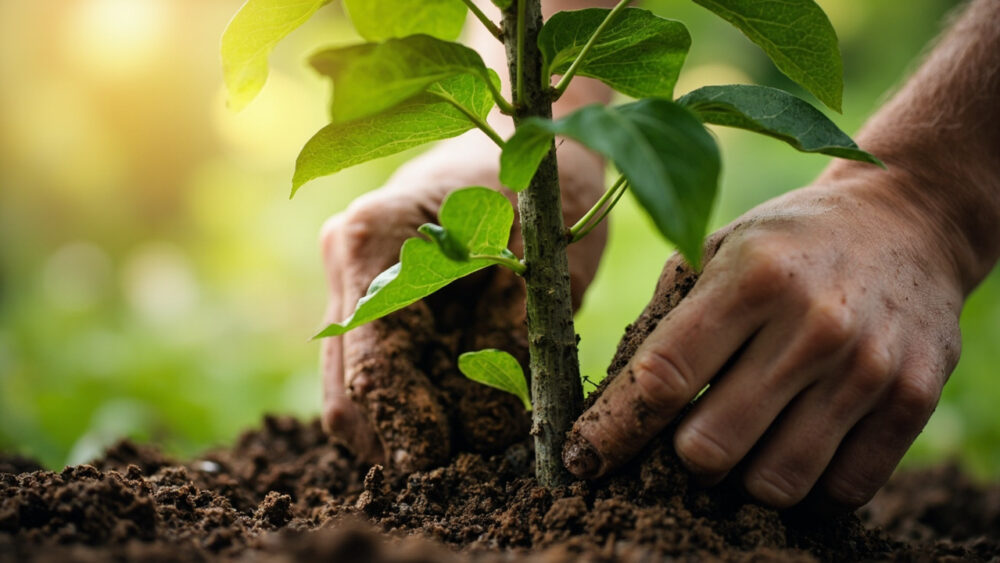
- Dig the hole two to three times as wide as the root ball, but no deeper than the root ball itself. The trunk flare, where the trunk widens at the base, should sit at or very slightly above the surrounding soil line.
- Loosen the root ball gently, teasing out any circling roots. Container-grown dogwoods especially can arrive root-bound and need this or they will strangle themselves in a few years.
- Set the tree in the hole and check the flare depth again before backfilling. This is the step people rush, and a tree planted even 2 inches too deep will struggle for its whole life.
- Backfill with the native soil mixed with your compost, tamping gently to remove air pockets but not compacting hard.
- Space multiple trees 15 to 25 feet apart depending on the mature spread of your species or cultivar, more for kousa dogwood, which can spread wider than flowering dogwood.
- Mulch 2 to 3 inches deep in a ring extending to the edge of the planting hole, but keep mulch pulled back several inches from the trunk itself.
- Water immediately and deeply right after planting, enough to settle the soil around the roots.
That mulch ring is not decoration, it is doing a job you will thank it for all summer.
Watering and Feeding Through the Season
New dogwoods need consistent moisture for their first two full growing seasons, roughly 1 inch of water a week between rain and irrigation, more during hot dry stretches. Check the soil 3 to 4 inches down with your finger. If it’s dry there, water.
If you assumed a struggling dogwood needs more water, that guess is wrong about half the time. Wilted, scorched-looking leaves on a dogwood often mean the roots are sitting in water that never drains, not that they’re thirsty. Squeeze a handful of soil from near the root zone. If it balls up wet and heavy, the problem is drainage, not drought.
Feed lightly, if at all, in the first year. A slow-release, balanced tree fertilizer applied once in early spring of year two onward is plenty. Skip high-nitrogen lawn fertilizer runoff near the root zone, it pushes soft growth that invites disease.
Once the watering routine is dialed in, the next threat isn’t thirst, it’s what’s touching the bark.
The Problems That Actually Take Dogwoods Down
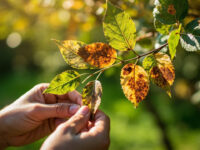
Anthracnose and powdery mildew are the two diseases most likely to show up, especially in humid climates or on trees stressed by drought. Anthracnose shows as tan or purple-bordered leaf spots and can eventually cause dieback in branches. Powdery mildew looks like a gray-white dusting on leaves and mostly affects appearance rather than survival.
Improve air circulation by not overcrowding trees, rake up and dispose of fallen infected leaves each autumn, and avoid overhead watering that keeps foliage wet. If a fungicide is genuinely warranted for a bad anthracnose year, follow the product label exactly for timing and application.
Here’s the bark symptom almost everyone misreads. Cracked or sunken bark low on the trunk usually isn’t borer damage or disease, it’s from a string trimmer or lawnmower nicking the bark during routine mowing. That wound then becomes the actual entry point for borers and disease later. Keep a mulch ring wide enough that no equipment ever gets near that trunk.
Dogwood borers do exist and target stressed or already-wounded trees specifically, which is exactly why that mower damage matters so much.
Once the tree is healthy and protected, the reward you actually planted it for starts to show up on schedule.
When Dogwoods Bloom and What to Expect Year by Year
Dogwoods don’t get “harvested” the way a fruit tree does, but they do have a bloom and maturity timeline worth knowing honestly upfront. A newly planted dogwood, especially a younger, smaller specimen, may not flower at all in its first one to two years while it’s focused on root establishment.
Here’s the honest answer to the question you’re already asking. Full, showy bloom typically doesn’t arrive until year three to five, and a dogwood doesn’t reach its true mature flowering display until around year ten. If you bought a larger, more established tree from a nursery, you’ll see flowers sooner, sometimes the first spring.
Flowering dogwood blooms in early to mid spring before full leaf-out, with the true small flowers clustered in the center of the showy white or pink bracts. Kousa dogwood blooms later, typically late spring into early summer, after the leaves are already out.
Some species also produce small red or pink fruits in late summer through fall that birds strip quickly. These berries are considered mildly toxic to pets and humans in quantity, so if a child or pet eats a handful and shows stomach upset, call a doctor or veterinarian rather than waiting it out.
Patience is most of what a dogwood asks of you, and the payoff card below is what to keep close while you wait.
Dogwood Trees at a Glance
- When to plant: fall, about six weeks before ground freeze, or early spring two to four weeks before your last frost, avoiding summer heat.
- Zones: generally hardy in USDA 5 through 9, varies by species and cultivar so check the tag.
- Sun and soil: partial shade with morning sun, well-drained but moisture-retentive slightly acidic soil, pH 5.5 to 6.5.
- Planting depth: trunk flare at or just above soil level, hole no deeper than the root ball, two to three times as wide.
- Spacing: 15 to 25 feet apart depending on mature spread.
- Water needs: about 1 inch a week for the first two seasons, checked by feel 3 to 4 inches down, more during heat and drought.
- First real bloom: often delayed until year three to five for young trees, full mature display around year ten.
Get the depth and the drainage right on planting day and most of a dogwood’s problems never get the chance to start.
Everything else, the mulch ring, the light watering hand, the patience for bloom, is just protecting that first good decision.