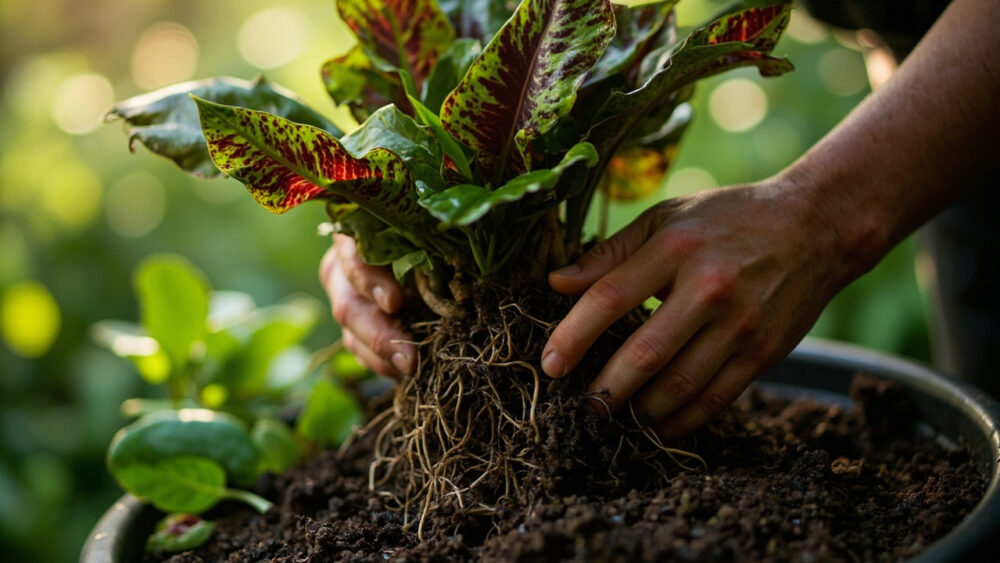
The only propagation method that reliably works on calathea is division at the root ball, done when you repot an established plant. Calathea does not root from leaf cuttings or stem cuttings the way a pothos or philodendron does, no matter how long you leave a leaf sitting in water. Split the rhizome clump into sections that each have roots and at least two or three leaves attached, pot them separately, and keep them warm and humid while they recover.
That is the honest answer, and it disappoints a lot of people who came here hoping for a jar-of-water trick. Here is what else is coming: the one mistake that kills most division attempts within a week, the sign everyone misreads as failure when it is actually normal, and the real reason your calathea might sulk for a month before doing anything at all.
Stick around for the full walkthrough, and save the Calathea at a Glance card at the bottom for the next time you’re standing over the pot wondering if you just killed it.
Why Division Works and Cuttings Don’t
Calathea grows from a clump of rhizomes, thick underground stems that each send up their own leaves and roots. Every leaf you see is connected back to one of these rhizomes, not to a stem that can root independently.
Cut a leaf off and you have a leaf with no growing point attached. It might survive in water for a surprisingly long time, but it will never grow roots or a new plant. That is the mistake that burns the most time: weeks spent watching a leaf in a jar, waiting for something that was never going to happen.
Division works because you are not asking the plant to grow a new root system from scratch. You are just separating root systems it already has.
The next question is when your plant is actually ready to be split apart.
When Your Calathea Is Ready to Divide
Look for a plant that has outgrown its pot and clearly has more than one crown, meaning more than one cluster of leaves emerging from separate points in the soil. If you gently pull it out and the root mass is thick, tangled, and shows two or more distinct rhizome clumps, you have material to work with.
A single small plant with one crown is not a candidate yet. Wait until it bulks up. Trying to divide too early just gives you two weak halves instead of one healthy plant.
Spring through mid summer is the best window, while the plant is actively growing and can recover fast. Dividing in the dead of winter, when light and growth are already low, is asking for trouble on top of trouble.
Once you’ve confirmed you have enough to work with, the actual split is where most of the risk lives.
Step 1: Unpot and Rinse the Roots
Ease the whole plant out of its pot and gently knock or rinse off enough soil to see the rhizomes clearly. Calathea roots are fine and somewhat brittle, so work slowly rather than yanking clumps apart.
Step 2: Find the Natural Divisions
Look for places where the clump separates naturally into sections, each with its own roots and leaves. Use your fingers first; only reach for a clean knife or shears if a section is truly fused and won’t pull apart by hand.
Step 3: Pot Each Section Immediately
Use a well-draining, moisture-retentive mix, something like a standard peat or coir-based potting soil with added perlite. Pot each division at the same depth it was growing before, water it in, and don’t let the roots sit exposed to air any longer than necessary.
Every minute those roots spend drying out in the open is a minute working against you.
What to Expect, Week by Week
The first week after division is almost always ugly, and this is the part everyone misreads. Drooping, curling leaves in the first few days do not necessarily mean the division failed. It means the root system took a hit and the plant is conserving water while it reroots.
By week two, established sections usually stabilize. Leaves stop drooping further, even if they haven’t perked back up completely.
Weeks three to four are when you should see actual new growth, a new rolled leaf emerging from the center of a crown. That is the real sign of success, not how perky the old leaves look.
If a division still looks lifeless with zero new growth by week six, that section likely didn’t have enough root mass to survive on its own.
Now the question becomes how long each new plant stays in that small pot before it needs more room.
Potting Up as the New Plant Establishes
Keep new divisions in a snug pot for the first couple of months. A pot that’s too roomy holds excess moisture around roots that aren’t yet strong enough to use it, and that is a fast route to rot.
Once you see two or three new leaves unfurl, the division has enough root activity to justify sizing up. Move it into a pot roughly 1 to 2 inches larger in diameter, not a dramatic jump.
Calathea also wants consistent warmth, generally 65 to 80°F, and humidity well above what most living rooms offer on their own. Low humidity during this recovery window is the second most common cause of failed divisions, right behind rushing the split itself.
Getting the pot size right matters, but it won’t save a division that failed for a completely different reason.
Why Most Attempts Fail
Almost every failed calathea propagation traces back to one of these:
- Trying to root a leaf cutting: it has no growing point and will never form roots, no matter how long it sits in water.
- Dividing a section with no roots attached: leaves without roots are dead weight, not a starter plant.
- Letting roots dry out during the split: even 20 to 30 minutes of air exposure on a hot, dry day stresses fine roots badly.
- Low humidity after potting: calathea roots recover slowly in dry air, and crispy leaf edges usually follow within a week or two.
- Overwatering a stressed division “to help it”: a struggling root system can’t take up water it isn’t ready for, and soggy soil just invites rot on top of the stress it’s already under.
Avoid these five and you’ve already beaten the odds most people are up against.
If you’ve done all of this and a division still isn’t pulling through, the honest prognosis is that section simply didn’t have enough of its own root system to make it on its own, and that’s a normal outcome of division, not a sign you did something wrong with your care afterward.
Calathea at a Glance
- Best method: division of the rhizome clump at repotting time, not leaf or stem cuttings.
- When to divide: spring through mid summer, while the plant is actively growing.
- What you need: a mature plant with two or more distinct crowns and healthy root mass.
- Rooting medium: a well-draining, moisture-retentive mix, such as peat or coir with added perlite.
- Ideal conditions: 65 to 80°F, high humidity, bright indirect light, roots never left exposed to dry air.
- Timeline: stress and drooping in week one, stabilization by week two, new growth by weeks three to four.
- Pot up when: two to three new leaves appear, sizing up just 1 to 2 inches in diameter at a time.
Division is slower and less forgiving than propagating a pothos, but it’s the only method that actually produces a new calathea plant.
Get the split right and give it warmth and humidity afterward, and the new growth will tell you it worked before you even have to ask.