No, majesty palm is not toxic to cats. It is listed as non-toxic by the ASPCA, and that holds true whether your cat nibbles a frond tip or makes a full meal of a fallen leaf. That said, is majesty palm toxic to cats in every situation, or are there catches most pet owners never hear about? There are a few, and they matter more than the toxicity label does.
A “non-toxic” plant can still make a cat sick, cause a vet visit, or get chewed down to stubs if you do not understand what is actually going on. I want to walk you through what changes depending on how much your cat eats, the signs that mean something else entirely, and what to do in the moment if you find leaves missing.
Stick around for the save-able quick reference card at the bottom. It has the core answer plus every qualifier worth remembering, so you never have to re-search this at midnight.
The Plain Answer: Majesty Palm and Cats
Majesty palm (Ravenala rivularis, sometimes sold as Dypsis lutescens’ cousin, though true majesty palm is a distinct species) is on the ASPCA’s non-toxic list for cats, dogs, and horses. There is no known toxic compound in the leaves, stems, or roots that causes poisoning in the way lilies, sago palms, or philodendrons do.
This is genuinely one of the safer common houseplants to keep around a curious cat. It is part of why it shows up so often in pet-owner plant recommendations.
But “non-toxic” is not the same as “harmless in any quantity,” and that distinction is where the real story starts.
What Actually Happens if Your Cat Eats It
Cats are not built to digest plant fiber, and majesty palm fronds are fibrous and a little sharp-edged. Mechanical irritation is the real risk here, not chemical toxicity.
A cat that eats a leaf or two typically gets nothing worse than mild stomach upset. A cat that eats a large amount, especially older, tougher fronds, can end up with vomiting, drooling, or a hairball-like gag response as the fiber irritates the throat and gut on the way through.
None of this is poisoning. It is closer to what happens if your cat ate a chunk of coarse lettuce or grass, just less pleasant to clean up.
If you assumed “non-toxic” meant “no reaction possible,” that guess is common and it is what sends confused owners back to search their symptoms.
The Signs That Actually Mean Something
Watch for vomiting, drooling, pawing at the mouth, or a brief loss of appetite after your cat has been chewing on fronds. These are usually mild and short-lived, resolving within a few hours.
Repeated vomiting, lethargy, refusal to eat for more than a day, or visible blood in vomit or stool are not typical for majesty palm and point to something else, possibly an unrelated illness, a different plant entirely, or a piece of fiber that got lodged rather than passed.
Cats are also notorious for eating more than one thing off a windowsill, so do not assume the palm is the culprit just because it is the plant with chew marks.
Knowing what is normal makes the next step, deciding whether to call the vet, much easier.
What to Do if Your Cat Ate Majesty Palm
For a bite or two with no symptoms, you can usually just watch your cat for the next several hours. Keep water available and note if anything seems off.
If your cat is vomiting repeatedly, seems lethargic, stops eating, or you are not fully sure what they ate, call your veterinarian or an animal poison control line. This applies even for a plant labeled non-toxic, because cats can react individually and because you may be wrong about what they actually got into.
Bring or describe the plant if you can, note roughly how much was missing, and mention any other plants nearby that could also be involved. Do not give home remedies, induce vomiting, or attempt any treatment yourself. Let the professionals guide you based on your cat’s actual condition.
Even with a safe plant, a quick call costs you five minutes and buys real peace of mind.
Why Cats Chew It Anyway, and How to Stop the Damage
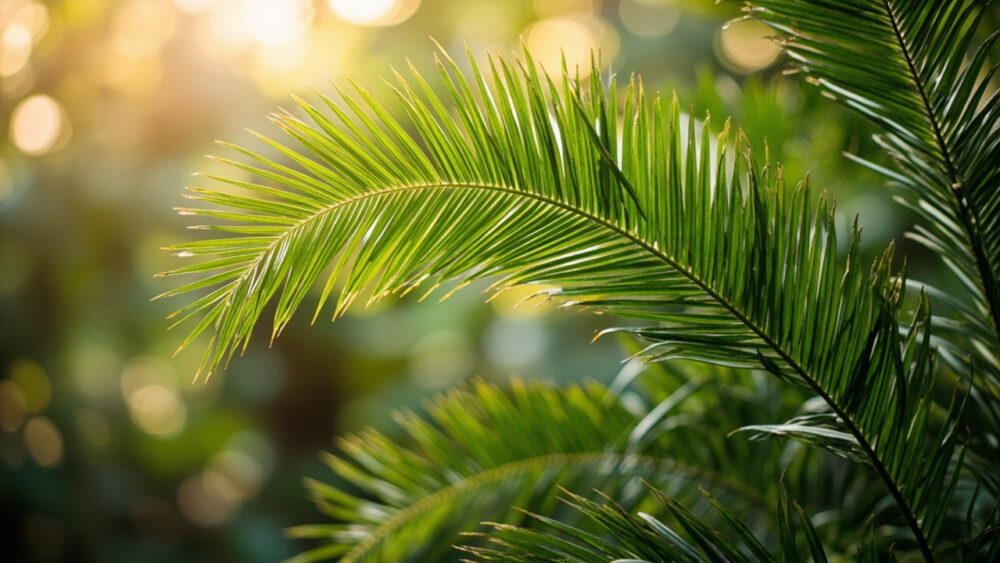
Majesty palm’s long, arching fronds move in the air and mimic grass, which is exactly the texture and motion that triggers a cat’s chewing instinct. This is a behavior problem, not a toxicity problem.
Give your cat a legitimate outlet, like a small pot of cat grass or wheatgrass, kept near but not next to the palm. Most cats redirect fast once they have their own patch to destroy.
Elevating the palm on a stand, out of easy jumping range, also cuts down on grazing simply because it is more effort to reach.
If the chewing continues despite redirection, it is worth knowing what else you could grow instead.
Safer Look-Alikes if You Want Options
If you like the palm look but want more built-in peace of mind, a few other cat-friendly options give similar texture without the fiber-chewing habit majesty palm invites.
- Parlor palm (Chamaedorea elegans): non-toxic, smaller growth habit, easier to keep out of reach.
- Ponytail palm (Beaucarnea recurvata): technically not a true palm, non-toxic, tougher leaves cats tend to leave alone.
- Areca palm (Dypsis lutescens): non-toxic, similar arching fronds, widely available.
Any of these lets you keep the palm aesthetic without trading up in risk.
Whatever you choose, the reference card below covers the core facts worth keeping handy.
Majesty Palm: Quick Reference
- Core answer: majesty palm is non-toxic to cats according to the ASPCA, with no known poisonous compound in leaves, stems, or roots.
- Real risk: mechanical irritation from fibrous leaves, not chemical toxicity, especially with large amounts eaten.
- Mild signs: occasional vomiting, drooling, or brief appetite loss after chewing fronds, usually resolving within hours.
- Signs needing a vet call: repeated vomiting, lethargy, blood in vomit or stool, or refusal to eat for more than a day.
- What to do: monitor for mild cases, call your veterinarian or poison control for anything severe or uncertain, never give home treatment.
- Why cats chew it: the moving, grass-like fronds trigger natural chewing instinct, not nutritional need or toxin-seeking.
- Safer look-alikes: parlor palm, ponytail palm, and areca palm all offer similar look with the same non-toxic status.
Majesty palm is one of the good ones to keep around a cat. Just watch the fiber, not the toxin, and you will both be fine.