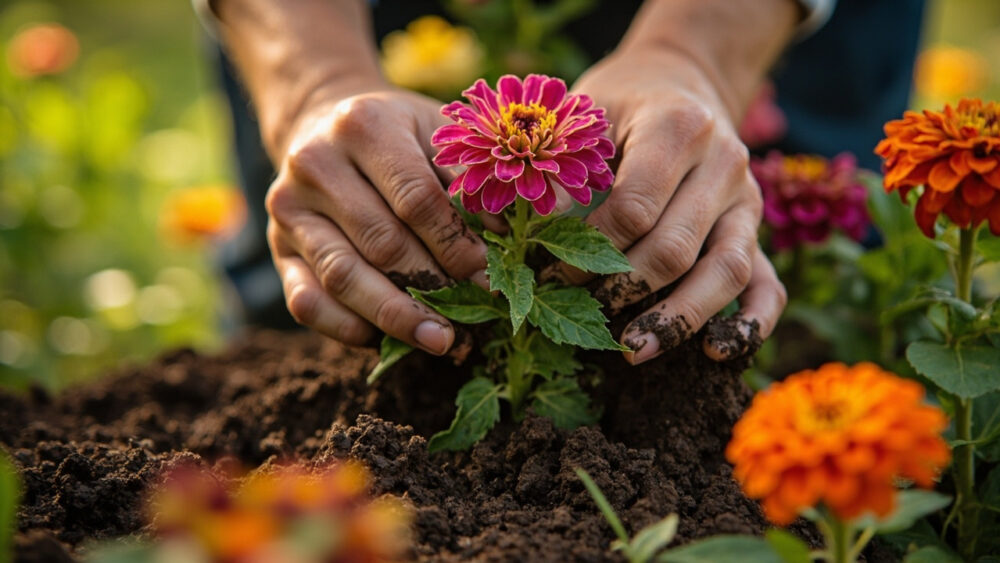
Here is how to grow zinnias without overthinking it: sow seeds directly in the ground after your last frost once soil hits at least 60°F, give each plant 12 to 18 inches of breathing room, keep them in full sun, and start cutting blooms once they’ve stopped wobbling on the stem. That’s the whole system. Zinnias are about as forgiving as flowers get, which is exactly why so many people still manage to shortchange them.
The mistake that ruins most first attempts isn’t watering or fertilizer. It’s spacing them like they’re going to stay small forever, then watching powdery mildew move through a crowded bed by August. There’s also a sign on the stem that tells you exactly when a bloom is cut-ready, and almost nobody checks for it before reaching for the shears.
Stick around for the “Zinnias at a Glance” card at the bottom, it’s the save-to-your-phone version of everything below, but the reasoning in between is what keeps your bed blooming into fall instead of fizzling out by mid-July.
When to Plant Zinnias
Zinnias are warm-season flowers through and through. Wait until your last frost has passed and soil temperature has reached at least 60°F, ideally 65 to 70°F, before putting seed in the ground. Cold, wet soil is the fastest way to rot seed before it even sprouts.
In most of the country that lands sometime from mid-spring into early summer. Gardeners in zones 3 to 6 are often planting in late May or June; zones 7 to 10 can start earlier and may even get a second round of seed in for fall color.
You can start seed indoors 4 to 6 weeks before your frost date to get a head start, but zinnias resent root disturbance less than most seedlings, so don’t feel pressure to. Direct sowing is genuinely the easier, more reliable path here.
Timing solved, next comes the part that decides whether your zinnias thrive or just survive.
Choosing the Spot and Prepping the Soil
Zinnias want full sun, at least 6 hours a day, more if you can give it. Shade doesn’t kill them outright, it just gets you leggy stems, fewer flowers, and a much higher chance of disease.
They aren’t picky about soil richness, but they do want it to drain. Heavy clay that stays soggy after rain is their real enemy, not poor fertility. Work in an inch or two of compost before planting and you’ve covered most of what they need.
Good airflow matters more than gardeners expect. If your planting spot is tucked against a fence or wall with no breeze, mildew problems show up faster later in the season.
Soil ready, sun secured, now let’s get seed or transplants actually in the ground correctly.
Planting Zinnias Step by Step
1. Sow at the right depth
Plant seeds about 1/4 to 1/2 inch deep. Buried much deeper than that, they struggle to push through.
2. Space wider than feels right
Give each seed or seedling 12 to 18 inches in all directions, more for tall varieties that can hit 3 to 4 feet. This is the step almost everyone skimps on, and it’s the one that causes the most trouble down the line.
3. Water in gently
Moisten the soil at planting, then keep it consistently damp, not soaked, until germination, which usually takes 5 to 10 days at proper soil temperature.
4. Thin without guilt
Once seedlings have their first true leaves, thin to your final spacing. It feels wasteful. It isn’t. Crowded zinnias are the single biggest setup for the disease problems covered further down.
Seeds are in, spacing is right, now the season becomes about water, food, and timing your first pinch.
Watering and Feeding Through the Season
Once established, zinnias are genuinely drought-tolerant. Water deeply but infrequently, about 1 inch per week including rainfall, letting the top inch of soil dry out between waterings. Constantly damp soil invites the fungal issues zinnias are otherwise good at shrugging off.
Water at the base, not overhead, and do it in the morning if you can. Wet foliage sitting overnight is asking for mildew.
Feeding is optional but helpful. A balanced fertilizer applied once at planting and again at first bud is plenty. Too much nitrogen buys you lush leaves and fewer flowers, which is the opposite of what you’re growing these for.
Pinch young plants back when they’re 6 to 8 inches tall, cutting the top set of leaves off. It feels counterproductive. It’s actually how you get a bushy plant loaded with blooms instead of one tall stem with a single flower.
Water and feeding under control, but there’s still the season’s real threat to plan around.
The Problems Most Likely to Strike
If you assumed the biggest zinnia threat is some kind of insect, that’s a reasonable guess, and it’s the wrong one. Powdery mildew is the problem that ends more zinnia seasons than anything with legs, showing up as a white, dusty coating on leaves, usually in late summer when nights cool and humidity climbs.
Good spacing and morning watering at the base are your best prevention. Once mildew shows up, remove the worst-affected leaves and improve airflow around the plant. If it’s spreading fast, a fungicide labeled for powdery mildew on ornamentals can help, applied exactly per the product label.
Japanese beetles and aphids will visit too, chewing ragged holes or clustering on new growth. Neither is usually serious enough to threaten the whole plant, and handpicking beetles or a strong water spray for aphids handles light infestations without reaching for anything stronger.
Disease pressure managed, now for the payoff you actually clicked for: knowing exactly when to cut.
When and How to Harvest Zinnias
Zinnias start blooming 8 to 10 weeks after sowing, and once they start, they don’t stop until frost, especially if you keep cutting. Cutting is not optional maintenance here, it’s the fuel that keeps new buds forming.
Here’s the sign almost everyone misses: grab the stem below the bloom and give it a gentle wiggle. If it flops or bends, it’s not ready.
If it stays firm and straight, that flower has finished developing and will hold in a vase for a week or more. This is more reliable than judging by how open the petals look, since a bloom can look full and still be immature.
Cut early in the morning with sharp shears, choosing stems at least 12 inches long when possible, cutting just above a leaf node to encourage branching. Strip lower leaves before they go in water.
Deadhead anything you don’t cut for a vase. Spent blooms left on the plant signal it to slow down and set seed instead of pushing out more flowers.
That’s the full cycle from seed to steady bouquets, now here’s the whole thing condensed to what you’ll actually want on hand next time you’re standing in the garden.
Zinnias at a Glance
- When to plant: after last frost, once soil is at least 60°F, ideally 65 to 70°F.
- Sun and soil: full sun, 6 or more hours daily, well-draining soil with a bit of compost worked in.
- Depth and spacing: sow seed 1/4 to 1/2 inch deep, thin to 12 to 18 inches apart.
- Watering: about 1 inch weekly, deep and infrequent, at the base, morning is best.
- Time to bloom: roughly 8 to 10 weeks from seed, then continuous flowering to frost.
- Watch for: powdery mildew in late summer humidity, plus occasional aphids or Japanese beetles.
- Harvest test: the stem should stay stiff when wiggled below the bloom, not floppy.
Give zinnias sun, space, and consistent cutting and they’ll outproduce almost anything else in the bed. The plants rarely fail you, they just need room to actually be as big as they want to get.