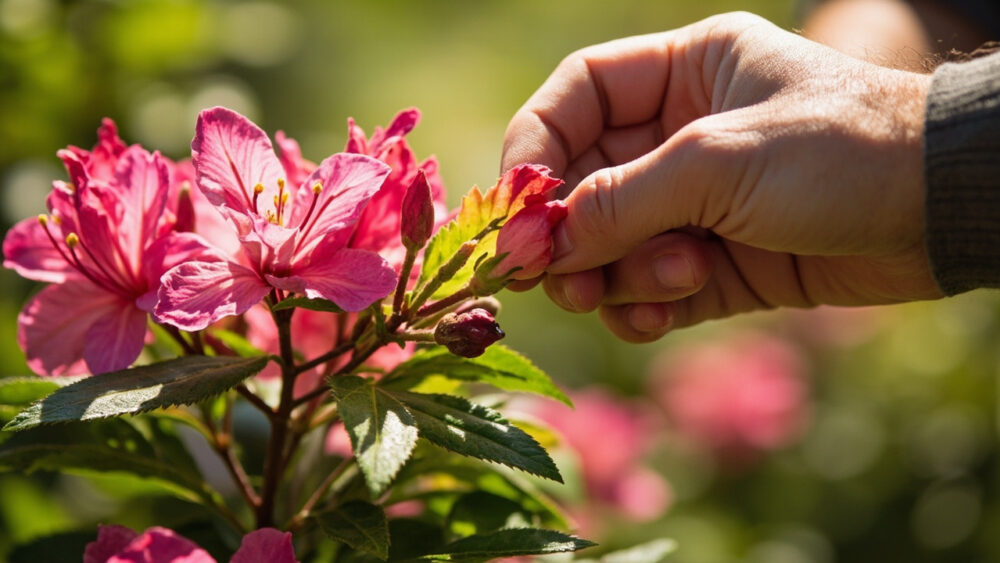
Deadhead azaleas by pinching or snipping off each spent flower cluster right where it meets the stem, just above the first set of leaves below it, as soon as the blooms turn brown and papery. Do this within a week or two of bloom drop, before the shrub sets next year’s buds. That timing window is the whole game with azaleas, and it is shorter than most people think.
Most gardeners either skip deadheading entirely because the shrub is “doing fine,” or they wait too long and snip off next spring’s flowers along with this year’s dead ones. Both mistakes cost you blooms, just in different years.
Below you will find exactly when to stop, what to actually cut off versus leave alone, and the one habit that quietly wrecks next year’s flower count without you ever noticing you did it. There is also a save-able Azaleas at a Glance card at the bottom with the numbers you will want to check again next spring.
When to Deadhead, and When to Just Walk Away
The window is short: deadhead within one to two weeks after the flowers fade, while the petals are browning but the plant hasn’t yet started forming next year’s buds where the old flower sat. For most azaleas that means late spring for early bloomers and early summer for reblooming types, but the flower itself is your real clock, not the calendar.
Once a flower has been gone for three or four weeks, the shrub has usually already started laying down bud tissue at that same spot for next year. Deadheading past that point does nothing helpful and risks knocking off the very growth you wanted.
If your azalea is a once-a-year spring bloomer and you’re past that window, the honest answer is to leave it alone until next year. Deadheading a shrub that has already set buds is how well-meaning gardeners cut their own bloom count in half.
So how do you know if you’ve missed the window, or if you’re actually right on time.
The One Prep Step That Actually Matters
You don’t need much gear here: a clean pair of bypass pruners or just your fingers, since azalea flower stems are soft enough to pinch off by hand. The tool matters less than most guides pretend.
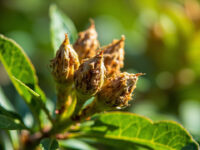
The step that matters is looking before you cut. Right below every spent flower cluster, you’ll see small swollen nubs forming in the leaf axils. Those are next year’s buds, and they show up faster than people expect, sometimes within days of the flower fading.
If you can already see those nubs forming, you’re too late to deadhead that cluster without risking them. If the spot below the flower still looks flat and green with no swelling, you’re clear to cut.
That five-second check is the difference between deadheading and accidentally debudding.
How to Deadhead an Azalea Step by Step
Once you’ve confirmed no buds have formed yet, the actual cutting is simple and forgiving.
Step 1: Find the base of the flower cluster
Azalea flowers often grow in small clusters of two to five blooms at the tip of a stem. Trace each spent flower down to where its short stalk meets the stem or the whorl of leaves beneath it.
Step 2: Pinch or snip just above the leaves
Cut or pinch the flower stalk off cleanly, leaving the leaves below intact. You’re removing only the dead flower and its short stem, not cutting back into woody growth.
Step 3: Take the whole spent cluster, not just the biggest bloom
Go back through and take any remaining brown or curling petals nearby too. Leaving a few dead flowers scattered through the shrub looks messier than it needs to and gives fungal issues something to sit on in humid weather.
Step 4: Stop at the flower, not the stem
Resist the urge to shape the shrub while you’re in there. Deadheading is not pruning, and cutting back into stems now is how buds disappear before they ever form.
That’s genuinely the whole technique, which is exactly why the mistakes people make happen elsewhere.
What Happens After You Deadhead
Within a week or two, you’ll see new leaf growth pushing out from just below where you removed each flower cluster. That’s the plant redirecting energy into foliage and, eventually, next year’s bud sites, instead of into seed pods.
You will not get a second flush of blooms this season on a once-blooming azalea. Deadheading azaleas is about next year’s flower count, not this year’s. If you were hoping for repeat blooms this summer, that’s a job for a true reblooming azalea variety, not deadheading technique.
On reblooming types, removing spent flowers promptly does help the plant push out its next flowering cycle a little more strongly, since it’s not spending energy on seed development.
Either way, the payoff shows up in spring, which is exactly why the mistakes below are so easy to make without noticing.
The Mistakes That Actually Cost You Flowers
If you assumed the biggest risk was leaving spent flowers on too long, that’s the obvious guess, and it’s not really where azaleas get hurt. A little cosmetic messiness doesn’t cost you blooms.
The real damage comes from these:
- Deadheading too late in the season: once bud nubs have formed below the flower, cutting there removes next year’s growth along with this year’s dead bloom.
- Using pruning shears to shape the whole shrub while deadheading: any stem cuts made after early-to-mid summer risk removing wood that would have carried next year’s buds.
- Pulling instead of snipping or pinching cleanly: tearing can strip small side buds or bark along the stem.
- Fertilizing heavily right after deadheading to “help it along”: a late surge of nitrogen pushes soft leafy growth instead of bud set, and that soft growth is more vulnerable going into winter in colder zones.
- Ignoring powdery, sticky, or spotted foliage while you’re in there deadheading: azaleas can pick up fungal leaf spot and lace bugs, and the time you’re already handling every branch is the easiest time to notice early trouble. Treat identified pest or disease issues with the appropriate cultural fix or labeled product, following the label exactly.
Every one of those is fixable next time, none of them kill the shrub outright, but they all quietly shrink next spring’s flower show.
Azaleas at a Glance
- When to deadhead: within one to two weeks after flowers fade, before bud nubs form in the leaf axils below each spent bloom.
- Where to cut: at the base of the flower stalk, just above the leaves, never into woody stem.
- How much to remove: the spent flower cluster only, leaving surrounding leaves and stem intact.
- Tools needed: clean bypass pruners or just your fingers, since flower stalks pinch off easily.
- Sign you’re too late: small swollen bud nubs already visible just below the old flower.
- What to expect after: new leaf growth within one to two weeks, with bloom benefit showing up next spring, not this season, on once-blooming types.
- Biggest mistake: shaping or heavily pruning the shrub while deadheading, which removes next year’s flower buds along with this year’s dead blooms.
Deadhead promptly, cut only the spent flower, and leave the shrub’s shape alone until after bloom season ends.
Get that timing right once and it becomes a five-minute habit that pays off every spring after.