The short answer: once the main flower spike is done blooming, most of the way up, cut it down to the base rosette instead of leaving it standing. That single cut is the real answer to how to prune foxgloves, and it does two jobs at once: it can trigger a second, smaller flush of side spikes in the same season, and if you do it before the seed pods brown, it stops the plant from dumping thousands of seeds where you don’t want them.
But there is a real fork in the road here depending on what you want next year. Foxgloves are biennial for most common types, meaning they grow leaves the first year and bloom the second, then usually die. If you want free plants next year, you actually need to let some seed dropwhich means you cannot deadhead everything.
That’s the mistake almost everyone makes: they cut the whole plant to the ground the second it looks tired, and then wonder why the foxglove patch is smaller every year instead of bigger. Stick with me, because there’s a middle path that gets you both the rebloom and the reseeding, and I’ll also cover the honest answer to the question right behind this one: what to do with the plant once it’s completely finished. There’s a save-able Foxgloves at a Glance card at the very bottom with the numbers on one screen.
When to Prune, and When to Leave It Alone
Prune the main spike as soon as the lower two-thirds of its flowers have faded and browned, even if the top few buds are still going. That’s usually mid to late spring into early summer, depending on your zone. Don’t wait for the whole spike to finish; by then it’s already setting seed low down and you’ve lost the timing window for a second flush.
Do not prune first-year foxgloves at all. A plant that’s only grown a rosette of leaves and hasn’t sent up a bloom spike yet is still building the root and leaf mass it needs to flower next year. Cutting it back now just sets it back.
Next comes the part that decides whether you’ll have any foxgloves at all next season.
The One Prep Step That Matters More Than the Tool
Any clean, sharp bypass pruner or garden snips will do the actual cutting. The tool is not where people go wrong.
The step that matters is deciding, before you make a single cut, which spikes you’re deadheading for rebloom and which one or two you’re leaving to go to seed. Skip this decision and you’ll deadhead the whole bed on autopilot, get zero seedlings, and be buying new plants next spring.
Wipe your blades with rubbing alcohol between plants if any of them look diseased, foxglove leaves can carry leaf spot and mildew, and a dirty blade spreads it down the row.
Once you’ve picked your seed-bearer, the cutting itself is fast.
How to Cut: Step by Step
Step 1: Cut the main spike low
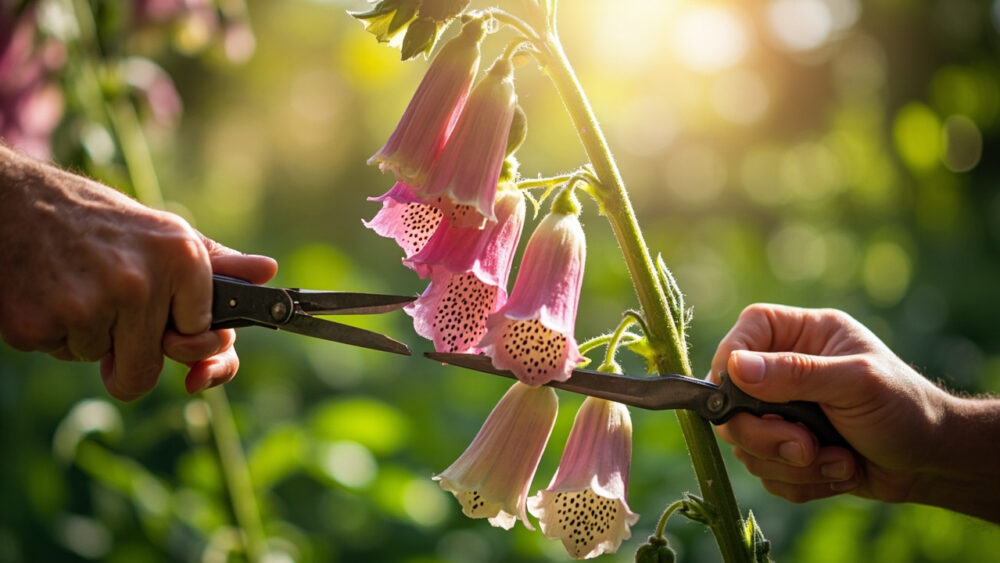
Follow the flower stalk down to where it meets the rosette of large basal leaves at the base. Cut there, not partway up the bare stem. Leaving 6 to 10 inches of bare stalk standing just wastes the plant’s energy and looks ragged.
Step 2: Leave the basal leaves alone
Those low, broad leaves at ground level are still photosynthesizing and feeding the roots. Don’t trim them back along with the flower stalk.
Step 3: Watch for side shoots
Within 2 to 4 weeks of cutting the main spike, most established foxgloves push up one or more smaller side spikes from the base. Let those bloom fully; don’t cut them early too.
Step 4: Choose your seed spike, and stop there
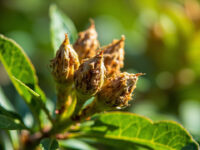
On the plant or two you’re saving for seed, do nothing. Let the spike finish, brown, and dry in place. The pods will split and drop seed on their own over several weeks.
That’s the whole cut, but what happens next surprises a lot of first-timers.
What to Expect After You Cut
Within a couple of weeks you should see new growth at the base, either a smaller secondary spike or just fuller rosette leaves if the plant is done blooming for the year. The second flush is always shorter and thinner than the first, that’s normal, not a sign of a problem.
If nothing happens at all after three or four weeks, the plant has likely put everything it has into that one bloom and is heading toward its natural end, especially if it’s a second-year plant. Biennial foxgloves generally die after they flower and seed, regardless of what you do with pruners.
Perennial types and some named perennial-leaning varieties will persist longer, but even those tend to bloom best in year two and slow down afterward.
Here’s where the seed-dropping plan pays off or doesn’t.
The Mistakes That Cost You Next Year’s Flowers
- Deadheading every single spike: this is the big one, and it’s the mistake that ruins most people’s foxglove patch within two years. No seed drop means no volunteer seedlings, and since most foxgloves die after flowering, no deadheading strategy equals no foxgloves the year after next.
- Cutting the basal rosette by mistake: those ground-level leaves aren’t spent stems, don’t mow them off with the flower stalk.
- Waiting too long to deadhead: once seed pods along the lower spike turn brown and papery, cutting there won’t stop that seed from having already dropped, and you lose the chance at a clean second flush.
- Assuming pruning saves a dying plant: if it’s a second-year biennial finishing its bloom, no amount of cutting back brings it back for a third year. That’s the plant’s normal life cycle, not a mistake you made.
- Handling seed heads carelessly: all parts of foxglove, including seeds, are toxic if ingested, so wear gloves when you deadhead and keep cuttings away from pets and kids. If you suspect a pet or child has eaten any part of a foxglove, call a vet or poison control right away rather than waiting to see what happens.
Get those five right and the rest of foxglove care is nearly hands-off.
Foxgloves at a Glance
- When to deadhead: as soon as the lower two-thirds of the main spike has faded, usually mid to late spring into early summer.
- Where to cut: at the base of the flower stalk where it meets the rosette, not partway up the bare stem.
- How much to leave: leave one or two spikes per patch uncut to go to seed if you want volunteers next year.
- Rebloom timing: expect a smaller side spike within 2 to 4 weeks of the first cut on established plants.
- Life cycle: most foxgloves are biennial, blooming and dying in their second year regardless of pruning.
- Never prune: first-year rosettes with no bloom spike yet.
- Handling caution: all parts, including seeds, are toxic if ingested, wear gloves and call a vet or poison control for any suspected ingestion.
The cut itself takes ten seconds. The decision about which spikes to leave standing is what actually determines whether you’re buying new foxgloves next spring or watching them come back on their own.