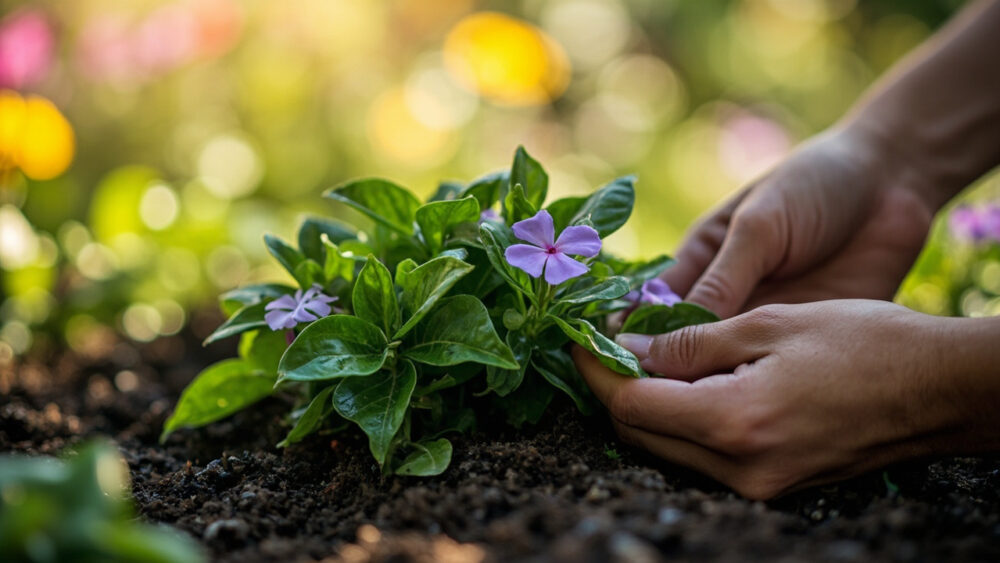
Vinca care comes down to three things: full sun, soil that drains fast, and a hand that stays off the watering can more often than it thinks it should. Give annual vinca (Catharanthus roseus) six or more hours of direct sun, well-drained soil, and water only when the top couple inches dry out, and it will bloom nonstop from late spring until frost. Get any one of those three wrong and you will watch a healthy-looking plant collapse almost overnight.
That collapse is the part almost nobody sees coming, and it is the single mistake that ends more vinca beds than any pest ever will. There is also a sign gardeners misread constantly, one that looks exactly like a watering problem but has nothing to do with water at all.
Stick with me through the sections below and I will walk you through light, watering, feeding, the seasonal tasks, and the real problems that hit this plant. Save the Vinca at a Glance card at the bottom for your phone, it is the fast version of everything here.
Light, Placement, and Temperature
Vinca wants full sunsix to eight hours a day minimum. This is a heat-loving plant native to Madagascar, and it genuinely performs better in July’s worst blast than it does in a shady corner.
In partial shade it survives but gets stretchy, blooms thin out, and it becomes far more prone to fungal trouble because leaves stay damp longer.
Do not plant or transplant vinca until nighttime temperatures are reliably above 50°F and soil has warmed well past your last frost date, ideally two to three weeks after. Cold, wet soil in spring is where most young vinca dies before it ever gets going.
Get the site and timing right and the next question is almost always about the watering can.
Watering: How Much, How Often, and the Sign You’re Reading Wrong
Water vinca only when the top 1 to 2 inches of soil feel dry to a finger poke, then soak it thoroughly and walk away. In beds that is often once a week; in containers, especially in hot climates, it can mean every 2 to 3 days.
Overwatering is the mistake that ends most vinca attemptsand here is the part that trips people up: the warning sign looks identical to drought stress. Leaves yellow, droop, and the plant looks thirsty, so the instinct is to water more. That is exactly backward.
Vinca wilting from too much water is suffering root rot, usually from aerial or stem blight, and more water accelerates the damage. Check the soil before you touch the hose. If it is already damp and the plant still droops, the fix is less water and better drainage, not more.
Once you trust your soil check over your eyes, feeding is the next lever worth understanding.
Soil, Potting Mix, and Feeding
Vinca needs soil that drains fast. In beds, work compost into heavy clay before planting, or build a raised bed if drainage is genuinely poor. In containers, use a standard well-draining potting mix, never garden soil straight from the yard, and make sure the pot has real drainage holes.
Skip heavy feeding. Vinca is not a hungry plant. A balanced, slow-release fertilizer worked in at planting time is usually enough for the whole season. In containers, a diluted liquid feed every 4 to 6 weeks keeps blooms coming without pushing weak, disease-prone growth.
Too much nitrogen gives you lush leaves and fewer flowers, plus softer growth that folds faster to fungal disease.
Good soil and light feeding set the stage, but a few hands-on chores keep the plant looking full all season.
Pruning, Deadheading, and the Maintenance Vinca Actually Needs
Here is some honest good news: vinca is self-cleaning. Spent blooms drop on their own, so you do not need to deadhead like you would with petunias.
What it does appreciate is a light pinch or trim back by a third if it gets leggy in midsummer, usually from stretching toward light or from a stretch of heavy rain. This pushes fresh branching and a new flush of flowers within 2 to 3 weeks.
Clear away fallen leaves and dead stems from the base periodically, especially in humid climates. Debris sitting on damp soil is exactly where fungal problems start.
Repotting only matters for container plants that get root-bound by midsummer; size up one pot diameter, don’t bury the crown any deeper than it was growing.
Most of that maintenance is prevention, which brings us to what actually goes wrong.
The Problems That Actually Hit Vinca
The big one is aerial blight and root rotboth fungal, both caused by excess moisture and poor airflow. Symptoms are wilting, dark lesions on stems near the soil line, and a plant that collapses fast, sometimes within days. There is no reviving a badly infected plant. Pull it, don’t compost it, and don’t replant vinca in that exact spot for a season.
Prevention is entirely about water and spacing. Space plants 8 to 12 inches apart so air moves between them, water at the soil line rather than overhead, and never let mulch pile against the stems.
Aphids and spider mites show up occasionally, usually on stressed plants. A strong water spray or insecticidal soap applied per the product label handles most infestations. Always follow label directions exactly rather than guessing at concentration.
One more honest note: all parts of vinca are toxic if ingested, to people and to pets. If a child or animal eats a significant amount, call a doctor or veterinarian rather than waiting to see what happens.
Once the disease risk is under control, the last thing to learn is what a genuinely happy vinca looks like.
How to Tell Vinca Is Actually Thriving
A thriving vinca is compact, mounded, and covered in flowers with almost no bare stem showing between them. New buds should be opening continuously, not in one big flush followed by nothing.
Glossy, deep green leaves are the tell. Dull, pale, or yellowing leaves almost always trace back to either too much water or not enough sun, in that order of likelihood.
By late summer a well-sited vinca planting will have filled in solid enough to act as a low groundcover, still blooming right up to the first real frost.
Keep that image in mind, then check it against the quick-reference card below whenever you need a fast answer.
Vinca at a Glance
- When to plant: two to three weeks after your last frost, once nights stay above 50°F and soil has warmed.
- Light: full sun, six to eight hours of direct light daily for best blooming.
- Spacing: 8 to 12 inches apart to keep airflow good and fungal disease down.
- Watering: only when the top 1 to 2 inches of soil are dry, then soak thoroughly, roughly once a week in beds.
- Soil: fast-draining, amended with compost if heavy, or a standard potting mix in containers.
- Feeding: light, slow-release at planting, or diluted liquid feed every 4 to 6 weeks in pots, never heavy nitrogen.
- Watch for: sudden wilting with damp soil means fungal rot, not thirst, pull affected plants fast.
If you remember one thing, remember this: check the soil before you water, every single time.
That one habit prevents more vinca deaths than anything else on this page.