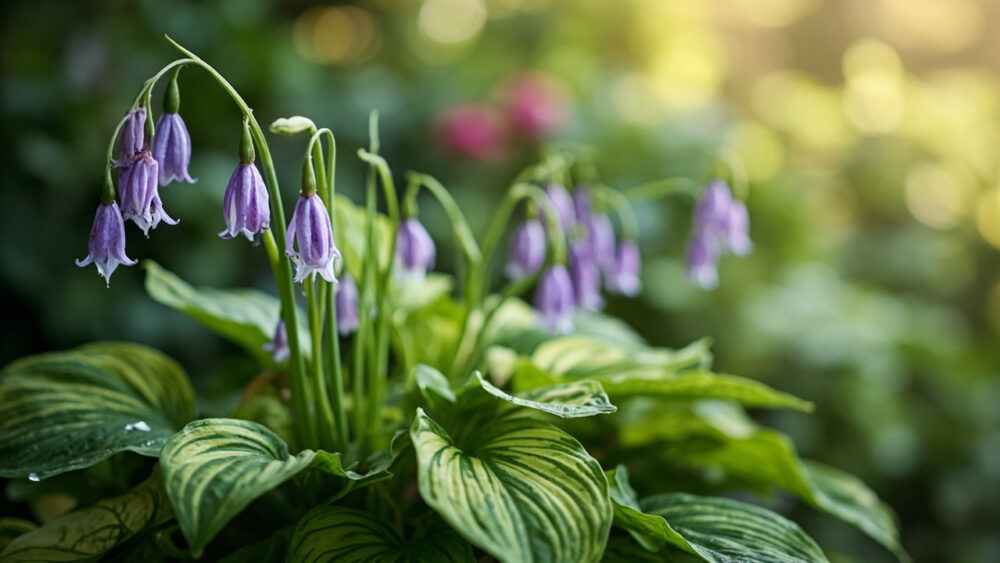
Hostas bloom in summer, most sending up flower spikes anywhere from early July through late August depending on the variety and your climate. Each spike stays showy for about two to four weeks, opening a few trumpet-shaped flowers at a time from the bottom up. That is the honest range, but it shifts a lot depending on which hosta you actually have.
Some hostas throw up bloom stalks in June. Others wait until the first cool nights of September to bother. If yours has never bloomed at all, that is a different problem, and it is not always a bad sign.
Stick around for the part most people get wrong about deadheading, and the reason a hosta that looks perfectly healthy sometimes skips flowering entirely. There is a save-able quick-reference card at the very bottom with the bloom window and the qualifiers all in one place.
The Real Bloom Window and How Long It Lasts
Most garden hostas flower somewhere between early July and late August. Early-season varieties, often the smaller, faster-growing types, can start budding in June. Late bloomers, including many of the big-leafed, fragrant varieties, hold off until August or even September.
A single flower spike, or scape, lasts two to four weeks in bloom. The individual flowers themselves only last a day or two each, but because the scape opens from bottom to top, you get a rolling show rather than one big burst.
Fragrant hostas, the ones with big rounded leaves, tend to bloom later in summer and often push out flowers with a sweet, noticeable scent, especially in the evening.
Next up is the thing that actually decides where your hosta lands in that window.
What Actually Controls Bloom Timing
Variety matters most. Hostas are a huge genus with hundreds of cultivars, and bloom time is baked into the plant’s genetics as much as anything you do.
Age matters too. A hosta division or a young plant from a garden center often will not bloom its first year, sometimes not its second. It is putting energy into roots and leaves before it bothers with flowers.
Climate shifts the whole window. In cooler northern zones, bloom often lands in July and August. In warmer zones with an earlier, longer growing season, the same variety can bloom weeks sooner.
Light exposure plays a role as well. A hosta in deeper shade usually flowers a bit later and sometimes less heavily than the same variety in a spot with a few hours of morning sun.
That is the timing side. Here is how to get more out of it once the season arrives.
How to Get More Blooms, or a Longer Show
Hostas are grown mostly for foliage, so nobody is going to hand you a trick that turns them into a nonstop flower machine. But a few real things move the needle.
Morning sun helps. An hour or two of direct morning light, with shade through the hot part of the day, tends to produce more flower scapes than a spot in full, dense shade all day.
Consistent moisture matters more than fertilizer. Hostas are shallow-rooted and dry out fast in containers or sandy soil, and drought stress cuts bloom production before it ever touches the leaves.
A balanced, slow-release fertilizer applied in spring supports overall vigor, which indirectly supports blooming. Skip heavy nitrogen-only feeds, since they push leaf growth at the expense of flowers.
Dividing overcrowded clumps every three to five years keeps plants vigorous. An old, congested clump often blooms less than a recently divided one with room to breathe.
If your hosta still is not flowering at all, the next section covers why.
Why Your Hosta Might Not Be Blooming
If you assumed a lack of flowers means something is wrong with the plant, that is usually the wrong read. Plenty of perfectly healthy hostas bloom lightly or skip a year.
Youth is the most common cause. A recently planted or recently divided hosta often skips flowering for a season or two while it rebuilds its root system.
Too much shade can suppress blooming, especially under dense tree canopy where the plant is fighting for every bit of light it gets.
Deer and slugs are frequent culprits too. Deer will bite off emerging flower scapes before you ever see a bud, and slugs can chew through young stalks at the base.
Late spring frost damage is another one. A hard freeze after the scapes have started forming can kill that year’s bloom without harming the leaves at all.
Some varieties, particularly certain compact or variegated cultivars, simply bloom sparsely by nature. That is not a care failure, it is just how that plant is built.
Once you know why it did or did not bloom, the last piece is what to do with the flowers once they show up.
Deadheading and Aftercare That Extend the Show
You do not need to deadhead hostas for plant health. Unlike a lot of flowering perennials, removing spent blooms will not push a hosta to rebloom.
Cut spent scapes for looks, not for more flowers. Once a stalk finishes blooming, it turns brown and can look ragged against the leaves, so many gardeners snip it at the base purely for tidiness.
Leave a few scapes if you want seed pods, or if you like the look of them standing through fall. Hostas will self-seed occasionally, though the seedlings rarely match the parent plant exactly.
After bloom, keep watering through late summer, since foliage is still building energy for next year’s growth even after the flower show ends.
A quick note on pets: hostas are considered toxic to dogs and cats and can cause vomiting, diarrhea, or lethargy if chewed or eaten. If you suspect a pet has eaten hosta leaves or flowers, call your veterinarian rather than waiting to see what happens.
Here is everything from above, boiled down to the card you came for.
Hostas: Quick Reference
- Bloom window: early July through late August in most climates, with some early varieties starting in June and some late ones running into September.
- How long it lasts: two to four weeks per flower spike, opening from the bottom up.
- Biggest timing factor: variety and cultivar, followed by your climate zone and the plant’s age.
- Young plants: often skip blooming in their first one to two years after planting or division.
- More blooms: a little morning sun, consistent moisture, balanced spring fertilizer, and dividing crowded clumps every three to five years.
- No blooms at all: usually youth, heavy shade, deer or slug damage to emerging scapes, a late frost, or a naturally sparse-blooming variety.
- Deadheading: optional and purely cosmetic, it will not trigger rebloom.
- Pet safety: hostas are toxic to dogs and cats, causing gastrointestinal upset if eaten, so call a vet if you suspect ingestion.
Most hostas will bloom on their own schedule whether you fuss over them or not.
Give them decent light, steady water, and a few years to settle in, and the flowers take care of themselves.