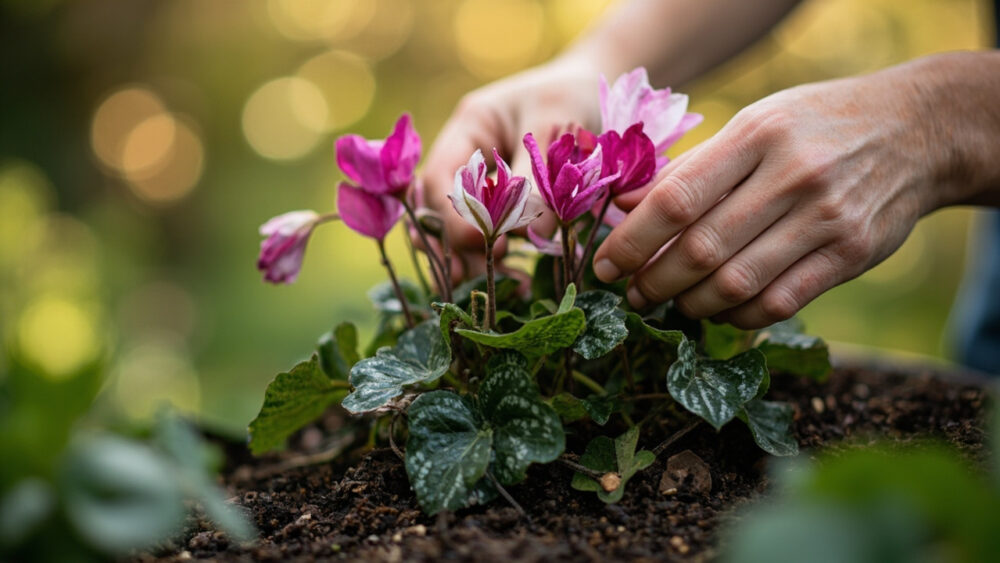
Cyclamen care comes down to three things most people get backwards: cool temperatures, water from the bottom, and a dormant season you should not fight. Get those right and a florist cyclamen will rebloom for years instead of dying by March, which is the usual outcome. This guide covers how to care for cyclamen through its whole cycle, not just the pretty six weeks after you bought it.
Here is what trips people up. The plant looks dead in late spring and almost everyone throws it out right then, when it is actually just going dormant and doing exactly what it is supposed to do. There is also a watering habit that feels responsible but rots the corm from the inside within a month. And there is a sign of a genuinely happy cyclamen that has nothing to do with flower count.
All three get resolved below, in order. Stick around for the Cyclamen at a Glance card at the bottom, it is the version worth screenshotting before you forget any of it.
Light, Placement, and Temperature
Cyclamen want bright, indirect light and cool air, somewhere between 50 and 65°F. A north or east windowsill works well. Direct south-facing sun through glass, especially midday, will scorch leaves and shorten bloom life fast.
Heat is the real enemy, more than light. A spot on top of a heating vent, near a fireplace, or above a radiator will push the plant into early dormancy no matter how well you water it. Cyclamen actually prefer the temperature drop most houseplants hate, so a cool porch, unheated sunroom, or north bedroom often outperforms a warm living room.
Nighttime temperatures below 40°F will damage the foliage, so keep it away from drafty single-pane glass in winter.
Get the temperature right and watering gets a lot more forgiving.
Watering: How Much, How Often, and How to Tell
Water when the top inch of soil feels dry, roughly once a week, and always avoid wetting the crown where the leaf stems emerge from the corm. That crown is exactly where most cyclamen die.
If you assumed more frequent watering keeps a wilting cyclamen alive, that guess is what kills most of them. Standing water around the corm causes rot faster than underwatering causes wilt, and a wilted cyclamen from dryness bounces back within hours of a drink. A rotted crown does not bounce back at all.
The safest method is bottom watering: set the pot in a saucer of water for 15 to 20 minutes, let it drink through the drainage holes, then remove it and let it drain fully. Never let the pot sit in standing water long-term.
Check the corm, not the calendar, and you will rarely get this wrong.
Soil, Feeding, and the Pot Itself
Use a loose, fast-draining potting mix, something like a standard peat or coir-based potting soil cut with perlite. Cyclamen roots hate sitting wet, and heavy garden soil suffocates the corm.
Plant or pot with the top third of the corm sitting above the soil line. Burying it completely is one of the most common reasons a cyclamen fails to thrive even when watering is otherwise fine.
Feed every 2 to 4 weeks during active growth, from fall through spring, with a balanced, diluted liquid houseplant fertilizer. Stop feeding entirely once the leaves start yellowing and dying back for dormancy, since a dormant corm cannot use the nutrients and excess fertilizer salts can damage it while it rests.
Get the corm depth and the feeding schedule right, and the plant does most of the rest of the work itself.
The Routine Tasks: Deadheading, Cleaning, and Dormancy
Remove spent flowers and yellowing leaves by grasping the stem at the base and giving it a firm twist to pull it free from the corm, rather than snipping partway up. Cut stems left behind tend to rot and can spread rot into the corm itself.
This is also where the “dead plant” panic happens. As spring warms up, cyclamen naturally yellow, flop, and drop most or all of their leaves. That is dormancy, not death, and it is normal for florist cyclamen (Cyclamen persicum) in particular.
What to do during dormancy
- Cut back watering drastically, to a light drink every few weeks, just enough to keep the corm from fully desiccating.
- Move the pot somewhere cool and dim for 2 to 3 months, a basement or closet shelf works.
- Stop fertilizing completely until new growth appears.
- Watch for a fresh leaf tip pushing up from the corm, usually in late summer to early fall, as the signal to resume normal watering, light, and feeding.
Repot only every 1 to 2 years, right as dormancy ends and new growth starts, sizing up just one pot size and keeping that top third of the corm exposed.
Ride out dormancy instead of composting the corm, and you will have a second, often better bloom season waiting on the other side.
Problems That Actually Show Up
Most cyclamen problems trace back to water, heat, or humidity, not pests, though pests do show up occasionally.
- Yellow leaves with soggy soil: overwatering or crown rot starting. Let it dry out, check the crown for soft, dark, mushy tissue, and cut back watering going forward.
- Sudden total wilting: usually dry soil, sometimes heat stress. Bottom water and move it somewhere cooler.
- Fuzzy gray mold on leaves or flowers: botrytis, caused by poor air circulation and wet foliage. Remove affected parts, increase airflow, and avoid overhead watering.
- Fine webbing or stippled, pale leaves: spider mites, common in hot, dry indoor air. Increase humidity and isolate the plant; a labeled insecticidal soap can help if it persists, applied exactly per the product label.
- Flowers fading fast, few new buds: too warm, too dark, or needs feeding. Check temperature first before assuming it needs more fertilizer.
One honest note on toxicity: cyclamen, especially the tubers, are toxic to cats, dogs, and to people if eaten in quantity. Symptoms in pets can include drooling, vomiting, and in serious ingestions heart rhythm changes. If a pet or child eats part of the plant, call a veterinarian or poison control right away rather than waiting to see what happens.
Rule out heat and water first for almost any symptom, since they cause the vast majority of cyclamen complaints.
How to Tell It’s Actually Thriving
Flower count is not the best signal, and this is the sign most people miss entirely. A thriving cyclamen has leaves that stay rich green, held upright on firm stems, with new leaves and buds continuing to emerge from the center of the plant rather than just the outer edge.
A plant pushing out fresh growth from the crown, even between bloom flushes, is a healthy corm building reserves. That matters more long-term than how many flowers are open on any given day, because that steady new growth is what carries it through dormancy and brings it back next season.
Save the card below and you have everything else on one screen.
Cyclamen at a Glance
- Light: bright, indirect light, no direct midday sun through glass.
- Temperature: 50 to 65°F, cooler nights are fine, avoid heat vents and drafts below 40°F.
- Watering: when the top inch is dry, roughly weekly, bottom-water and never soak the crown.
- Soil and potting depth: fast-draining mix, top third of the corm above the soil line.
- Feeding: diluted balanced fertilizer every 2 to 4 weeks during active growth, none during dormancy.
- Dormancy: expect yellowing and leaf drop in spring, cut water back, keep cool and dim for 2 to 3 months, resume care when new growth appears.
- Repotting: every 1 to 2 years, one size up, timed to the end of dormancy.
Cool air and restrained watering solve most cyclamen problems before they start.
Let dormancy happen instead of panicking, and the same corm will bloom for you again.