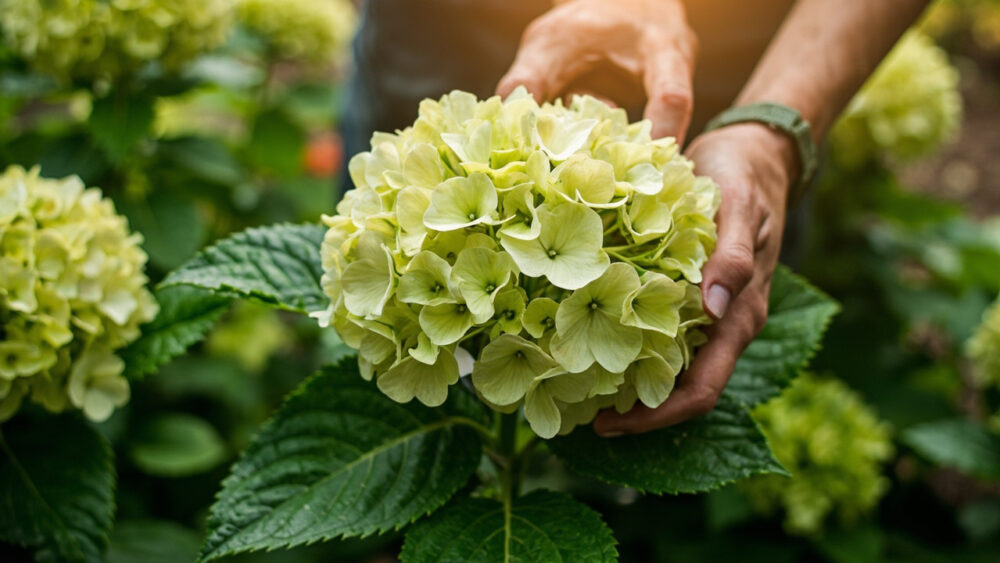
Learning how to grow limelight hydrangeas comes down to four things: full to part sun, rich well-drained soil, deep weekly water, and a hard prune in late winter instead of fall. Get those right and you get a shrub that pumps out cone-shaped, lime-green blooms from midsummer into fall, aging to pink and burgundy before frost. Get the pruning timing wrong, though, and you can cut off an entire season of flowers without realizing your mistake until July.
Most people who struggle with Limelight aren’t failing at watering or fertilizer. They’re failing at one specific, easy-to-miss step that has nothing to do with soil chemistry.
There’s also a color question almost everyone asks eventually, and the honest answer surprises people who bought this plant expecting the same blue-or-pink drama as their neighbor’s bigleaf hydrangea. Stick around and I’ll give you the full at-a-glance card at the bottom, the kind of thing worth screenshotting before you head out to the yard.
When to Plant Limelight Hydrangeas
The best planting window is early spring, two to three weeks after your last frost date, once soil is workable and no longer soggy-cold. Fall planting works too, ideally six weeks before your ground typically freezes, giving roots time to settle before winter. Limelight is hardy in USDA zones 3 through 9, tough enough that timing mistakes rarely kill it outright, but a plant set out too late in spring heat will sulk and drop leaves while it tries to establish roots.
If you’re potting one up from a nursery container, you have more flexibility than with bare-root stock. Container plants can go in anytime the ground isn’t frozen, though summer planting means you’ll be watering almost daily for the first couple weeks.
Timing gets the roots started right, but the spot you choose determines whether this shrub thrives or just survives.
Choosing the Spot and Prepping the Soil
Limelight wants at least six hours of sunand in hotter climates (zone 7 and up) it actually prefers a little afternoon shade to keep blooms from scorching and wilting by 3pm. In cooler zones, full sun all day is fine and produces the densest flowering.
Soil matters more than most people expect. Limelight isn’t fussy about pH the way bigleaf hydrangeas are, since its blooms don’t shift color with soil acidity. What it does demand is drainage.
Standing water around the roots is the fastest way to lose this plant. Work several inches of compost into the top 12 inches of native soil before planting, and if you’ve got heavy clay, consider raising the bed slightly or amending a wider area rather than digging one isolated hole.
A well-prepped hole now saves you years of replanting later, so let’s get it in the ground correctly.
Planting Limelight Hydrangeas Step by Step
1. Dig the hole wide, not deep
Dig a hole twice the width of the root ball but no deeper than the container it came in. Planting too deep suffocates the roots and stalls growth for a full season.
2. Loosen and settle the roots
Tease apart any circling roots at the edges of the root ball before placing it in the hole. Rootbound plants that go in unaltered often struggle to push roots outward into new soil.
3. Backfill and firm gently
Fill in with your amended soil, firming as you go to remove big air pockets, but don’t compact it hard. The crown of the plant should sit level with, or very slightly above, the surrounding soil.
4. Space for the mature size
Give each plant 6 to 8 feet of space in every direction. Limelight matures to 6 to 8 feet tall and equally wide, and crowded plants get poor airflow, which invites fungal problems later.
5. Water in and mulch
Soak thoroughly right after planting, then add 2 to 3 inches of mulch out to the drip line, keeping it a couple inches clear of the stem itself.
Getting it in the ground is the easy part; keeping it fed and watered through a full season is where most people either win or lose the bloom show.
Watering and Feeding Through the Season
Water deeply once or twice a week rather than a light daily sprinkle, aiming for about 1 inch total per week including rainfall. Check soil moisture by pushing a finger 2 inches down; if it’s dry there, water. Newly planted shrubs need closer attention for the first two months, sometimes daily in hot weather, until roots establish.
If you assumed a hydrangea this leafy needs constant moisture at the surface, that guess leads to overwatering and root rot just as often as drought stress leads to wilting. Both look similar from a distance: droopy leaves, faded color. The difference is in the soil, not the leaves, so always check before reaching for the hose again.
Feed once in early spring with a balanced, slow-release fertilizer formulated for shrubs or flowering plants, following the label rate. A second light feeding in early summer can help in poor soils, but skip late-season fertilizing, since it pushes soft new growth that won’t harden off before frost.
Feeding and watering keep the plant healthy, but there’s one piece of maintenance that decides whether you get flowers at all.
The Pruning Mistake That Costs an Entire Season
Here’s the mistake that ruins more Limelight hydrangeas than pests, disease, and bad soil combined: pruning at the wrong time of year. Limelight blooms on new wood, meaning this year’s flowers grow on stems produced this spring. That makes it forgiving of a hard cutback, but only if you time it right.
Prune in late winter to very early springwhile the plant is still dormant and before new growth starts, cutting stems back by about a third to a half. Never prune in fall. Cutting in autumn removes the buds and stem structure the plant needs to push strong spring growth, and you’ll spend the following summer looking at a stunted, sparse shrub wondering what went wrong.
Deadheading spent blooms through the season is optional and mostly cosmetic, since Limelight doesn’t rebloom on the same stems anyway.
Prune at the right time and skip most other problems entirely, but a few will still come looking for this plant no matter what you do.
Problems That Actually Show Up, and How to Head Them Off
Powdery mildew shows up as a white, dusty coating on leaves, usually when plants are crowded or watered overhead in humid weather. Water at the base instead of the leaves, and improve air circulation by respecting that 6 to 8 foot spacing.
Bud blackening or bloom drop is often frost damage on late-emerging growth in a cold spring, not a disease at all. There’s little to do beyond waiting. The plant usually rebounds with the next flush.
Aphids occasionally cluster on new growth. A strong blast of water from the hose knocks most of them off, and insecticidal soap applied per the product label handles persistent infestations.
Yellowing leaves with green veins point to iron deficiency in overly alkaline soil, not a watering problem, so resist the urge to change your watering schedule in response.
None of this is toxic guesswork for pets, either. Hydrangeas, including Limelight, are considered toxic to dogs and cats if ingested in quantity. Watch for vomiting, diarrhea, or lethargy, and call your veterinarian if you suspect a pet has eaten any part of the plant.
Handle these few issues and the only real question left is when you actually get to enjoy what you planted.
When Limelight Hydrangeas Bloom, and the Color Question Everyone Asks
Limelight typically blooms from midsummer through early fall, with the big cone-shaped flower heads opening lime-green and gradually shifting to creamy white, then blushing pink to deep burgundy-red as temperatures cool going into autumn. A newly planted shrub may not flower heavily its first year while it’s focused on root establishment. Expect the real show starting year two or three.
If you were expecting to control bloom color with soil pH the way you might with a bigleaf hydrangea, that’s the guess almost everyone makes, and it doesn’t apply here. Limelight’s green-to-pink color shift is driven by temperature and bloom age, not soil chemistry, so there’s no additive that will turn it blue.
The blooms are excellent cut or dried. Harvest for arrangements once they’ve fully opened and feel slightly papery, cutting stems in the morning when the plant is best hydrated.
That’s the full season from bare ground to vase, and here’s the whole thing condensed for your phone.
Limelight Hydrangeas at a Glance
- When to plant: early spring two to three weeks after last frost, or fall about six weeks before ground freeze, zones 3 through 9.
- Sun and spot: six or more hours of sun, afternoon shade helpful in zone 7 and warmer.
- Spacing and depth: 6 to 8 feet apart, planted no deeper than the original root ball.
- Watering: about 1 inch per week, checked by feel 2 inches down, more often while newly planted.
- Feeding: balanced slow-release fertilizer once in early spring, light second feed early summer if soil is poor.
- Pruning: late winter to early spring only, cut back by one third to one half, never in fall.
- Bloom time: midsummer through early fall, green aging to pink and burgundy, full show by year two or three.
If you remember one thing, remember the pruning window, since that single mistake costs more blooms than every pest and disease on this list combined.
Everything else here is just keeping a tough, forgiving shrub comfortable while it does what it already knows how to do.