The single biggest reason bougainvillea won’t bloom is too much kindness. Overwatering, rich soil, and heavy nitrogen fertilizer all push the plant into leafy growth mode and tell it there’s no reason to flower. The fix in most cases is to back off water until the soil goes properly dry, stop feeding it anything high in nitrogen, and let the plant feel a little bit stressed, since bougainvillea blooms best when it’s mildly uncomfortable, not pampered.
Here’s what trips people up: the plant looks healthy, green, and vigorous, so the instinct is to water more and feed more to “help” it bloom. That instinct is exactly backwards, and it’s the number one wrong guess I hear. There’s also a specific tell on the plant itself, where the new growth is happening and what color it is, that points straight at your actual cause instead of leaving you guessing.
Bougainvillea almost always comes back once conditions correct, but the timeline is longer than most people expect. Stick around for the full list of causes ranked by likelihood, the side-by-side way to tell them apart, an honest recovery timeline, and a two-minute diagnosis checklist at the very bottom you can run right now standing at the plant.
Why Your Bougainvillea Won’t Bloom
1. Overwatering and Too-Rich Soil
This is the most common cause by far. Confirm it by checking the soil: if it stays damp more than a day or two after watering, or the plant is in a large container with moisture-retentive potting mix, this is likely it. Lush, dark green growth with few or no blooms is the classic look. Fix it by watering only when the top 2 to 3 inches of soil are dry, and consider a slightly gritty, fast-draining mix if it’s in a pot.
Once the roots dry out between waterings, the plant shifts energy toward flowers instead of leaves.
2. Too Much Nitrogen Fertilizer
A lawn feed, an all-purpose balanced fertilizer, or compost applied heavily will grow you a beautiful green bush with almost no color. Confirm it by checking what and when you last fed: if it was a high-nitrogen product (the first number on the fertilizer label is high relative to the other two), that’s your culprit. Fix it by switching to a bloom-formulated fertilizer, one lower in nitrogen and higher in phosphorus and potassium, and cut the feeding rate back.
The next section will show you exactly where on the plant this shows up differently than watering problems do.
3. Not Enough Direct Sun
Bougainvillea is a full-sun plant, needing at least 6 hours of direct light daily, and it will flower poorly or not at all with less. Confirm it by watching the light pattern where it’s planted or potted: dappled shade, a north-facing wall, or afternoon shadow from a building or tree are common culprits. Growth will be greener and a bit leggy, reaching toward the light. Fix it by moving container plants to the brightest spot you have, or, for in-ground plants, pruning back overhanging branches that are stealing its light.
Light is non-negotiable for this plant, so this cause is worth ruling out before you touch water or fertilizer at all.
4. No Real Dry-Cool Rest or Stress Period
Bougainvillea sets buds in response to stress, and a plant that never experiences a dry spell, a temperature dip, or shorter days will often just keep growing leaves year-round without ever flowering. Confirm it by thinking through the last few months: has watering been steady and generous with no real dry-back, and has the plant been somewhere warm and even-tempered the whole time? Fix it by deliberately letting it go dry for a week or two at a stretch during its normal growing season, and if you’re in a marginal climate, let it experience the natural cooler, shorter days of fall before you resume regular care.
This is the cause people skip because it feels counterintuitive, but it’s often the missing piece after watering and light are already fixed.
5. Recent Repotting or Root Disturbance
A bougainvillea that was just repotted, especially into a much larger container, will often pause flowering for a season while it focuses on root growth. Confirm it by checking your timeline: if you repotted within the last two to four months, this is likely part of the story. Fix it mostly by waiting, though avoid the temptation to fertilize heavily to “help it recover,” since that just compounds cause number two.
Root stress fades on its own, but the next cause is one you can’t wait out, you have to correct it directly.
6. Over-Pruning or Pruning at the Wrong Time
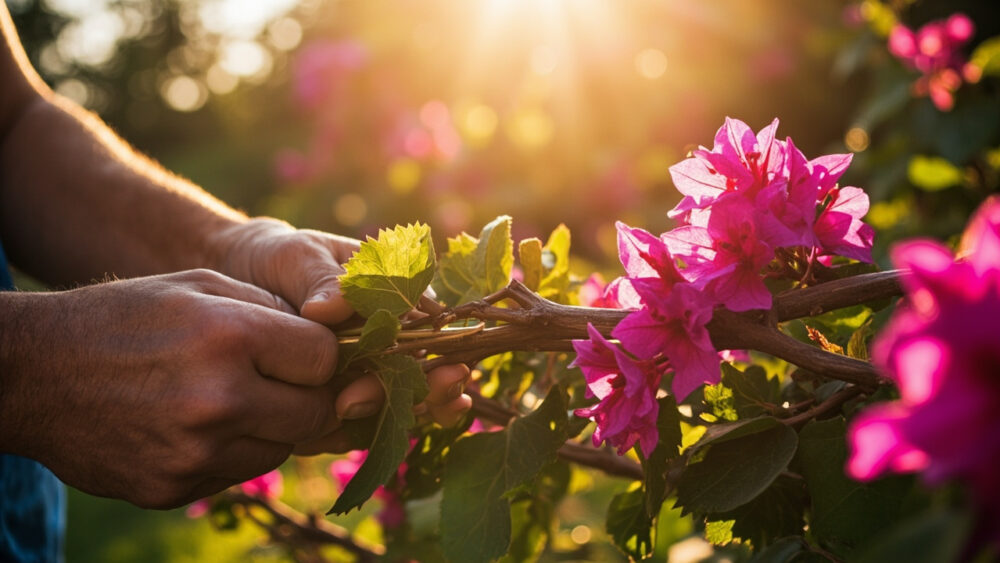
Bougainvillea blooms on new growth, so pruning is not inherently the problem, but heavy pruning right before the bloom period, or constant tip-pinching, removes the wood that would have flowered. Confirm it by checking whether you’ve trimmed it hard or shaped it frequently in recent weeks. Fix it by pruning lightly and only right after a bloom cycle finishes, not during active growth or right before flowering season.
Now that you’ve got the full list, here’s how to line your plant’s specific symptoms up against the right one.
How to Tell the Causes Apart
Location on the plant matters more than color alone. Overwatering and rich soil show up as uniformly lush growth all over the plant with soft, sometimes floppy stems. Too much nitrogen looks similar but often follows a specific feeding date, with a visible growth surge in the weeks right after.
Low light shows a lean toward the light source and thinner, stretched stems on the shaded side specifically, not the whole plant evenly. Missing a rest period shows a plant that’s been steadily, evenly growing for months with zero flower buds anywhere, old wood or new.
Recent repotting and over-pruning are easy to place because you know the dates, no guessing needed.
With the cause narrowed down, here’s what recovery actually looks like in real time.
Will It Recover?
The honest answer is yes, almost always, but not overnight. Bougainvillea is a tough, forgiving plant, and correcting water, light, or fertilizer typically brings blooms back within 4 to 8 weeks once the new regimen is consistent.
Overwatering and nitrogen fixes are the fastest to resolve, often showing bud set within a month of drying the soil out and switching fertilizer. Low light fixes take longer, closer to 6 to 10 weeks, since the plant needs to grow a round of new wood in better conditions before it can flower on it.
Repotting recovery and the missing rest period both run on a full season rather than weeks, so patience matters more than intervention here.
Cut your losses only if stems are dying back from the base along with the no-bloom issue, since that points to root rot from chronic overwatering rather than a simple bloom problem, and that’s a different, more serious repair.
Recovery is realistic in nearly every case, so the real work now is making sure you don’t end up back here.
How to Keep It From Happening Again
Water on a schedule tied to the soil, not the calendar. Let it dry out substantially between waterings all season, every season, not just when you’re troubleshooting.
Feed lightly with a bloom-formulated, lower-nitrogen fertilizer during the growing season, and stop feeding entirely once the weather cools or the plant slows down.
Keep it in the sunniest spot you have year-round, and if you grow it in a container, be willing to move that pot as the sun angle changes through the seasons.
Prune only right after a bloom flush, lightly, and resist the urge to shape it constantly.
Get those four habits locked in and the checklist below becomes something you rarely need again.
Diagnosis Checklist
- Check the soil now: if it’s damp more than an inch or two down, suspect overwatering first.
- Check your last fertilizer: if it was high nitrogen or a general lawn feed, suspect over-feeding next.
- Check the light: if the plant gets less than 6 hours of direct sun, suspect low light before anything else.
- Check the growth pattern: if it’s been steadily growing for months with zero buds, suspect a missing dry-stress period.
- Check your calendar: if you repotted within the last two to four months, give it time before changing anything else.
- Check for recent hard pruning: if you cut it back heavily in the last several weeks, that’s likely your answer.
- Check the base of the plant: if stems are dying back or blackened at the soil line, treat this as root rot, not a bloom problem, and address drainage immediately.
Bougainvillea rewards a little neglect more than it rewards attention, and that single fact solves most no-bloom cases.
Fix the water and light first, be patient for a full growth cycle, and the color comes back.