Dahlias want six to eight hours of direct sun, soil that drains fast but never fully dries out, and a stake in the ground before they need it, not after. Learning how to care for dahlias comes down to four things done right: full sun, consistent moisture, rich but loose soil, and staking early. Get those four right and the rest is maintenance, not rescue.
Here is what trips people up though. The mistake that ends most dahlia seasons early happens before the flower ever shows up, and it is not watering. There is also a sign on the leaves that half of gardeners read backwards, and an honest answer about why your neighbor’s dahlias are chest high while yours are knee high on the same street.
Stick with me through the sections below and save the Dahlias at a Glance card at the bottom. It has every number you need pinned in one place, no scrolling back through paragraphs to find the spacing you forgot.
Light, Placement, and Temperature
Dahlias need full sun, at least six hours, ideally closer to eight. Less than that and you get tall floppy stems reaching for light instead of thick stems holding up flowers.
They also want shelter from wind. These are top-heavy plants on hollow stems, and a single summer storm without staking will snap a season’s growth in seconds.
Temperature matters more than most people think. Dahlia tubers rot in cold wet soil, which is why you plant them after your last frost, once soil has warmed to at least 60°F. Rushing this by two or three weeks in cold soil kills more tubers than any pest does.
Pick the spot with the most sun and the least wind exposure, because the next thing you do there decides half the season.
Watering: How Much, How Often, and How to Tell
Water dahlias deeply once or twice a week, enough to soak the top 6 to 8 inches of soil, rather than a light daily sprinkle. Shallow frequent watering builds shallow roots that fail in the first hot dry week.
Check by pushing a finger 2 inches down. If it is dry there, water. If it is still damp, wait.
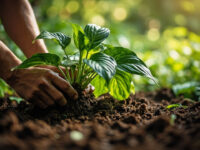
Newly planted tubers actually want less water than you’d guess. Here is the guess everyone gets wrong: a tuber with no sprout yet does not need soaking, it needs barely-moist soil, because a dormant tuber sitting in wet ground before it roots is exactly how it rots. Once you see a shoot break the surface, increase watering to the deep, twice-weekly routine.
Once the plant is growing hard and blooming, that watering rhythm becomes the backbone of everything else you do to it.
Soil, Potting Mix, and Feeding
Dahlias want loose, well-drained soil rich in organic matter, with a pH close to neutral, around 6.5 to 7.0. Heavy clay that holds standing water is the fastest route to a rotted tuber. Work in a few inches of compost before planting if your soil is dense.
In containers, use a quality potting mix with extra perlite for drainage, in a pot at least 12 to 16 inches across for a standard dahlia.
Feed lightly and skip the high-nitrogen fertilizer. A balanced or slightly phosphorus-and-potassium-leaning fertilizer, applied every four to six weeks through the growing season, builds flowers. Heavy nitrogen builds leaves at the expense of blooms, and it’s the second most common reason a dahlia patch looks lush but stubbornly refuses to flower.
Feed the soil right and the plant still needs you to show up with pruners at the right moments.
Pruning, Staking, and Seasonal Tasks
This is the mistake that ends most dahlia seasons before they start: skipping the stake. Set the stake at planting time, not once the plant is 3 feet tall and already leaning. Driving a stake in later shreds the tuber’s root system right when it needs it most.
Pinch the growing tip once the plant has three or four sets of leaves, around 12 to 15 inches tall. This forces side branching and doubles or triples your flower count instead of one tall central stem with a single bloom on top.
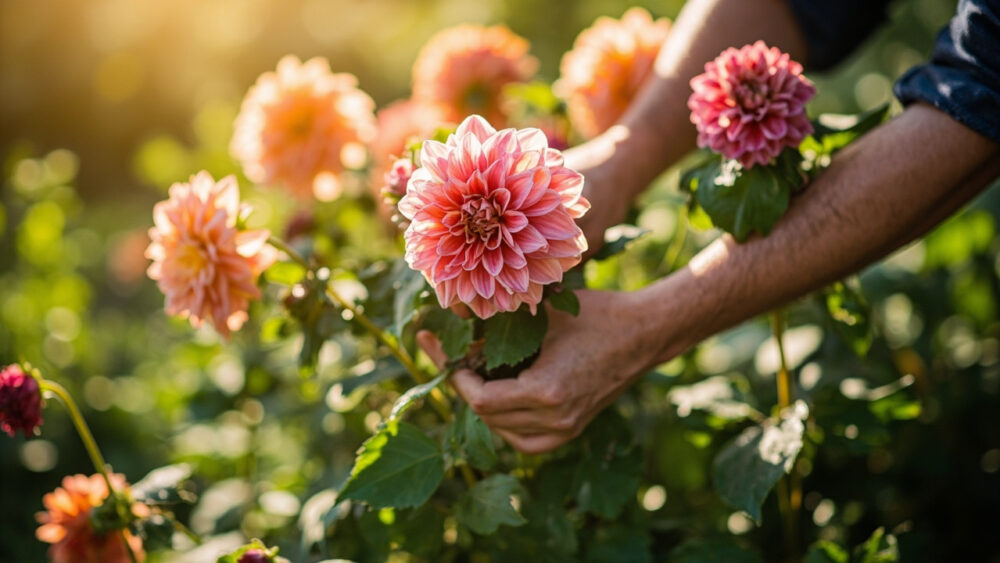
Deadhead spent flowers by cutting the stem down to the next leaf set, not just snipping the flower head. This tells the plant to keep producing instead of setting seed.
After the first hard frost blackens the foliage, cut the plant back to a few inches and, in any zone colder than about 8, dig the tubers for winter storage in a cool, dry, frost-free spot.
Staking and pinching handle the plant’s structure, but the leaves themselves will tell you when something has gone wrong.
Problems Most Likely to Strike
Here is the sign everyone misreads. Yellowing lower leaves on a dahlia get blamed on underwatering almost every time, and the reflex is to water more. That usually makes it worse. Yellowing lower leaves combined with soft, mushy stem tissue near the soil line points to overwatering and early tuber rot, not thirst. Check soil moisture before you reach for the hose.
Slugs and snails shred young shoots overnight, especially in damp spring weather. Handpicking at dusk and clearing mulch away from the crown helps; if you need a product, follow the label exactly.
Powdery mildew shows up as a white coating on leaves in humid, still air. Improve airflow with wider spacing, 18 to 24 inches between plants, and water the soil rather than the foliage.
Earwigs and thrips chew ragged holes in petals just as buds open. They’re mostly cosmetic pests on established plants, and cultural cleanup around the base handles most cases.
Dahlias are toxic in a mild way to pets if chewed on; if a dog or cat has eaten a significant amount of leaf or tuber, call your veterinarian rather than waiting to see what happens.
Once you’ve ruled out the obvious culprits, the plant’s overall look tells you whether you’re actually winning.
The Honest Sign a Dahlia Is Actually Thriving
Here’s the follow-up question everyone eventually asks: why is the dahlia three doors down twice the size of mine planted the same week? Usually it’s not luck or fertilizer, it’s sun hours and tuber size. A bigger tuber division with more eyes simply outgrows a small one every time, regardless of care.
A genuinely thriving dahlia has dark, glossy, unblemished leaves held upright without support fighting to keep the stem vertical. New buds keep forming continuously through summer rather than one flush and then nothing.
Stems should feel firm and snap cleanly if bent, never soft or hollow-feeling at the base. That firmness is the plant telling you the roots below are healthy too.
Get the sun, water, and staking right, and a dahlia rewards you with blooms from midsummer clear through to first frost.
Dahlias at a Glance
- When to plant: after your last frost, once soil has warmed to at least 60°F, tubers going in 4 to 6 inches deep.
- Spacing: 18 to 24 inches apart for good airflow, closer for dwarf varieties.
- Light: six to eight hours of direct sun, sheltered from strong wind.
- Water: deep soak once or twice weekly once sprouted, barely moist soil before the shoot emerges.
- Soil: loose, rich, well-drained, pH around 6.5 to 7.0.
- Feeding: balanced or phosphorus-potassium-leaning fertilizer every four to six weeks, skip high nitrogen.
- Key tasks: stake at planting, pinch the tip at 12 to 15 inches, deadhead to the next leaf set, dig tubers after first hard frost in cold zones.
Get the stake in the ground on day one and keep the soil evenly moist, not soggy. Everything else about dahlia care is just maintaining those two decisions through summer.