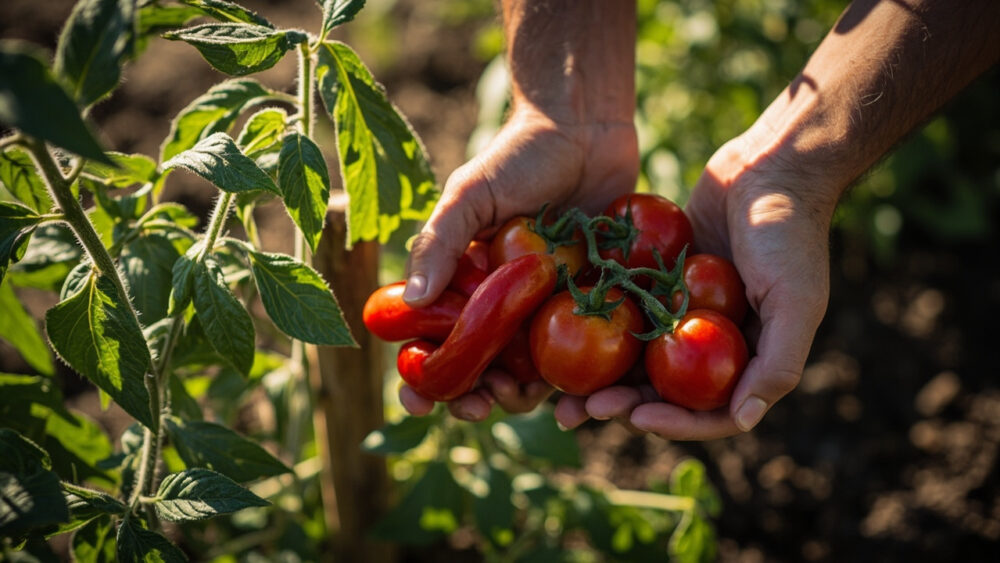
Growing San Marzano tomatoes means giving this long-season paste tomato warm soil, a stake or cage set early, steady even moisture, and 80 to 90 days from transplant to that first deep-red, torpedo-shaped fruit. Learning how to grow San Marzano tomatoes well is really about patience and structure. These are indeterminate vines that can hit 6 feet and keep producing until frost, so the plant you baby along in May is not the sprawling, fruit-loaded mess you will be wrestling in August unless you plan for it now.
Most people who try this variety make one mistake that quietly tanks the whole season: they treat it like a compact patio tomato and skip the cage or stake until the plant is already flopping. By then the root disturbance and stem damage from staking a sprawled vine cost you weeks of growth.
There is also a sign almost everyone misreads once fruit sets, and a hard truth about split skins and blossom end rot that catches new growers every year. Stick with me and you will also get the honest answer to the question you are probably already forming: why do my San Marzanos taste watery or bland some years and rich other years. All of it, plus the save-able San Marzano Tomatoes at a Glance card, is waiting at the bottom of this guide.
When to Plant San Marzano Tomatoes
Move transplants outside 1 to 2 weeks after your last frost date, once nighttime temperatures hold above 50°F and soil temperature at a 4-inch depth is at least 60°F. Cold soil stalls root growth even if the air feels warm enough.
Start seed indoors 6 to 8 weeks before that transplant date, since San Marzanos need the head start to reach a sturdy 6 to 10 inch transplant with true leaves.
If you garden in zone 5 or colder, expect your transplant date to land in late May or even early June, and count backward from there for seed starting. In zone 7 and warmer you can often get transplants out by late April.
Get this timing wrong in either direction and you either stunt the plant in cold soil or run out of season before the last fruit ripens.
Choosing the Spot and Prepping the Soil
San Marzanos want full sun, meaning 6 to 8 hours of direct light, and a spot with good airflow since tomatoes crowded against fences or walls hold humidity that invites disease.
Soil matters more than most people admit. Work in 2 to 3 inches of compost before planting, and aim for a slightly acidic pH between 6.2 and 6.8. Heavy clay that stays soggy is the enemy here, raised beds or mounded rows fix that fast.
Rotate away from where you grew tomatoes, peppers, eggplant, or potatoes last year. These share diseases that overwinter in soil, and a 3-year rotation is worth the hassle.
Good soil prep now saves you from problems you cannot fix later with fertilizer.
Planting San Marzano Tomatoes Step by Step
Set Depth and Spacing
Bury the transplant deep, up to two-thirds of the stem, pinching off the lower leaves first. Tomatoes root along buried stems, and that extra root mass builds a sturdier plant.
Space plants 24 to 36 inches apart in rows 3 to 4 feet apart. San Marzanos get tall and leafy, and cramped spacing is a direct invitation to fungal disease.
Stake or Cage Before You Need To
Drive a 6 to 7 foot stake or set a heavy-duty cage at planting time, not after the vine flops. This is the mistake I mentioned earlier, and it is the single most common reason San Marzano plants end up a tangled, disease-prone mess by midsummer.
Water in thoroughly right after planting, then hold off on fertilizer for about 2 weeks to let roots establish.
Once the plant is in and staked, the real work shifts to what you do every week after.
Watering and Feeding Through the Season
Water deeply 1 to 2 times a week rather than a little every day, aiming for about 1 to 1.5 inches of water weekly including rain. Deep, infrequent watering builds deep roots that handle heat better.
Check soil moisture by feeling 2 inches down. If it is dry there, water. If it is still damp, wait.
Inconsistent watering is the real answer to that bland, watery fruit question I opened with. Swings between drought and flooding dilute sugars and flavor compounds, which is why the same plant can taste incredible one week and flat the next. Mulch with 2 to 3 inches of straw to even out soil moisture and cut down on that swing.
Feed with a balanced fertilizer at planting, then switch to something lower in nitrogen and higher in phosphorus and potassium once flowering starts. Too much nitrogen late gives you a jungle of leaves and disappointing fruit set.
Get the watering rhythm right and most of your remaining problems shrink on their own.
Pests, Disease, and the Sign Everyone Misreads
Blossom drop in early summer heat looks alarming, but it is usually temporary heat stress, not a plant failure, and flowering resumes once nights cool below 75°F.
The sign people actually misread is early yellowing on lower leaves. Most assume overwatering and cut back on water, which only stresses the plant further. That yellowing is far more often early blight or simple nitrogen drawdown from lower leaves aging out. Remove affected leaves, improve airflow, and mulch to keep soil-borne fungal spores from splashing up during rain or watering.
Blossom end rot, that leathery dark patch on the fruit bottom, comes from inconsistent calcium uptake, which almost always traces back to uneven watering rather than a true calcium deficiency in the soil.
Watch for hornworms, stripping leaves overnight, and hand-pick them. For fungal disease like early blight or septoria leaf spot, a copper-based fungicide applied per the product label can slow spread once it appears, but prevention through spacing and airflow works better than any spray.
Handle these early and you will lose very little fruit, but the harvest window still has its own rules.
When and How to Harvest San Marzano Tomatoes
Harvest when fruit is fully deep red, firm but with slight give, usually 80 to 90 days after transplanting and roughly 100 to 115 days from seed. The elongated, blocky shape should look solid, not glossy-tight like it is straining.
Twist or clip fruit rather than yanking, to avoid tearing the stem and stressing the vine’s remaining fruit.
Split skins usually mean a heavy rain right after a dry spell, the fruit absorbs water faster than the skin can stretch. Pick fruit slightly early if a big rain is coming and let it finish ripening on a counter.
Once frost threatens, pull any green fruit showing a hint of pale color, they will ripen indoors over 1 to 2 weeks.
Everything above works, but you will want the short version taped inside a shed door, so here it is.
San Marzano Tomatoes at a Glance
- When to plant: transplant 1 to 2 weeks after last frost, once soil hits at least 60°F at 4 inches deep.
- Sun and soil: full sun, 6 to 8 hours minimum, rich compost-amended soil, pH 6.2 to 6.8, good drainage.
- Spacing and depth: 24 to 36 inches apart, buried up to two-thirds of the stem, staked or caged at planting.
- Watering: deep watering 1 to 2 times weekly, about 1 to 1.5 inches total, mulch to even out swings.
- Feeding: balanced fertilizer at planting, lower-nitrogen and higher phosphorus and potassium once flowering begins.
- Watch for: blossom end rot from uneven watering, early blight yellowing on lower leaves, hornworms.
- Harvest: 80 to 90 days from transplant, fruit deep red and firm with slight give, twist or clip to remove.
Get the stake in the ground on day one and keep watering steady, and this plant does most of the rest of the work itself.
Everything else is just fine-tuning around those two habits.