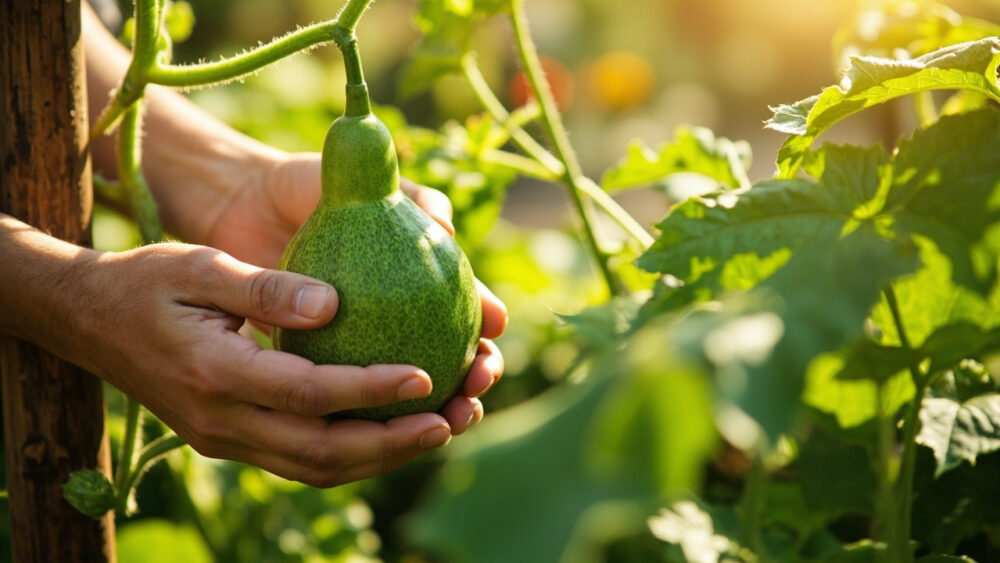
Bitter melon needs warm soil, a sturdy trellis, and a long season, at least 90 to 100 warm days from seed to fruit, so learning how to grow bitter melon starts with treating it like a heat-loving vine, not a casual squash. Plant seeds outdoors only after soil temperature holds at 70 to 75 F, roughly two to three weeks after your last frost date. Give it full sun, rich compost-fed soil, and something to climb, and the vine does most of the rest of the work itself.
Here is what trips people up before they even get a vine going: soaking or nicking the seed coat is not optional the way it is with cucumbers, and skipping it is the single biggest reason bitter melon seed never sprouts at all. There is also a sign on the fruit itself that most new growers read backward, mistaking the exact right harvest moment for a fruit that has gone too far. And if you are already picturing a heavy harvest by midsummer, the honest timeline is going to surprise you.
Stick with this guide to the end and you will find a save-able Bitter Melon at a Glance card with the numbers worth keeping on your phone while you are out at the nursery or standing over your seed packets this weekend.
When to Plant Bitter Melon
Bitter melon is a tropical vine at heart, related to cucumbers and squash but far less tolerant of cool soil. Wait until soil temperature is consistently 70 F or warmer, checked a couple inches down, before direct-sowing or transplanting outside. That usually lands two to three weeks after your last frost.
In zones 9 and warmer you can direct-sow straight into the garden. In zones 6 through 8, start seed indoors four to six weeks before your last frost so the vine has enough runway to fruit before fall cools things down.
Cold soil does not just slow bitter melon, it can rot the seed outright before it germinates.
Choosing the Spot and Prepping the Soil
Bitter melon wants full sun, six or more hours a day, and shelter from strong wind that can shred young vines. It is a vigorous climber, so plan for a trellis, fence, or arbor at least 5 to 6 feet tall before you plant, not after the vines are sprawling across the ground.
Work in two to three inches of compost or aged manure before planting, since this vine is a heavy feeder over a long season. Good drainage matters as much as fertility. Raised beds or mounded rows help if your soil holds water after rain.
Aim for a soil pH around 6.0 to 6.8. Bitter melon is not fussy about exact pH, but it sulks in soil that stays soggy or compacted.
Get the trellis in the ground before the seed goes in, and the rest of planting day goes a lot faster.
Planting Bitter Melon Step by Step
- Seed prep: soak seeds in warm water for 24 hours, or nick the hard seed coat with a nail file, to break dormancy. This step is not optional, untreated seed can take three weeks or more to sprout, if it sprouts at all.
- Depth: sow seeds 1 inch deep directly in the garden, or start in 4-inch pots indoors if you are getting a head start.
- Spacing: space plants 18 to 24 inches apart along the base of a trellis, with rows 4 to 6 feet apart if you are growing more than one.
- Technique: plant 2 to 3 seeds per spot and thin to the strongest seedling once true leaves appear, since germination is uneven even with prepped seed.
- Transplanting: if starting indoors, harden off over 5 to 7 days and move outside once nights stay above 60 F.
Once seedlings have two or three true leaves and start reaching for something to grab, the vine takes over the job of climbing on its own.
Watering and Feeding Through the Season
Bitter melon wants steady moisture, not a flood-and-drought cycle. Water when the top inch of soil feels dry, usually two to three times a week in hot weather, and mulch around the base to hold that moisture and keep roots cool.
Feed lightly but regularly. A balanced fertilizer every three to four weeks works well early on, then switch to something higher in phosphorus and potassium once flowering starts, to push fruit set instead of just leaf growth.
Watch the leaves for your cues. Pale, yellowing lower leaves usually mean the plant is hungry, while wilting despite wet soil often points to root rot from soil that never drains.
Flowers show up 6 to 8 weeks after planting, and what happens next is where most people either get their first fruit or wonder why nothing is forming.
Why Flowers Drop Without Setting Fruit
Bitter melon produces separate male and female flowers on the same vine, and early on the plant throws mostly males. If you assumed no fruit means a pollination problem you need to fix, that guess is usually wrong, it just means the female flowers, the ones with a small swollen bulge at the base, have not shown up yet.
Female flowers typically follow one to two weeks after the first males, and once both are present, bees and other pollinators usually finish the job. In small gardens or container setups with few pollinators around, hand-pollinating with a small brush between male and female blooms in the morning improves your fruit set noticeably.
Give the vine a little patience here before you assume something is wrong.
Problems That Actually Cost You a Harvest
Bitter melon is fairly tough once established, but a handful of problems show up often enough to plan for.
- Powdery mildew: a white, dusty coating on leaves in humid weather. Improve airflow by pruning crowded growth, water at the soil line instead of overhead, and treat early with a fungicide labeled for powdery mildew, following the label exactly.
- Cucumber beetles and fruit flies: these chew leaves and can scar or bore into young fruit. Floating row covers over young plants, removed once flowering starts for pollination, cut down damage significantly.
- Blossom drop: often just the male-flower phase described above, but persistent drop once females appear can mean heat stress above 95 F or inconsistent watering.
- Root rot: from soil that stays wet. Raised beds and mulch instead of constant heavy watering prevent most of it.
Catch these early and the vine shrugs them off, ignore them and you can lose most of a harvest to something that started as a small white spot on one leaf.
When and How to Harvest Bitter Melon
Here is the part almost everyone reads backward: the deep orange, fully ripe fruit that looks the most dramatic is actually past its prime for eating fresh. Harvest bitter melon while it is still firm and green to pale green, with the ridges and bumps still distinct, usually 10 to 14 days after the flower opens.
Fruit is typically 4 to 8 inches long depending on variety, and ready when it gives slightly to gentle pressure but is not soft or squishy. Once it starts turning yellow-orange and the skin softens, the flesh has gone from pleasantly bitter to unpleasantly so, and it is headed toward splitting open to reveal red, seedy pulp inside.
Cut fruit from the vine with a sharp knife or scissors, leaving a short stem attached. Regular picking, every 2 to 3 days once fruiting starts, keeps the vine producing instead of putting energy into fully ripening a few fruits and shutting down.
A healthy vine can keep producing for 8 to 10 weeks once it gets going, which is where that save-able summary below earns its spot.
Bitter Melon at a Glance
- When to plant: outdoors once soil is 70 to 75 F, about two to three weeks after last frost, or start indoors four to six weeks early in cooler zones.
- Spacing and depth: sow 1 inch deep, thin to one plant every 18 to 24 inches along a trellis at least 5 to 6 feet tall.
- Sun and soil: full sun, six or more hours daily, in compost-rich, well-drained soil with pH 6.0 to 6.8.
- Watering: water when the top inch of soil is dry, roughly two to three times a week in heat, with mulch to hold moisture.
- Days to fruit: flowers in 6 to 8 weeks, fruit ready 10 to 14 days after each flower opens, total season 90 to 100 days.
- Harvest sign: pick while still firm and green, before the skin turns yellow-orange and softens.
- Common trouble: powdery mildew in humid weather and slow early fruit set while the vine is still producing mostly male flowers.
Get the seed prep and the trellis right, and the vine handles most of the rest itself.
Pick it green, pick it often, and you will get weeks more harvest than a vine left to ripen on its own.