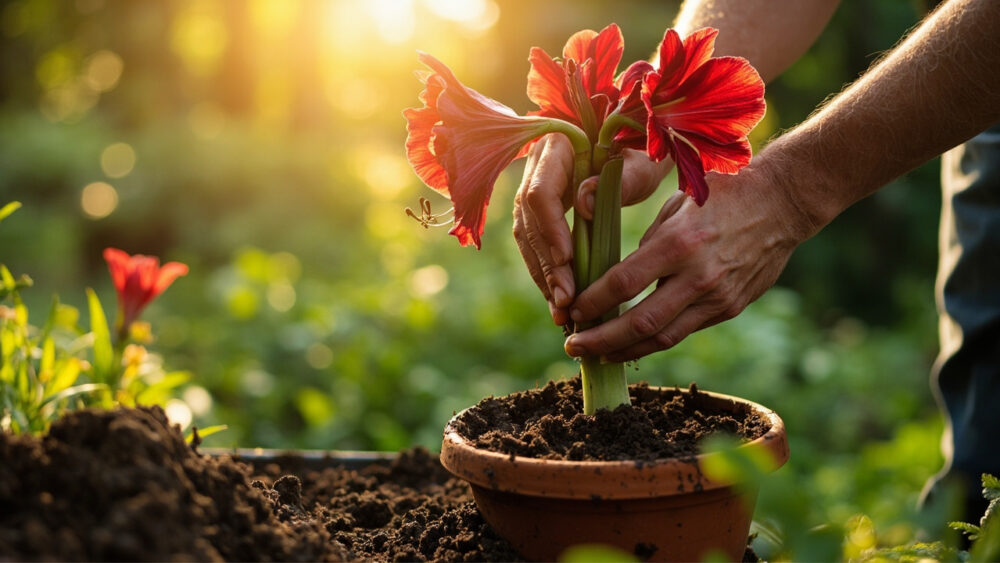
Growing amaryllis comes down to one simple fact most people never learn: it wants to be crowded, not buried. Plant the bulb with its top third sitting above the soil line, in a pot barely bigger than the bulb itself, and you will get a thick flower stalk in six to eight weeks. Get the depth wrong and you get a beautiful bulb that refuses to send up anything but leaves.
Almost everyone kills their second bloom cycle without realizing they did it. There is a step right after flowering that decides whether this bulb reblooms next year or slowly starves to death in the pot.
There is also a very specific, easy-to-miss sign that tells you a bulb is rotting from the inside before the leaves ever show it. Stick with me and I will flag it. The full Amaryllis at a Glance card is waiting at the bottom, save it before you plant.
When to Plant Amaryllis
Amaryllis bulbs are almost always grown indoors, so frost dates matter less here than with garden bulbs. What matters is when you want the bloom. Plant a bulb and expect flowers 6 to 10 weeks later, so count backward from the date you want color.
For holiday bloom, plant in early to mid October. For late winter color, plant anywhere from December through February. There is no wrong window as long as the bulb is firm and dormant when you start.
If you’re moving a potted amaryllis outdoors for summer, wait until nighttime temperatures stay reliably above 50°F, which in most zones means a few weeks after your last frost.
Timing decides when you see flowers, but the pot you choose decides whether you see them at all.
Choosing the Spot and Prepping the Soil
Amaryllis wants a tight pot, only 1 to 2 inches wider than the bulb’s diameter, with a drainage hole. A bulb swimming in a giant pot of wet soil is the single fastest way to rot it before it ever sprouts.
Use a loose, well-draining potting mix, not garden soil. A standard peat- or coir-based potting mix with some perlite works fine. Heavy, water-retentive soil is the second most common killer after oversized pots.
Light matters once growth starts, not before. A bright spot with several hours of indirect to direct sun, a south or east-facing window works well, is what you’re aiming for once leaves and the flower stalk emerge.
Before you touch the soil, though, you need to get the planting depth right, and that’s where most people guess wrong.
Planting Amaryllis Step by Step
If you assumed you should bury the bulb like a tulip or daffodil, that guess is exactly what stalls most amaryllis. This bulb wants air on its shoulders.
Steps to plant an amaryllis bulb
- Inspect the bulb. It should feel firm and heavy for its size, with dry, papery outer skin. Soft spots or a moldy smell mean rot has already started, discard that bulb.
- Fill the pot about a third full with potting mix.
- Set the bulb so its top one-third to one-half sits above the soil line once you finish filling in around it. This is the depth mistake that ruins most attempts, buried too deep, it rots or stalls.
- Fill in around the sides with soil, firming gently, but leave the top of the bulb exposed.
- Water thoroughly once at planting, then hold off until you see growth.
Get the depth right and the next decision, how much to water, is where the second wave of mistakes happens.
Watering and Feeding Through the Season
Right after planting, water once well and then wait. Do not water again until you see the green tip of a flower stalk or leaf pushing through the soil, usually within 2 to 4 weeks. Bulbs sitting in constantly moist soil before they’ve rooted are the ones that rot.
Once growth appears, water when the top inch of soil feels dry, roughly every 7 to 10 days indoors. Never let the pot sit in standing water.
Start feeding once the flower stalk is a few inches tall. A balanced liquid houseplant fertilizer at half strength every 2 to 4 weeks carries the plant through bloom and into leaf growth afterward.
Keep feeding after the flowers fade, this is the step almost everyone skips, and it’s exactly what determines whether this bulb blooms again next year.
The Problems Most Likely to Strike
The rotting sign nobody catches early: press gently on the neck of the bulb, right where it narrows above the roots. If it feels soft or mushy there before any leaves even show, the bulb is rotting from the base up, not from the top down where you’d expect to see it first. Pull it and check the roots; if they’re brown and slimy rather than white and firm, that bulb is done.
A leggy, floppy flower stalk usually means too little light, not too little water. Move it somewhere brighter and rotate the pot every few days so the stalk doesn’t lean hard toward one window.
Mealybugs and spider mites occasionally show up on indoor amaryllis, look for cottony white clusters in leaf joints or fine webbing under leaves. Wipe pests off with a damp cloth or treat with insecticidal soap, following the product label exactly.
Amaryllis bulbs are toxic to cats and dogs, and the bulb itself is the most concentrated part. If a pet chews on one, watch for drooling, vomiting, or lethargy and call your veterinarian rather than waiting it out.
Once you’ve got the plant healthy and blooming, the real question becomes what to do with it when the flowers fade.
When Amaryllis Blooms and What Happens After
Expect flowers 6 to 10 weeks after planting a dormant bulb, and each stalk stays showy for 2 to 3 weeks. A healthy bulb sends up one or two stalks, sometimes more if it’s a large, mature bulb.
When each flower fades, cut it off but leave the stalk alone until it yellows and goes limp on its own, then cut it back to about 2 inches above the bulb. Don’t cut a green stalk, it’s still feeding the bulb.
Keep the leaves growing and keep feeding for the next several months. Those leaves are rebuilding the bulb’s energy reserves for next year’s bloom, this is the step that gets skipped and it’s why so many amaryllis never flower a second time.
In late summer, you can force dormancy by withholding water for 8 to 10 weeks and storing the bulb somewhere cool and dark, or simply let it rest with reduced watering. Either way, that rest period is what resets the clock for another bloom cycle.
Amaryllis at a Glance
- When to plant: anytime indoors, count 6 to 10 weeks back from the date you want blooms, common windows are October for holiday color and December through February for late winter.
- Planting depth: top third to half of the bulb stays above the soil line, never bury it fully.
- Pot size: only 1 to 2 inches wider than the bulb, with drainage holes.
- Light needs: bright indirect to direct light, a south or east-facing window, once growth starts.
- Watering: nothing until you see a sprout, then water when the top inch of soil is dry, about every 7 to 10 days.
- Feeding: half-strength balanced liquid fertilizer every 2 to 4 weeks, starting once the stalk appears and continuing after bloom.
- Bloom window: flowers open 6 to 10 weeks after planting and last 2 to 3 weeks per stalk.
Depth and pot size are what most people get wrong, everything else is just patience.
Feed the leaves after the flowers fade and you’ll have a bulb that blooms again next year, not just this once.