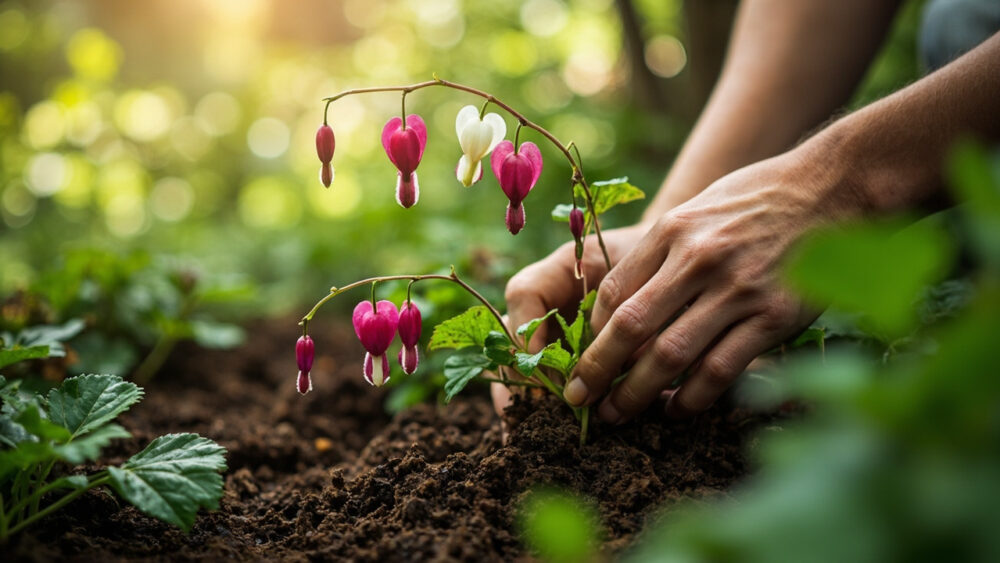
Growing bleeding hearts starts with picking a shady, well-drained spot and planting them in early spring or fall, about 2 to 3 feet apart, with the crown just an inch or two below the soil surface. Get that part right and the plant does most of the rest itself for years. Learning how to grow bleeding hearts successfully is really about respecting one fact: this is a woodland plant pretending to be a garden flower, and it plays by shade-loving rules.
Here is what trips people up: the plant dies back to nothing by midsummer, and most gardeners panic and assume they killed it. That is not death, that is the plan. There is also a spacing mistake that looks fine the first year and turns into a crowded, mildew-prone mess by year three.
Stick with me through the planting steps, the watering rhythm, and the summer dieback nobody warns you about, and I will give you a save-able Bleeding Hearts at a Glance card at the very bottom with every number on one list.
When to Plant Bleeding Hearts
Plant bleeding hearts in early springas soon as the soil can be worked and is no longer frozen or waterlogged, roughly 2 to 4 weeks before your last expected frost. They tolerate a light frost on emerging foliage without issue. Fall planting works too, about 4 to 6 weeks before your ground freezes solid, giving roots time to settle before winter.
Soil temperature matters more than the calendar. You want it above about 45°F, which in most of USDA zones 3 through 8 lands somewhere between mid-March and late April.
If you are starting from a potted nursery plant rather than bare root, you have more flexibility and can plant through late spring as long as you keep it watered while it establishes.
Timing gets the plant off to a good start, but where you put it decides whether it thrives or sulks.
Choosing the Spot and Prepping the Soil
Bleeding hearts want partial to full shadethe kind under deciduous trees or on the north or east side of a house. Morning sun with afternoon shade is close to ideal. Full sun in hot climates scorches the foliage and pushes the plant into early dormancy.
Soil should be rich, loose, and well drained but moisture retentive, the kind of ground you find under old hardwoods with years of leaf litter broken down into it. Work 2 to 3 inches of compost into the top 8 to 10 inches of soil before planting.
Heavy clay is the enemy here. Bleeding hearts rot in soggy, compacted ground faster than almost anything else you will plant this spring.
If your soil holds water after rain instead of draining within a few hours, raise the bed or amend heavily before you put a plant in the ground.
Planting Bleeding Hearts Step by Step
1. Dig the hole
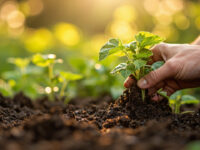
Dig a hole roughly twice the width of the root ball and just as deep. For bare-root plants, dig a hole about 12 inches wide and deep enough that the crown sits an inch or two below grade.
2. Set the crown at the right depth
This is the step most people get wrong. Plant the crown, the point where roots meet stems, no deeper than 1 to 2 inches below the soil surface. Bury it deeper and the plant may never emerge.
3. Space generously
Space plants 24 to 36 inches apart depending on variety. Mature bleeding hearts spread wide, and crowding invites poor air circulation and fungal problems later.
4. Backfill and water in
Fill in around the roots with your amended soil, firm it gently, and water thoroughly right after planting to settle air pockets out of the root zone.
5. Mulch
Add 2 to 3 inches of shredded bark or leaf mulch around, not on top of, the crown. This keeps roots cool and holds moisture through the first season.
Get the plant in the ground correctly and the next job is keeping it fed and watered without overdoing either.
Watering and Feeding Through the Season
Bleeding hearts like consistently moist soilnever bone dry, never waterlogged. Check the top 2 inches of soil with your finger; if it is dry, water deeply. Most established plants need this once or twice a week depending on rainfall and shade cover.
Feed once in early spring as new growth emerges, using a balanced, slow-release fertilizer or a topdressing of compost. That is usually enough for the whole year.
Here is the part almost nobody expects. By midsummer, especially in hotter climates, the foliage yellows and collapses entirely, and the whole plant seems to vanish. If you assumed that means you overwatered or the plant is dying, that guess is wrong and it is the single biggest reason people give up on this flower.
This dieback is normal dormancy. Bleeding hearts are spring ephemerals at heart. They bloom, they fade, they disappear underground, and they come back reliably next spring. Mark the spot so you do not accidentally dig there in July.
Once you know the disappearing act is expected, the real problems to watch for are the ones that actually threaten the plant.
Problems That Actually Threaten Bleeding Hearts
The most common issue is crown rot from soil that stays too wet, especially in clay or in a spot without afternoon drainage. The crown turns soft and dark instead of firm. There is no fixing a rotted crown; if you catch it early enough you can try lifting and relocating the plant to drier ground, but often it is a lost season.
Powdery mildew shows up as a white dusty coating on leaves in humid, crowded conditions. Improve air circulation and avoid wetting foliage when you water. A labeled fungicide can help if it is severe, and you should always follow the product label exactly.
Aphids occasionally cluster on new growth. A strong spray of water or insecticidal soap applied per the label usually handles them.
Slugs chew ragged holes in the soft foliage, especially in damp shade gardens. Hand-picking at dusk or a labeled slug bait around the base keeps damage minimal.
One honest note on safety: bleeding heart foliage and roots are toxic if ingested, to both pets and people, and can cause symptoms ranging from mild stomach upset to more serious effects depending on the amount eaten. If a pet or child eats a significant amount, call a veterinarian or poison control right away rather than waiting to see what happens.
Handle the site conditions right and most of these problems never show up at all.
When Bleeding Hearts Bloom and What to Do After
Bleeding hearts flower in mid to late springtypically April into June depending on your zone, producing the arching stems of heart-shaped blooms in pink, white, or red that give the plant its name. Bloom usually lasts 4 to 6 weeks.
There is no harvest in the vegetable-garden sense here. This is a flower grown for the display and, in some gardens, for cut stems brought indoors for a few days in a vase.
Once the flowers fade and the foliage starts yellowing on its own in early to midsummer, resist the urge to cut it back early. Let the leaves die back naturally so the plant can store energy in its roots for next year.
You can trim the dead foliage away once it has fully browned, usually by late summer, right down to the ground.
Everything you need for next year’s bloom is already stored underground by the time the leaves finish dying back.
Bleeding Hearts at a Glance
- When to plant: early spring, 2 to 4 weeks before last frost, or fall, 4 to 6 weeks before ground freeze, once soil is above about 45°F.
- Light: partial to full shade, morning sun with afternoon shade is ideal, avoid full sun in hot climates.
- Soil: rich, loose, well drained but moisture retentive, amended with 2 to 3 inches of compost.
- Depth and spacing: crown 1 to 2 inches below the soil surface, plants spaced 24 to 36 inches apart.
- Watering: consistently moist, check the top 2 inches of soil, water deeply once or twice weekly depending on rainfall.
- Bloom time: mid to late spring, typically 4 to 6 weeks, followed by natural summer dieback that is not a sign of trouble.
- Watch for: crown rot from wet soil, powdery mildew in crowded humid spots, slugs, and toxicity to pets and people if eaten.
Plant it in shade, keep the soil moist but never soggy, and let it vanish every summer without worry.
Do that, and a bleeding heart will outlive most of the other plants in your garden.