Here’s how to prune verbena: shear it back by about a third to a half whenever it gets leggy or stops blooming, which for most garden verbena is every 4 to 6 weeks through the growing season. Use clean shears, cut just above a set of leaves, and never take more than half the plant at once. That’s the core of it, but knowing when to walk away from the shears matters just as much as knowing when to pick them up.
Most people who try this make one specific mistake that costs them the rest of the bloom season, and it isn’t cutting too much. It’s cutting at the wrong stage of the plant’s cycle, or skipping the deadheading that should happen between the big prunes.
There’s also a sign a lot of gardeners misread as disease when it’s actually just verbena telling you it’s overdue for a haircut. Stick with me and I’ll walk through all of it, including the exact spots to cut, and I’ve put a save-able Verbena at a Glance card at the very bottom for the next time you’re standing in front of the plant with shears in hand and no memory of any of this.
When to Prune Verbena, and When to Leave It Alone
The main pruning window runs from a few weeks after your last frost, once the plant is actively growing, through late summer. Established verbena gets a hard cutback in early spring, right as new growth shows at the base, cutting the whole plant down to about 4 to 6 inches. That’s the reset that keeps perennial types like Verbena bonariensis or Verbena hastata from turning into a woody, sparse mess.
During summer, you’re not doing that hard cutback again. You’re doing lighter trims and deadheading, every few weeks, whenever the plant looks tired.
Don’t prune within about 6 weeks of your first expected fall frost. Late cuts push tender new growth that frost kills outright, and on perennial types that can weaken the crown going into winter. Once night temperatures start dropping consistently, let the plant coast.
Timing is half the job, but the other half is knowing where on the stem to actually make the cut.
Tools and the One Prep Step That Matters
A basic pair of bypass pruners or garden shears handles annual and perennial verbena fine. For a big mounding patch of the trailing types, hedge shears speed things up. Whatever you use, make sure the blades are sharp. Dull blades crush stems instead of slicing them, and crushed stems are slower to heal and more open to fungal issues.
The one prep step people skip: wipe your blades down with rubbing alcohol before you start, especially if you’ve used them on anything showing powdery mildew or leaf spot this season. Verbena is genuinely prone to powdery mildew in humid weather, and dirty shears are a fast way to spread it from one plant to the next.
Clean tools are step zero, and skipping it is how a five-minute trim turns into a season-long fungus problem.
Once your blades are sharp and clean, the actual cutting is straightforward.
How to Prune Verbena, Step by Step
Step 1: Look at the plant, not the calendar
Check for the real signs it’s time: fewer new blooms, flower heads mostly spent and browning, or stems that have gone long and floppy with bare lower sections. If the plant still looks tight and is blooming well, leave it. Pruning on a schedule instead of by appearance is how you end up cutting a plant that didn’t need it yet.
Step 2: Deadhead first, in between the bigger prunes
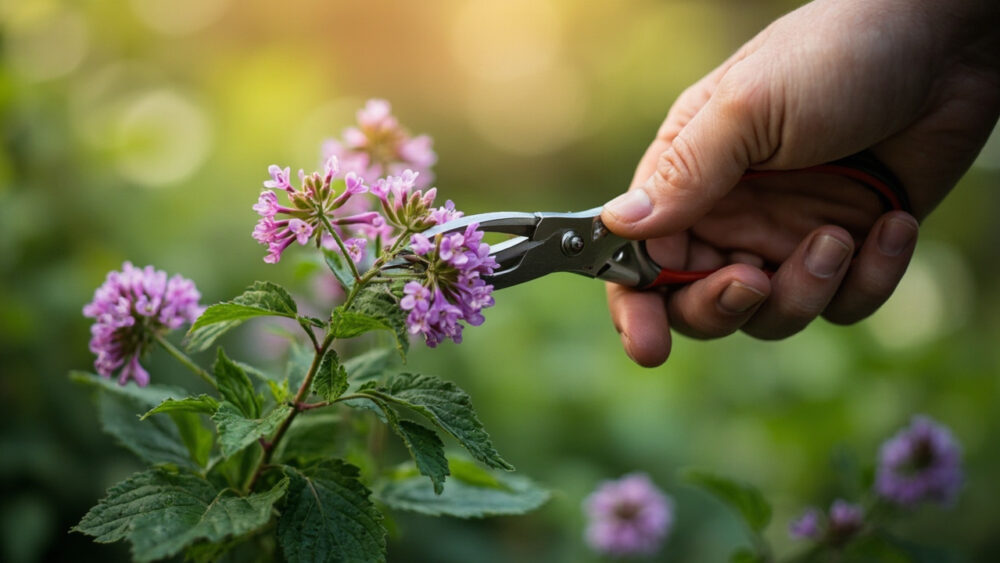
Snip spent flower clusters off just below the bloom, where the stem is still green. Do this every week or two through the season. It’s small maintenance, but it’s what keeps verbena flowering continuously instead of going to seed and shutting down.
Step 3: Make the real cut just above a leaf node
When it’s time for a fuller trim, cut each stem back by a third to a half, always just above a set of leaves or a visible node. New growth comes from that node, so cutting mid-stem with no leaves below wastes the cut. Work around the whole plant so it comes back an even shape rather than lopsided.
Step 4: Reserve the hard cutback for early spring only
On perennial verbena, once a year, cut the entire plant down to 4 to 6 inches above the soil as new growth starts. This is the one time you take more than half the plant, and it’s the cut that keeps the base from getting woody and hollow in the center.
Knowing where to cut is only useful once you know what the plant is supposed to do next.
What to Expect After You Cut
If you guessed the plant sulks for a couple weeks and then explodes with flowers, you’re half right, and the half you’re missing is the part that trips people up. Verbena responds fast, usually pushing visible new growth within 7 to 10 days in warm weather. But that new growth is foliage first. Bloom follows 2 to 4 weeks after the cut, not immediately.
That gap is exactly when nervous gardeners assume they killed it and start overwatering or dosing it with fertilizer. Don’t. Verbena actually blooms better in lean soil with consistent but moderate water. Heavy nitrogen after a prune gives you leaves at the expense of flowers.
Also expect the plant to look a little rough right after a hard spring cutback. Bare stems and short stubs are normal, not a sign of damage.
Patience here pays off, but so does knowing which problems are worth worrying about, and that’s where most pruning mistakes actually happen.
The Mistakes That Cost You Flowers
The powdery gray-white coating a lot of gardeners see on verbena leaves in late summer looks like a disaster, and the instinct is to rip the plant out or panic-spray it. It’s usually powdery mildew, driven by humidity and poor airflow, not a death sentence. Prune out the affected stems, improve spacing so air moves through the plant, and if it’s severe, a fungicide labeled for powdery mildew on ornamentals applied exactly per the label will get it under control.
- Shearing on a fixed schedule instead of by the plant’s appearance, which means cutting healthy growth that didn’t need it.
- Taking more than half the plant in a single summer trim, which stresses the roots and delays reflowering by weeks.
- Cutting mid-stem with no leaf node below the cut, wasting the cut and leaving a dead stub.
- Pruning within 6 weeks of first frost, which forces tender growth the cold kills and weakens the crown.
- Skipping deadheading and waiting for the one big trim, which lets the plant set seed and slow down blooming for weeks at a time.
Avoid those five and verbena will out-bloom almost anything else you’re growing this season.
Verbena at a Glance
- Main pruning window: a few weeks after last frost through late summer, stopping about 6 weeks before first fall frost.
- Hard cutback: once a year in early spring, perennial types only, down to 4 to 6 inches as new growth starts.
- Routine trim: every 4 to 6 weeks, cutting a third to half the plant, always just above a leaf node.
- Deadheading: weekly or biweekly, snipping spent blooms just below the flower head, to keep continuous flowering.
- Tools: sharp bypass pruners or hedge shears, wiped with rubbing alcohol before use.
- After cutting: new growth in 7 to 10 days, blooms following 2 to 4 weeks later, no extra fertilizer needed.
- Watch for: powdery gray coating on leaves in humid weather, treated by pruning affected stems and improving airflow.
If you remember nothing else, cut by what the plant looks like, not the date on the calendar.
Sharp shears, a node to cut above, and a little patience for the bloom to catch up is the whole job.