Pruning pansies mostly means deadheading spent blooms and pinching back leggy stems, and you can do it any time the plant is actively growing, roughly every one to two weeks during bloom season. The goal is simple: remove faded flowers before they set seed, and cut back stretched, floppy stems by about a third to force new branching from the base. Skip either step for too long and the plant stops blooming and starts looking like a tired houseplant that got left outside too long.
Here is what trips people up. Most gardeners either deadhead the flower head alone and leave a bare stem behind, or they get scared of cutting into green growth and only pick off things that are already brown and crunchy. Both habits quietly shrink your bloom count for the rest of the season.
There is also a harder truth waiting a few sections down: pansies have a built-in shutdown switch tied to heat, not neglect, and pruning cannot override it forever. Stick with me and I will tell you exactly when cutting back saves the plant and when it is just delaying the inevitable. The save-it-to-your-phone Pansies at a Glance card is at the very bottom once you have the full picture.
When to Prune, and When to Leave Them Alone
Start light deadheading as soon as the first flowers fade, usually within a few weeks of planting. Do a real cutback, the one-third-off kind, when you notice stems getting long and thin with blooms only at the tips, rather than flowers scattered along a compact plant.
Cool weather is prime pruning time. Pansies grow fastest and respond best to cutting back when daytime temps sit in the 45 to 75°F range. In hot climates that means spring and fall are your productive windows; in mild winter zones (roughly zone 7 and warmer) they will keep going most of the winter too.
Do not bother heavy-pruning a plant that is bolting from sustained heat above 80 to 85°F. You can trim it back to try to buy time, but pansies are cool-season annuals (sometimes short-lived perennials in zone 6 and cooler with protection) and heat eventually ends the show no matter what you do with your scissors.
Next, the two tools that actually matter and the one prep step everyone skips.
Tools and the One Prep Step That Matters
You need almost nothing for this job. A clean pair of small snips or scissors handles cutbacks, and your fingers handle deadheading just fine since pansy stems are soft and pinch off easily.
The prep step people skip: check the soil moisture first. Pansies wilt when they are thirsty, and a wilted plant looks exactly like a plant that needs a hard prune when it actually just needs water. Stick a finger an inch into the soil; if it is dry, water first and check back in an hour before you decide how much to cut.
If you are working with a lot of plants in beds or containers, wipe your blades with rubbing alcohol between plants if any of them show spotting or mushy stems. Pansies can pick up fungal issues in wet, crowded conditions, and dirty tools spread it.
Once the plant is hydrated and your tools are clean, you are ready to actually cut.
How to Prune Pansies Step by Step
Step 1: Deadhead first, always
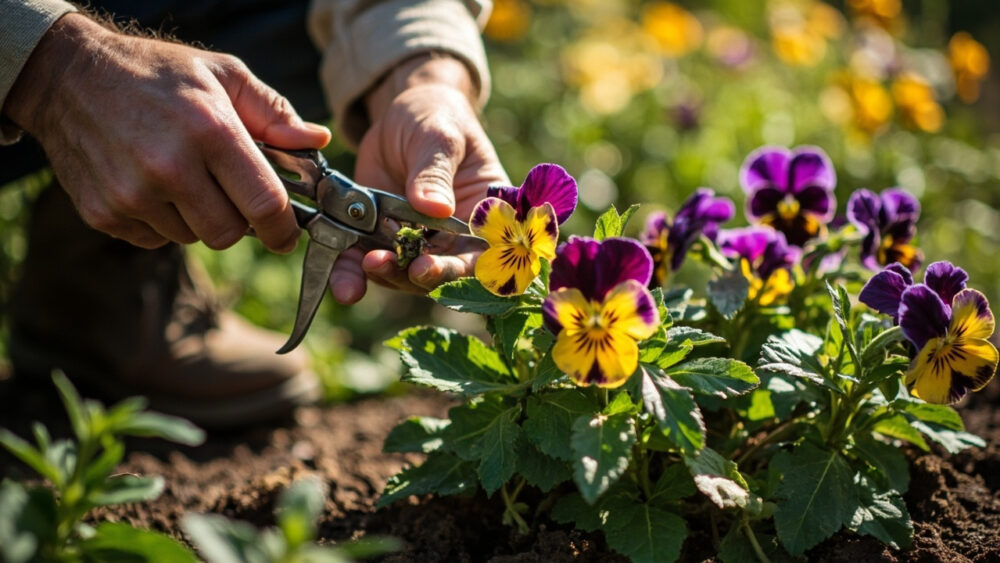
Follow the faded flower stem down to where it meets a leaf node or the main crown, and pinch or snip it there, not just at the base of the petals. Leaving a bare inch of stem behind is the mistake that produces the sad, twiggy look people blame on the plant instead of the pruning.
Do this pass every week to ten days during active bloom.
Step 2: Cut back leggy stems by a third
When stems have stretched past 4 to 6 inches with sparse leaves and blooms clustered only at the tips, cut the whole stem back by about a third to a half, cutting just above a set of healthy leaves. This forces the plant to branch lower and produces a fuller, shorter plant with more flower buds within two to three weeks.
Do not remove more than half the plant’s growth in one session, even if it looks rough.
Step 3: Rejuvenate an overgrown or heat-stressed plant
If a plant has gone mostly to stem with a few sad blooms at the top, cut it back hard, down to about 2 to 3 inches of growth above the crown. This is a bigger cut than the routine third-off trim and it will leave the plant looking bare for a week or two.
Only do this in cool weather with the plant well watered. A hard cut on a heat-stressed, dry pansy often just kills it outright.
Now here is what actually happens after you make these cuts, and it is not always flowers right away.
What to Expect After You Cut
Light deadheading shows results almost immediately, since you are just tidying and redirecting energy away from seed production. Within days the plant looks cleaner and new buds keep forming on schedule.
A real cutback is slower and looks worse before it looks better. Expect a rough, sparse one to two weeks with few or no blooms while the plant pushes new branching from lower nodes.
If you assumed no new blooms means you killed it, that is usually the wrong read. As long as you see any new leaf growth at the cut points, the plant is working, it is just investing in structure before it reinvests in flowers.
Feed lightly with a balanced liquid fertilizer at half strength after a hard cutback to support that regrowth, and expect full bloom flush again in roughly two to three weeks under cool, growing conditions.
That regrowth window is exactly where most of the real mistakes happen.
The Mistakes That Actually Cost You Flowers
Deadheading the flower but leaving the stem is the single most common error, and it is why pruned pansies sometimes look worse than unpruned ones. Always follow the stem down to a leaf node.
Pruning a thirsty plant. Cutting a wilted, drought-stressed pansy hard often pushes it past the point of recovery instead of reviving it. Water first, wait, then assess.
Waiting for total legginess before cutting anything. If you only ever cut back once the plant is 80% bare stem, you are always playing catch-up. Little, frequent trims beat one dramatic rescue surgery.
Fighting the heat. Once sustained temps push past the mid-80s, no amount of cutting back restores vigorous blooming. That is the honest answer to the question everyone eventually asks: pruning delays the seasonal decline by a couple of weeks at best, it does not reverse it. At that point your better move is accepting the pansy’s season is ending and planning its warm-season replacement.
Ignoring soft, mushy, or blackened stems. That is not a pruning problem, it is likely a fungal rot from overly wet soil or poor airflow. Remove affected stems and improve drainage rather than pruning your way around a moisture problem. Pansies are not toxic to pets or people and are actually edible for humans in small amounts, but if a pet eats a large quantity of any garden plant and shows vomiting, drooling, or lethargy, call your veterinarian rather than waiting it out.
Get those five habits right and pruning stops being guesswork and starts being maintenance, which is exactly what pansies want.
Pansies at a Glance
- When to prune: every one to two weeks during active growth, spring and fall in most climates, winter too in zone 7 and warmer.
- Best temperature range: 45 to 75°F for strong regrowth after cutting back.
- Deadheading cut point: follow the spent flower stem down to the nearest leaf node or crown, not just the petals.
- Routine cutback amount: about a third of leggy stem growth, never more than half at once.
- Hard rejuvenation cut: back to 2 to 3 inches above the crown, only on well-watered plants in cool weather.
- Recovery time: one to two rough weeks after a hard cut, full bloom flush again in two to three weeks.
- The limit: pruning cannot stop heat-driven decline above the mid-80s, it only buys a little time.
Deadhead often, cut back before the plant looks desperate, and never prune a thirsty pansy.
Get that rhythm down and your pansies will outbloom anyone who only trims when things already look bad.