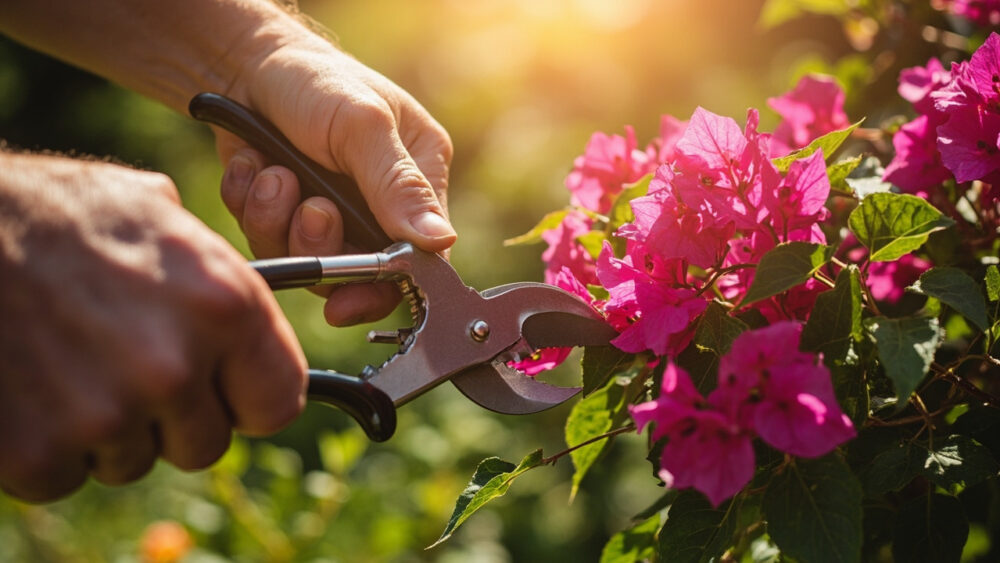
The short answer: prune bougainvillea hard right after a bloom flush, cutting spent flowering stems back by a third to a half, and do your one big structural cut in late winter or early spring while the plant is still semi-dormant. Skip pruning during an active bloom cycle or you will cut off the flowers you were waiting for. That is the core of how to prune bougainvillea, but the timing window is narrower than most people think.
Most pruning failures come down to one thing: cutting on a calendar instead of cutting on what the plant is doing. There is also a specific mistake that costs people an entire bloom season without them ever realizing that pruning was the cause.
Stick around for the step-by-step, because where you cut on the stem matters almost as much as when. And bookmark this one, because the save-able Bougainvillea at a Glance card at the bottom has every number you need next time you are standing in front of the plant with shears in hand.
When to Prune Bougainvillea, and When to Leave It Alone
Bougainvillea blooms in flushes, not continuously, and it blooms on new growth. That means the best time for a hard structural prune is late winter to early spring, after the coldest nights have passed but before strong new growth kicks in. In frost-free zones that is roughly January through March. Where winters bring real cold, wait until the last frost has passed and you see the first hint of new leaf buds.
Light shaping happens after each bloom flush fades, any time spring through fall. Never prune heavily in late fall or early winter in a marginal climate, since that pushes tender new growth right into frost.
The one time to leave it alone entirely is mid-bloom, when the papery bracts are fully colored and the plant is putting on a show.
Get the timing right and the tools barely matter, but let us cover them anyway.
Tools and the One Prep Step Nobody Skips (But Should)
You need bypass pruners for stems under about half an inch, loppers for anything thicker, and thorn-resistant gloves that actually go past the wrist. Bougainvillea thorns are stiff, curved, and hide inside the foliage, so a scraped forearm is the most common injury of this whole job.
Sanitize your blades before you start, especially if you have used them on another plant recently. A quick wipe with rubbing alcohol prevents spreading disease between plants, and it takes ten seconds.
The prep step people skip: clear the area under the plant first. Cut stems and dropped bracts create a thorny mat on the ground that is miserable to clean up after the fact, and stepping barefoot near it later is worse.
Tools ready, gloves on, ground cleared. Now the part that actually changes how the plant blooms.
Where to Cut
Always cut just above a node, the small bump or joint where a leaf or side shoot emerges. Cutting mid-internode, between nodes, leaves a dead stub that never leafs out and just sits there browning.
Angle the cut slightly, about 45 degrees, sloping away from the node so water runs off instead of pooling on the cut face.
How Much to Take
On a mature, established plant, take off a third to a half of each flowering stem during the big late-winter prune. For overgrown vines that have taken over a trellis or fence, you can cut back by half to two-thirds without killing the plant, since bougainvillea recovers aggressively from hard cuts.
Younger plants, under a year or two in the ground, need only light tip pruning to encourage branching, not a hard renovation cut.
Shaping as You Go
Cut long, whippy runners back to a strong lateral branch to keep the plant dense rather than leggy. Remove any dead, crossing, or inward-growing stems at their base regardless of season.
That is the mechanics, but knowing what happens in the weeks after tells you whether you did it right.
What to Expect After You Cut
Expect a slow week or two of apparent nothing, especially on a late-winter prune in cooler soil. Bougainvillea is not in a hurry to respond until soil temperatures climb and days lengthen.
Then new shoots push from the nodes just below your cuts, usually multiple shoots per cut, which is exactly the branching effect you want.
Flowers will not appear immediately. Bougainvillea needs to grow new stem length first, then it blooms at the tips of that new growth, so expect four to eight weeks between a hard prune and the next real flush, depending on heat and light.
If you pruned correctly and fed lightly with a bloom-formulated fertilizer afterward, the next flush is usually heavier than the one before, since you now have more branch tips producing color.
That waiting period is exactly where the guessable mistake sneaks in.
The Mistakes That Cost You a Season of Flowers
If you assumed the biggest mistake is cutting too much, that is not actually what wrecks most people’s bloom season. Bougainvillea tolerates hard cuts fine. The real killer is pruning during active bud formation, right when the plant is setting up its next flush, which strips off wood that was about to bloom and forces the plant to start the four-to-eight-week growth cycle over from zero.
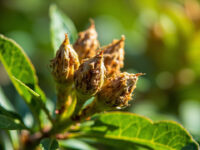
The tell you probably misread: if you see tiny green nubs forming along stems and you prune anyway because the plant “looks messy,” you just deleted next month’s flowers.
Other mistakes that genuinely cost you:
- Overfeeding with nitrogen after pruning, which produces lush leafy growth at the expense of blooms. Bougainvillea flowers best when slightly stressed for water and light on nitrogen, heavy on phosphorus and potassium.
- Pruning in deep shade conditions and expecting the same rebound as a plant in full sun. Bougainvillea needs six or more hours of direct sun to push a strong flush; prune a shaded plant and it just grows leaves.
- Ignoring the thorns and root sensitivity when working near the base, damaging surface roots with a shovel or hard rake while cleaning up, which stresses the plant separately from the pruning itself.
- Assuming potted bougainvillea needs the same aggressive cutback as an in-ground vine. Container plants are smaller-scale and usually only need light shaping plus a repot every couple of years, not a hard renovation.
Get the timing and the target right and this is one of the most forgiving vines you will ever cut into, which is exactly why the quick reference below is worth saving.
Bougainvillea at a Glance
- Best time to prune hard: late winter to early spring, after frost risk has passed and before strong new growth starts.
- Best time to shape lightly: right after each bloom flush fades, spring through fall.
- When to avoid pruning entirely: mid-bloom, and whenever you see tiny green bud nubs forming.
- How much to cut: a third to a half of flowering stems on mature plants, up to two-thirds on overgrown vines, light tip pruning only on young plants.
- Where to cut: just above a node, at a 45 degree angle sloping away from the bud.
- Time to rebloom: four to eight weeks after a hard prune, depending on heat and sun exposure.
- Sun requirement for a strong flush: six or more hours of direct sun daily.
Cut for shape after the bloom fades, cut hard once a year while the plant rests, and never cut when you see buds forming.
Get those three timings right and everything else about bougainvillea takes care of itself.