Learning how to grow phlox comes down to three things: give it full sun to light afternoon shade, plant after your last frost has passed once soil hits about 60°F, and space the roots or seedlings far enough apart that air moves freely between them. Get those three right and phlox more or less grows itself for years. Get them wrong and you get the two most common phlox failures: a plant that never blooms and a plant that looks dusted in flour by August.
That flour-dusted look is powdery mildew, and it is the mistake that ruins more phlox plantings than any pest, drought, or bad soil ever will. Almost everyone blames the weather when it shows up. The real cause is usually sitting a few inches to the left or right of the plant, and I will show you exactly what it is.
There is also a bloom-timing question nearly every new phlox grower asks around their second summer, and the honest answer surprises people. Stick with me through the growing steps below and the full Phlox at a Glance card is waiting at the bottom, saveable to your phone before you walk back out to the garden.
When to Plant Phlox
Bare-root or potted garden phlox (Phlox paniculata) goes in the ground in early spring, two to three weeks before your last frost date, or in fall about four to six weeks before your ground freezes. Either window lets roots establish in cool soil without fighting summer heat.
Creeping phlox and woodland phlox follow the same logic: root establishment matters more than bloom timing, so cool soil beats warm air.
If you’re starting annual phlox (Phlox drummondii) from seed, wait until soil temperature holds steady at 60 to 65°F, which usually lines up with two to three weeks after your last frost. Zone matters here: gardeners in zone 3 or 4 are often planting in late May, while zone 7 and up can go in late March or April.
Nail the timing and you’ve already dodged half the problems phlox runs into.
Choosing the Spot and Prepping the Soil
Phlox wants six or more hours of direct sun for the heaviest bloom, though it tolerates light afternoon shade, especially in hot climates where afternoon sun scorches the leaves. Morning sun with afternoon relief is close to ideal.
Soil drainage is non-negotiable. Phlox roots sitting in wet clay through winter rot outright. Work two to three inches of compost into the top eight inches of soil before planting, and if your soil holds water after rain like a sponge, raise the bed four to six inches or plant on a gentle slope.
Here’s the part that surprises people who assumed powdery mildew comes from humid weather alone: weather is only half the story. The other half is spacing, and that’s exactly where we’re headed next.
Planting Phlox Step by Step
1. Space it wide, not tight
Give tall garden phlox 18 to 24 inches between plants. Creeping phlox can go 12 to 18 inches since it spreads to fill gaps. This feels too far apart on planting day. It is exactly right by midsummer, when foliage fills in and airflow between plants is what keeps mildew off the leaves.
2. Dig the hole right
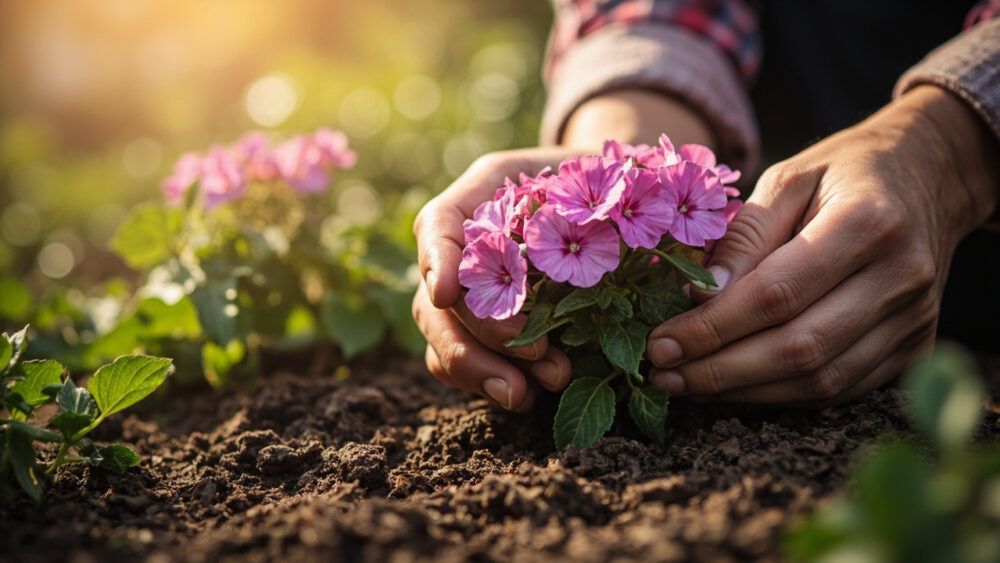
Dig a hole as deep as the root ball and twice as wide. Set potted phlox so the crown sits level with the surrounding soil, not buried and not raised on a mound.
3. Backfill and water in
Fill in around the roots, firm gently with your hands, and water slowly until the soil around the base is saturated. Skip fertilizer at planting time. New roots need to establish before you push growth.
4. Mulch, but leave a collar
Add two inches of mulch, keeping it an inch or two away from the stems. Mulch against the crown traps moisture right where rot starts.
Get the spacing and the collar right and you’ve already solved the problem most people fight all summer.
Watering and Feeding Through the Season
Water phlox one inch per week during the first growing season, more during stretches of dry heat. Once established, mature garden phlox tolerates short dry spells, but consistent moisture at the root zone still produces the biggest blooms.
Water at the base, not overhead. Wet foliage sitting overnight is the single biggest mildew trigger there is, ahead of humidity itself. A soaker hose or drip line beats a sprinkler every time with this plant.
Feed with a balanced, slow-release fertilizer once in early spring as new growth emerges. A second light feeding after the first flush of bloom keeps reblooming types going, but skip heavy nitrogen feeds, which push leafy growth at the expense of flowers.
Deadhead spent flower clusters through summer and you’ll stretch bloom time by several weeks on reblooming varieties.
The Problems Most Likely to Strike
Powdery mildew is the one you’ll meet eventually. White, flour-like coating on leaves, usually starting on lower foliage in humid, still air. Prevention beats treatment: spacing, base watering, and choosing mildew-resistant cultivars where you can find them do more than any spray applied after the fact. If it takes hold, a fungicide labeled for powdery mildew on ornamentals can slow it. Follow the product label exactly and remove badly infected leaves.
Spider mites show up in hot, dry summers as stippled, dusty-looking leaves. A strong water spray on the undersides most mornings usually knocks populations down.
Stem canker and root rot both trace back to wet feet. If a plant wilts despite moist soil, suspect rot over drought and check drainage before you water more.
Phlox is not a fussy plant once these three are handled, and heading them off is easier than fixing them after the fact.
When Phlox Blooms, and the Reblooming Question
Garden phlox blooms mid to late summer, typically 60 to 90 days after spring planting for established roots, holding color for four to six weeks. Creeping phlox blooms earlier, a brief but showy carpet in early to mid spring. Annual phlox blooms roughly 60 to 70 days from seed and keeps going until frost if deadheaded.
Here’s the honest answer to the question most second-year growers ask: no, phlox does not naturally rebloom the way some perennials do. What looks like reblooming is usually deadheading done well, or a modern reblooming cultivar bred specifically for it. If your phlox stopped flowering by midsummer and stayed done, that’s normal, not failure.
Divide clumps every three to four years in early spring or fall, once the center of the clump starts blooming thin. That division is also your easiest way to get more plants for free.
Phlox at a Glance
- When to plant: early spring two to three weeks before last frost, or fall four to six weeks before ground freeze, once soil holds steady near 60°F.
- Sun and soil: six or more hours of sun, well-drained soil enriched with compost, never soggy through winter.
- Spacing: 18 to 24 inches for garden phlox, 12 to 18 inches for creeping types.
- Depth: crown level with the soil surface, not buried, not mounded.
- Watering: one inch per week while establishing, base watering only, never overhead.
- Feeding: balanced slow-release fertilizer in early spring, light second feed after first bloom flush.
- Bloom window: mid to late summer for garden phlox, four to six weeks of color, earlier and briefer for creeping types.
Space it generously, water the roots and not the leaves, and phlox rewards you for years with almost no fuss.
Everything else is just details around those two habits.