The best time to plant catmint is two to three weeks before your last spring frost, once the soil has warmed to at least 50°F, or in early fall about six weeks before your first hard frost so roots can establish before winter. Catmint is tough enough to forgive a lot, but there’s still a real window here, and planting into cold, wet soil or during a summer heat wave is how a lot of first attempts fail.
Here’s what nobody tells you upfront: the mistake that kills more catmint than frost ever does isn’t timing at all, it’s soil that’s too rich and too damp. You’re about to find out why that matters more than the calendar does. There’s also a sign gardeners misread constantly right after planting, a floppy, sprawled look that people assume means the plant is dying when it usually means the opposite.
Stick with me through this, because at the very bottom there’s a Catmint at a Glance card, the kind of thing worth saving to your phone before you head out to the garden bed this weekend.
The Real Planting Window, Anchored to Frost and Soil
Spring planting works best once nighttime temperatures are reliably staying above the mid 30s and the soil has warmed past 50°F, which usually lands two to three weeks before your area’s last frost date. Catmint tolerates a light frost on its foliage fine once established, but new transplants with disturbed roots handle cold snaps worse than mature plants do.
Fall planting is the underused option. Aim for six to eight weeks before your first expected hard frost. That gives roots time to settle into the soil without forcing the plant into a lot of top growth right before winter.
Either window works. What matters is soil temperature and workability, not the date on a seed packet.
How to Find Your Actual Window, Not the Generic One
Forget the calendar for a second and check the dirt. Grab a handful of soil from where you’re planting. If it’s still cold and forms a tight, muddy ball that doesn’t crumble, it’s too early, even if your frost date has technically passed.
A cheap soil thermometer pushed two inches down is the most honest tool you own. You want 50°F minimum, and 60°F is better if you can wait for it.
Watch your local perennials too. When nearby daylilies or peonies are pushing new growth several inches tall, that’s a strong regional signal that soil has warmed enough for catmint to go in without sulking.
Once the soil passes that test, the next question is what happens if you jump the gun anyway.
Plant Too Early, and This Is What Actually Goes Wrong
If you assumed planting too early just means slower growth, that’s a reasonable guess, but it’s not quite right. Cold, wet soil around new roots is an invitation for root rot, and catmint’s biggest weakness is soggy ground, not cold air.
A plant sitting in 45°F mud for two weeks straight often rots at the crown before it ever gets the chance to grow slowly. That’s the real damage, not stunted growth.
On the other end, planting too late into summer heat means the transplant is fighting drought stress while trying to establish roots, and it will wilt hard in the afternoon sun for the first week or two even with regular watering.
Neither mistake is fatal on its own, but stacking heat stress with infrequent watering during that first month is what actually finishes off a struggling transplant.
The Floppy Look Everyone Panics Over
Now, the sign people misread. A week or two after planting, catmint often flops over, looking sprawled and half-dead, and gardeners assume they’ve killed it.
That floppy habit is genetic, not a stress symptom. Catmint naturally sprawls and mounds instead of standing upright, and many varieties lean over dramatically even at full health.
The real signs of trouble look different: leaves that are yellow and mushy rather than green and limp, or a black, soft crown at soil level. Sprawling green foliage means it’s fine. Mushy black stems mean rot, usually from planting too early into cold, waterlogged ground.
Knowing the difference is what keeps you from yanking out a perfectly healthy plant in week two.
What to Do Before the Window Opens
Prep the bed while you’re waiting on soil temperature, not after. Catmint wants full sun, at least six hours a day, and soil that drains fast. If your soil holds water after rain, work in some compost or coarse grit to loosen it before planting day, not the week after.
Skip heavy nitrogen fertilizer at planting time. Rich soil grows floppy, sparse-blooming catmint that flops over even more than it naturally would.
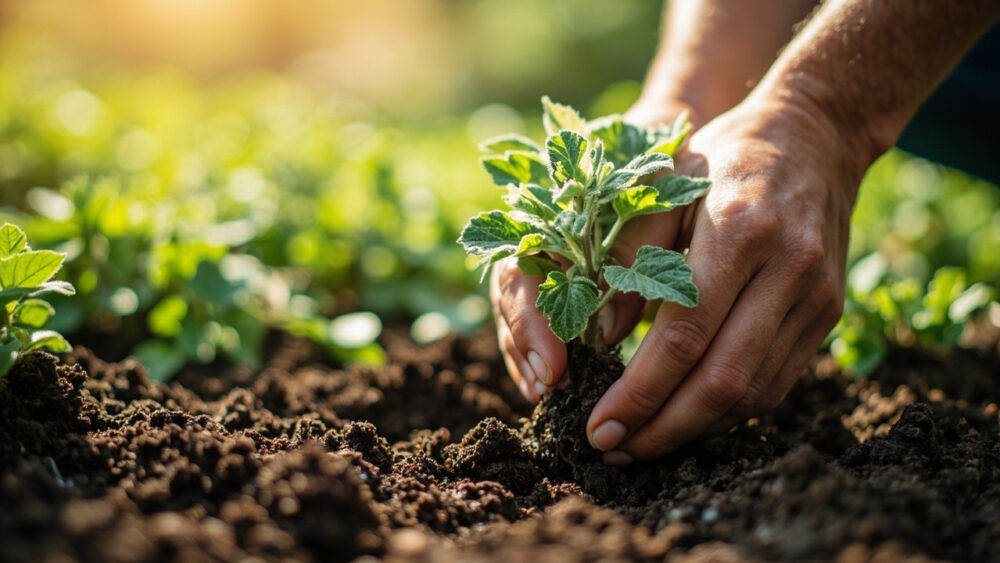
Space plants 12 to 18 inches apart depending on the variety, since most catmints spread wide within a season or two. Dig the hole just as deep as the root ball and no deeper, backfill, and water in well immediately.
With the bed ready to go, timing becomes the easy part.
Region Notes Worth Knowing
Catmint is reliably hardy from about USDA zone 3 through zone 8, and in most of that range spring planting after the soil warms is the safer bet for a first-year plant.
In hot summer regions, zone 7 and up, fall planting often outperforms spring because the plant skips the brutal establishment period during peak heat entirely.
In short-season northern climates, spring planting gives the roots a full season to bulk up before the first hard winter, which matters more there than it does further south.
Wherever you garden, the same two checks apply: soil temperature and your own frost dates, not a generic date on a plant tag.
Catmint at a Glance
- When to plant: two to three weeks before your last spring frost once soil hits 50°F or higher, or six to eight weeks before your first fall frost.
- Soil check: a handful should crumble, not clump into cold mud, and a soil thermometer two inches down should read 50 to 60°F.
- Spacing: 12 to 18 inches apart, since most varieties spread wide by their second season.
- Planting depth: match the root ball exactly, no deeper, then water in thoroughly.
- Light needed: full sun, at least six hours a day, for the tightest, least floppy growth.
- Soil type: lean, fast-draining soil beats rich, damp soil every time.
- Hardiness range: USDA zones 3 through 8, with fall planting favored in hot summer zones 7 and up.
If you remember one thing, remember the soil thermometer, not the calendar.
Get that reading right and catmint forgives almost everything else you throw at it.