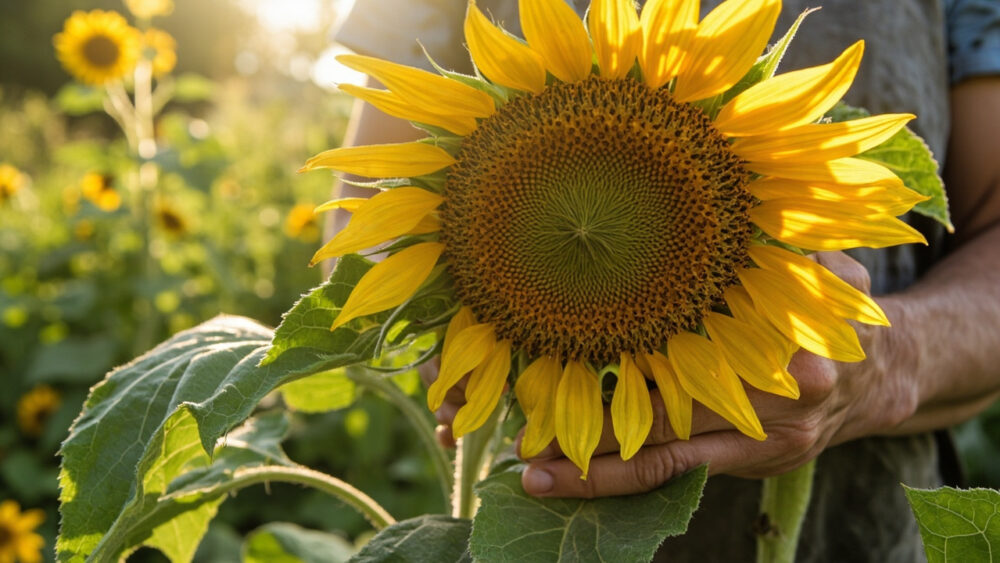
To grow giant sunflowers that actually hit 10 to 15 feet, plant seeds directly in the ground about 1 to 1.5 inches deep once soil has warmed past 60°F, space them at least 2 feet apart in full sun, and feed them through the season instead of just at planting time. That single spacing detail is where most first attempts go wrong. Crowded sunflowers compete for root room and light, and you end up with a row of skinny 6-footers instead of the towering, thick-stalked giants you were picturing.
There is also a timing mistake almost nobody expects: planting too early does not give you a head start, it gives you a stalled, sulking seedling that gets outgrown by seeds planted three weeks later in warmer soil. And the sign most people misread once the plant is up? A drooping head in late summer looks like distress, but it is usually just the flower doing exactly what it is supposed to do as it matures and loads up with seed.
I will walk through timing, siting, planting depth and spacing, feeding, the pest and weather problems that actually take these plants down, and when to harvest if you want the seed head instead of just the show. Save-able specifics, all of it, and the full Giant Sunflowers at a Glance card is waiting at the bottom.
When to Plant Giant Sunflowers
Wait until the danger of frost has passed and soil temperature has climbed to at least 60°F, checked an inch or two down with a soil thermometer or just your hand. That usually lands two to three weeks after your average last frost date, depending on your zone.
In zones 3 to 6, that often means late May into early June. In zones 7 to 9, you can get seed in the ground anywhere from mid April through May.
Cold, wet soil is the real enemy here, not the calendar. Seeds sitting in soil below 55°F rot or germinate weakly instead of sprinting.
Giant varieties like Mammoth or Russian Giant need a full 80 to 120 days of warm growing season to reach full height and mature seed, so in short-season climates, get them in the moment the soil allows it rather than waiting for a “safe” date on paper.
Get the timing right and the next decision, where you actually put them, matters just as much.
Choosing the Spot and Prepping the Soil
Full sun is non-negotiable. Giant sunflowers want 6 to 8 hours of direct sun minimum, and the tallest ones you have seen in photos were almost certainly getting closer to 8 or more.
Pick a spot with some wind protection, a fence line or a building corner, since a 12-foot stalk with a heavy, sun-heavy head acts like a sail in a storm.
Soil should be loose, well-draining, and rich. Work in a couple inches of compost or aged manure before planting, down to about 12 inches deep if you can manage it, because these are deep-rooted plants that will punish compacted soil with stunted growth.
Skip heavy fresh manure or high-nitrogen soil amendments at this stage. Too much nitrogen early pushes leafy growth at the expense of a strong stalk, which is exactly the kind of plant that snaps in a July windstorm.
Once the bed is ready, the actual planting is the easy part, if you get the depth and spacing right.
Planting Giant Sunflowers Step by Step
1. Sow directly, skip transplanting
Giant sunflowers develop a long taproot early and resent having it disturbed. Direct sow rather than starting indoors and transplanting, unless you are in a very short-season climate and willing to transplant carefully while seedlings are still small, under 4 inches tall.
2. Plant at the right depth
Sow seeds 1 to 1.5 inches deep. Any shallower and birds or drying soil get them before they germinate; any deeper and they struggle to push through, especially in heavier soil.
3. Space for size, not for looks
Give true giant varieties 2 to 3 feet between plants. If you are growing a block or short row for a “sunflower forest” look, you can go slightly tighter, but expect somewhat shorter, thinner stalks as a tradeoff.
4. Water in and thin
Water right after planting to settle soil around the seed. Once seedlings reach 4 to 6 inches tall, thin to your final spacing, keeping the strongest, thickest-stemmed seedling and removing the rest rather than trying to relocate them.
Get the spacing and depth right at planting and the rest of the season is mostly about feeding and watching the weather.
Watering and Feeding for Maximum Height
Deep, infrequent watering beats frequent shallow watering every time with these plants. Aim for about 1 to 2 inches of water per week, more during hot, dry stretches, and water at the base rather than overhead to keep the foliage dry.
Once plants are established at 12 to 18 inches tall, start a monthly feeding with a balanced fertilizer, or one slightly higher in phosphorus and potassium than nitrogen. This is the part most people skip, and it is the actual answer to “why is my sunflower not getting as tall as the ones online.”
A single dose of fertilizer at planting is not enough to fuel a plant that is about to put on 8 to 12 feet of growth in a few months. Giant sunflowers are heavy feeders for their whole run, not just at the start.
Mulch around the base to hold moisture and keep roots cool, but keep mulch a couple inches back from the stem itself.
Feed and water consistently and the plant does most of the rest of the work, but it still has to survive a handful of real threats first.
Problems That Actually Take Down Giant Sunflowers
Wind and weak stalks are the number one killer of giants, not disease. A stalk that grew too fast on too much nitrogen and too little sun exposure, or one planted too close to its neighbors, snaps in a summer storm right when the head is heaviest.
Staking a young plant loosely with a stake driven a foot into the ground near, not through, the root zone is cheap insurance for exposed sites.
Pests to watch for
- Birds and squirrels: the biggest threat to seed at both planting and harvest time, netting the seed head as it matures is the most reliable fix.
- Aphids: cluster on stems and the backs of leaves, usually manageable with a strong water spray or insecticidal soap applied per the product label.
- Sunflower moth larvae and stem-boring insects: can affect seed heads in some regions, cultural cleanup of old stalks at season’s end reduces overwintering populations.
For fungal issues like powdery mildew or stem rot, good spacing and base watering prevent most of it before it starts. If you do see disease, remove affected leaves and treat with an appropriate fungicide per the label rather than guessing at a home remedy.
Handle wind and pests, and the last question is simply knowing when the payoff is ready.
When and How to Harvest
If you assumed a drooping head late in the season means the plant is dying or stressed, that is the guess that trips up most new growers. A nodding, heavy head is actually the sign of a healthy plant finishing its job, bending under the weight of developing seed as the back of the flower turns from green to yellow to brown.
For seed harvest, wait until the back of the head is fully brown, petals have dried and mostly fallen, and seeds look plump with visible black and white or striped hulls, depending on variety. This typically happens 80 to 120 days after planting.
Cut the head with a foot or so of stem attached, and hang it upside down in a dry, ventilated spot, or cover it loosely with cheesecloth if birds have been a problem, until fully dry over one to two weeks. Then rub seeds free with your hands or a stiff brush.
If you only wanted the bloom for show or cutting, harvest a bit earlier, once the head is fully open with petals still fresh, and expect it to hold in a vase for about a week.
Once you know that sign, the rest of the season is just watching the show, and here is everything worth saving before you go.
Giant Sunflowers at a Glance
- When to plant: direct sow two to three weeks after your last frost, once soil hits at least 60°F.
- Depth and spacing: sow 1 to 1.5 inches deep, thin to 2 to 3 feet apart once seedlings reach 4 to 6 inches tall.
- Light and soil: full sun for 6 to 8 hours minimum, loose, compost-rich, well-draining soil worked at least 12 inches deep.
- Water: 1 to 2 inches per week, deep and at the base, more during heat.
- Feeding: balanced fertilizer monthly once plants reach 12 to 18 inches tall, do not stop after the first feeding.
- Main risks: wind damage to weak stalks, birds and squirrels at harvest, aphids on stems and leaves.
- Harvest window: 80 to 120 days after planting, when the back of the head browns and seeds look plump.
Get the spacing, the feeding schedule, and the wind protection right, and everything else about growing giants takes care of itself.
The rest is just water, sun, and the patience to let a slow-nodding head finish its work.