Rhododendrons care boils down to four things the plant will not compromise on: acidic soil that drains fast, roots kept cool and never soggy, dappled or morning light instead of full sun, and pruning timed right after bloom instead of whenever you feel like it. Get those right and a rhododendron will outlive the person who planted it. Get one wrong, especially the soil, and you will spend years wondering why a supposedly easy shrub keeps looking sick.
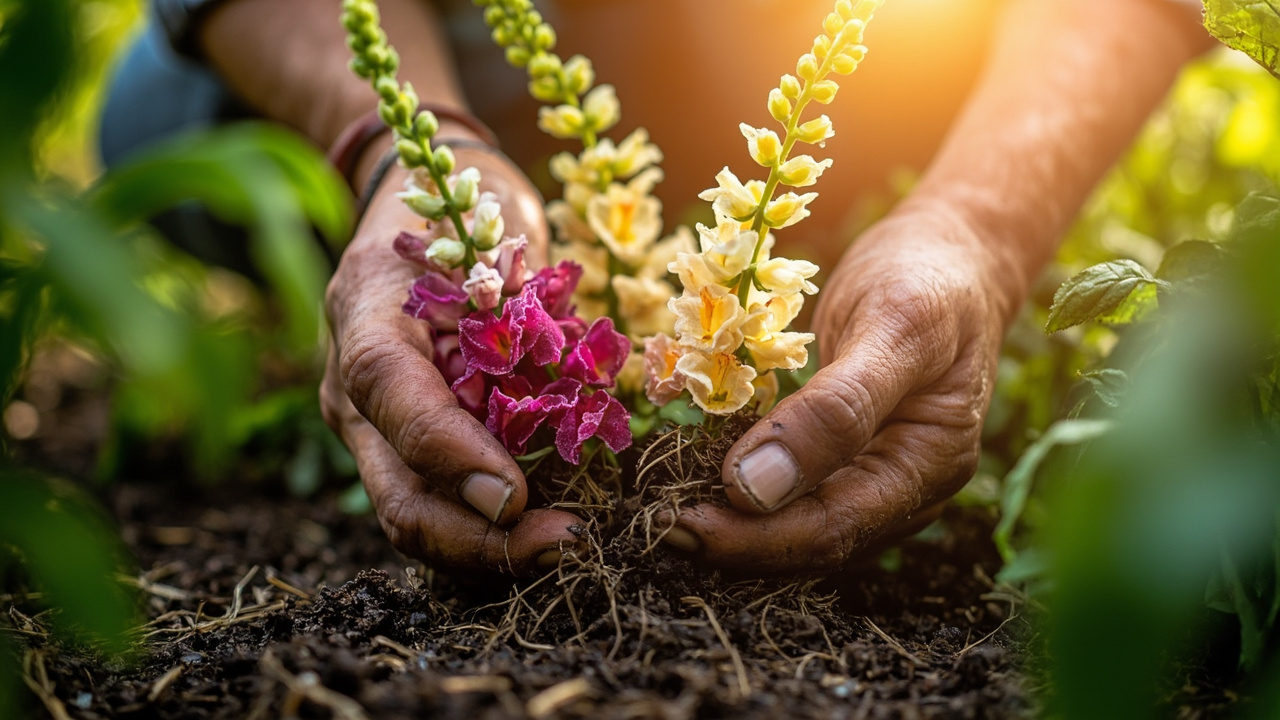
Most failures trace back to one mistake: planting too deep. It is the single most common way people kill a rhododendron in its first two years, and almost nobody suspects it because the plant does not die right away, it just slowly declines. There is also a sign nearly every new grower misreads completely, and a watering instinct that feels responsible but actually drowns the roots.
Stick around for all of it, including the mistake itself, the sign everyone gets backward, and the honest answer to “why won’t mine bloom.” Save-able specifics, spacing, depth, feeding schedule, are waiting in the Rhododendrons at a Glance card at the very bottom, but the reasoning behind each one matters more than the number alone.
Light, Placement, and Temperature
Rhododendrons want morning sun and afternoon shade, or the dappled light under tall, high-branched trees like oaks or pines. Full, all-day sun scorches the leaves in summer and stresses the plant in winter. Full shade keeps them alive but you will get few if any flowers.
Cold hardiness varies enormously by variety, some tolerate USDA zone 4 winters, others need zone 7 or warmer, so check the tag or variety name before you assume yours is bulletproof. Wind is the other factor people ignore. A spot shielded from harsh winter wind matters as much as the light exposure, since windburn on evergreen leaves in January looks a lot like disease but is not.
Placement decides almost everything else you will fight with later.
Watering: How Much, How Often, and How to Tell
Rhododendrons have shallow, fibrous roots that dry out fast but also rot fast, so the goal is consistently moist, never waterlogged. In the first year, water deeply once or twice a week whenever the top 2 inches of soil feel dry to the touch, more often in hot weather, less in cool or rainy stretches. Established plants can usually coast on rainfall except during real drought.
Here is the guess almost everyone makes wrong. If the leaves droop and curl, the instinct is to water more, since drooping looks like thirst. Sometimes that is right. But rhododendrons also droop and curl their leaves as a defense against cold and drought stress, and if the soil underneath is already damp, more water just finishes off roots that are already suffocating from poor drainage.
Check the soil before you touch the hose. Curled leaves with dry soil mean water now. Curled leaves with damp soil mean the problem is drainage, not thirst, and adding water makes it worse.
Getting the soil itself right is what actually prevents this conflict from happening in the first place.
Soil, Potting Mix, and Feeding
Rhododendrons need acidic soil, roughly pH 4.5 to 6.0, that drains well but holds some moisture, think of a woodland floor with lots of organic matter. Heavy clay is the enemy. If your soil is dense, amend generously with pine bark fines, compost, and peat moss, or simply plant high, mounding the root ball a few inches above grade so excess water sheds away from the crown.
For containers, use an acidic, well-draining mix labeled for azaleas or rhododendrons rather than generic potting soil.
Feed lightly with a fertilizer formulated for acid-loving plants, applied once in early spring as new growth starts and again right after bloom if growth looks weak. Skip feeding after mid-summer, since late fertilizer pushes soft new growth that winter will kill.
Good soil chemistry solves half the disease problems you will ever have with this plant.
Pruning, Repotting, and Seasonal Cleanup
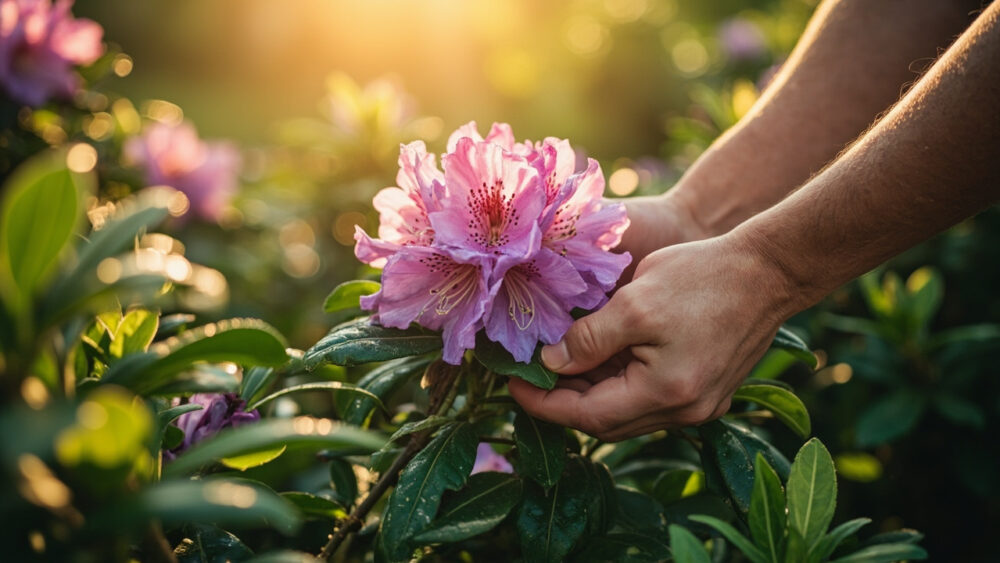
Prune within 2 to 4 weeks after flowering finishes, never in fall or winter, because rhododendrons set next year’s flower buds on the current season’s new growth almost immediately after bloom. Prune late and you cut off next year’s flowers without knowing it. Remove spent flower clusters (deadheading) by snapping them off just above the new growth buds, and thin out any crossing, dead, or leggy branches at the same time.
Repot container plants every 2 to 3 years, moving up one pot size and refreshing the acidic mix. In-ground plants rarely need dividing or moving once established, and in fact resent transplanting, so choose the permanent spot carefully the first time.
Clean up fallen leaves and old mulch each spring to reduce fungal spores overwintering at the base.
Timing pruning wrong is forgivable once, but it explains a surprising number of “why didn’t it bloom” questions.
Problems That Actually Show Up
The most common issues are fungal leaf spots and root rot, both traceable back to poor drainage or overhead watering that keeps foliage wet. Yellowing leaves with green veins usually signal iron chlorosis from soil that is not acidic enough, not a nutrient deficiency needing more fertilizer.
Lace bugs and vine weevils are the two pests worth watching for: stippled, pale speckling on leaf tops means lace bugs, while notched leaf edges at night point to weevils. For any pest or fungal outbreak, treat with a product labeled for that specific pest or disease on rhododendrons, and follow the label instructions exactly rather than guessing at concentration.
Rhododendrons are toxic to dogs, cats, horses, and people if ingested, affecting the heart and digestive system. If you suspect a pet or child has eaten any part of the plant, contact a veterinarian or poison control immediately rather than waiting to see what happens.
Most of these problems are preventable, but the bloom question deserves its own honest answer.
Why Won’t It Bloom, and What Thriving Actually Looks Like
If your rhododendron isn’t flowering, the usual suspects are too much shade, fall or winter pruning that removed the buds, or a late hard freeze that killed buds already formed. Too much nitrogen fertilizer can also push leafy growth at the expense of flowers. None of these are fixable this season, but correcting light and pruning timing usually brings blooms back the following year.
A genuinely thriving rhododendron has deep green, glossy leaves that stay firm rather than curled at midday, steady new growth each spring, and flower buds forming by late summer for the following year’s bloom. Leaves rolling tightly on a cold night is normal and not a problem.
Everything above compresses down to the numbers worth keeping on hand.
Rhododendrons at a Glance
- Light: morning sun with afternoon shade, or dappled light under high tree canopy, never full all-day sun.
- Soil: acidic, pH 4.5 to 6.0, rich in organic matter, well-draining, amended with pine bark or peat if heavy.
- Planting depth and spacing: plant at or slightly above grade, never deeper, space 3 to 6 feet apart depending on mature variety size.
- Watering: check soil 2 inches down, water deeply when dry, avoid soggy soil, water once or twice weekly in the first year.
- Feeding: acid-plant fertilizer in early spring and lightly after bloom, never after mid-summer.
- Pruning: within 2 to 4 weeks after flowering ends, never in fall or winter.
- Hardiness: varies widely by variety, zone 4 to zone 8, confirm your specific type before relying on it through winter.
If you remember one thing, remember this: soil acidity and drainage forgive almost every other mistake, and planting too deep forgives none of them.
Get the roots right and the rest of rhododendron care is mostly just patience.