Learning how to care for plumeria comes down to three things the plant demands non-negotiably: full sun, well-drained soil that dries out between waterings, and a winter rest with almost no water at all. Get those right and a plumeria will reward you with fragrant, waxy blooms from late spring through fall. Get the winter part wrong, and you can rot a healthy plant to mush in a single wet January.
Most people who kill a plumeria do it with kindness, watering through winter dormancy like it’s a houseplant that needs year-round attention. There’s also a sign on the leaves that panics new growers into overwatering when the plant is actually just doing something completely normal. And if you’re wondering whether that bare, leafless stick you brought home is dead, the honest answer surprises most people.
Stick with me through the sections below and you’ll know exactly what your plumeria needs this week, not just in theory. At the bottom is a save-able Plumeria at a Glance card with the numbers you’ll want to check on your phone next time you’re standing in front of the plant wondering what to do.
Light, Placement, and Temperature
Plumeria wants full sunsix or more hours a day, and it wants heat. This is a tropical shrub, comfortable anywhere from about 65 to 95°F, and it sulks below 50°F. In the ground, that means a USDA zone 10 or 11 spot, or a large patio pot anywhere colder that you can move.
If you’re in zone 9 or colder, plumeria lives in a container full time. Bring it indoors, garage, or a bright sunroom once nights drop into the 40s. It can handle a light frost brush without dying, but a hard freeze will kill stems to the ground or outright kill the plant.
A plumeria that isn’t blooming is almost always a plumeria that isn’t getting enough direct sun.
Watering: How Much, How Often, and How to Tell
During active growth, spring through early fall, water deeply and then let the top 2 to 3 inches of soil go completely dry before watering again. That’s usually every 5 to 10 days outdoors in summer heat, less often in a pot with slow-draining mix. Stick a finger in past the first knuckle; if it’s still damp, wait.
Winter is where this plant is actually easy to kill. Once leaves drop and growth stops, cut water back to almost nothing, a light drink every 3 to 4 weeks at most, sometimes none at all if the plant is dormant indoors. A dormant plumeria sitting in damp soil will rot from the roots up before you ever see a warning sign above ground.
If you assumed a leafless winter plumeria needs regular water like anything else, that assumption is the single most common way people lose these plants.
Soil, Pots, and Feeding
Plumeria roots hate sitting wet. Use a fast-draining cactus or succulent mix, or build your own with regular potting soil cut with an equal amount of perlite or coarse sand. In the ground, raised beds or berms solve drainage problems that flat, clay-heavy soil never will.
Pots need real drainage holes, not decorative ones. A plumeria in a pot without adequate drainage is a plumeria on a timer.
Feed with a bloom-boosting fertilizer, something formulated with higher phosphorus relative to nitrogen, every 2 to 4 weeks during the growing season. Stop feeding entirely once the plant drops leaves for winter; fertilizer on a dormant plant does nothing but sit in the soil.
Good drainage and the right feeding schedule set up everything the plant does next, including how it responds to pruning.
Pruning, Repotting, and Seasonal Cleanup
Prune in late winter or early spring, before new growth pushes, using clean, sharp shears. Cut branch tips back to shape the plant or control size. Each cut typically forces two or three new branch tips, which is how you build a fuller-looking plant over a few seasons. Cut ends will ooze white sap, which is normal and stops within an hour or so.
Repot every 2 to 3 years, or whenever roots are circling the pot’s edge, moving up one pot size and refreshing the mix. Do this in spring as new growth starts, not mid-summer or during dormancy.
That leafless winter stick you’re worried about is very likely just dormant, not dead. Scratch a stem lightly with a fingernail. Green underneath means it’s alive and simply waiting for warmth and longer days.
Once you know your plant is alive, the next job is watching for the handful of problems that actually threaten it.
Problems Most Likely to Strike
Black, mushy stem tips almost always mean stem rot from overwatering, usually during dormancy or in poorly draining soil. Cut well below the black tissue into clean white wood, let the cut dry for a few days, and repot in fresh, dry mix. Whether the plant survives depends on how much rot had already spread before you caught it.
Yellow, dropping lower leaves in late fall are not disease, they’re the plant going dormant on schedule. That’s the sign that spooks a lot of new growers into extra watering, which is exactly the wrong move.
- Rust: orange powdery spots on leaf undersides, worse in humid, still air. Improve airflow and remove affected leaves. A fungicide labeled for rust on ornamentals helps if it’s severe, applied exactly per the product label.
- Spider mites and mealybugs: stippled or sticky leaves, tiny webbing. Rinse foliage and treat with insecticidal soap or horticultural oil, following the label, repeating as directed since one treatment rarely finishes the job.
- Black tip fungus: soft, blackened new growth tips in wet, cool spring weather. Prune out affected tips and improve drainage and airflow around the plant.
Plumeria is toxic if ingested, and the sap can irritate skin on contact. Keep it away from pets and small children who chew on plants, wash sap off skin if it touches you, and call a veterinarian right away if a pet eats any part of it.
Most of these problems trace straight back to too much water or too little air, which makes the healthy-plant signs below easy to recognize once you know what to look for.
Signs Your Plumeria Is Actually Thriving
A thriving plumeria pushes new leaf growth from the branch tips every spring without prompting, and those leaves stay a deep, glossy green rather than pale or yellow-tinged. Firm, plump stems are the tell that matters most, since a stressed or overwatered plant goes soft and rubbery long before it shows anything on the leaves.
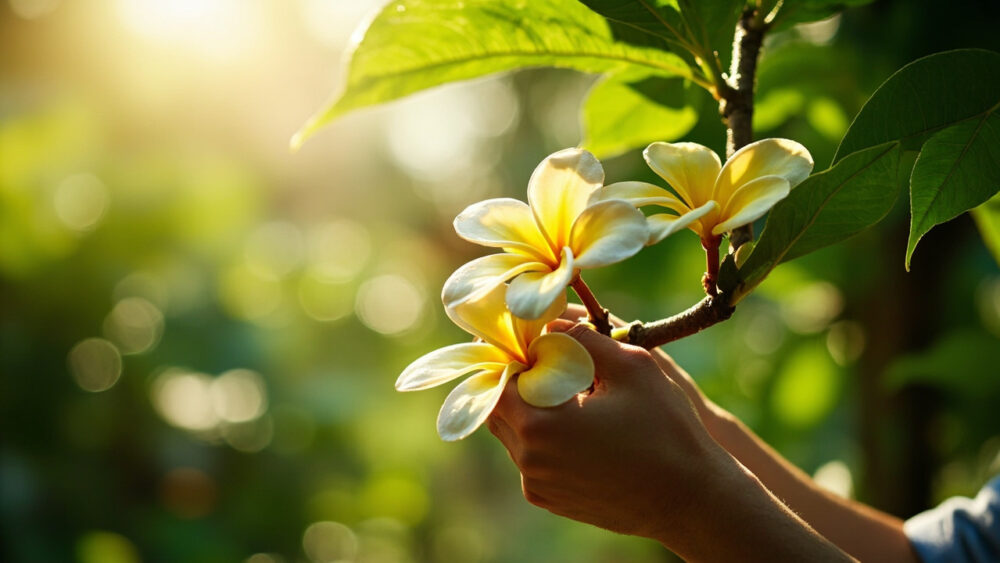
Blooming is the real scorecard. A happy, well-sited plumeria that’s a couple of years past a cutting will flower repeatedly through summer, throwing clusters of fragrant blooms at the branch tips.
No flowers usually means not enough direct sun or a plant still too young or too recently cut back to bloom yet, not a fertilizer problem.
Everything above boils down to a handful of numbers worth keeping on hand, which is exactly what’s below.
Plumeria at a Glance
- Light needed: full sun, six or more hours of direct light daily, the top cause of a no-bloom plant if it’s missing.
- Temperature range: thrives between 65 and 95°F, protect from anything below 50°F, move potted plants indoors before frost.
- Watering, growing season: deeply, then let the top 2 to 3 inches of soil dry out before watering again, roughly every 5 to 10 days.
- Watering, winter dormancy: almost none, a light drink every 3 to 4 weeks at most, this is where most plumeria die.
- Soil: fast-draining cactus or succulent mix, or potting soil cut with equal parts perlite or coarse sand.
- Feeding: bloom-boosting, higher-phosphorus fertilizer every 2 to 4 weeks in active growth, none during dormancy.
- Pruning and repotting: prune in late winter before new growth starts, repot every 2 to 3 years in spring as growth resumes.
If you remember nothing else, remember that plumeria dies far more often from winter water than from winter cold.
Give it sun, drainage, and a genuinely dry rest, and it will bloom for you like it means it.