Straight answer: no, true hibiscus (Hibiscus rosa-sinensis and most hardy hibiscus species) is considered non-toxic to cats. The ASPCA lists it as non-toxic, and it does not contain the compounds that make lilies so dangerous to cats. That said, “non-toxic” is not the same as “harmless in every way,” and there is one common look-alike plant that gets confused with hibiscus and is genuinely dangerous.
Is hibiscus toxic to cats in the pot on your porch or the one you just brought home from the garden center? Almost certainly not, but the answer changes depending on which plant you actually have, how much your cat ate, and whether anything else was mixed into that soil or spray bottle.
Stick around for the part most people get wrong: the plant everyone panics about when they hear “hibiscus” is often not hibiscus at all. There’s a save-able quick-reference card at the bottom of this page, so keep scrolling if you want the short version to screenshot.
The Plain Answer: Hibiscus and Cats
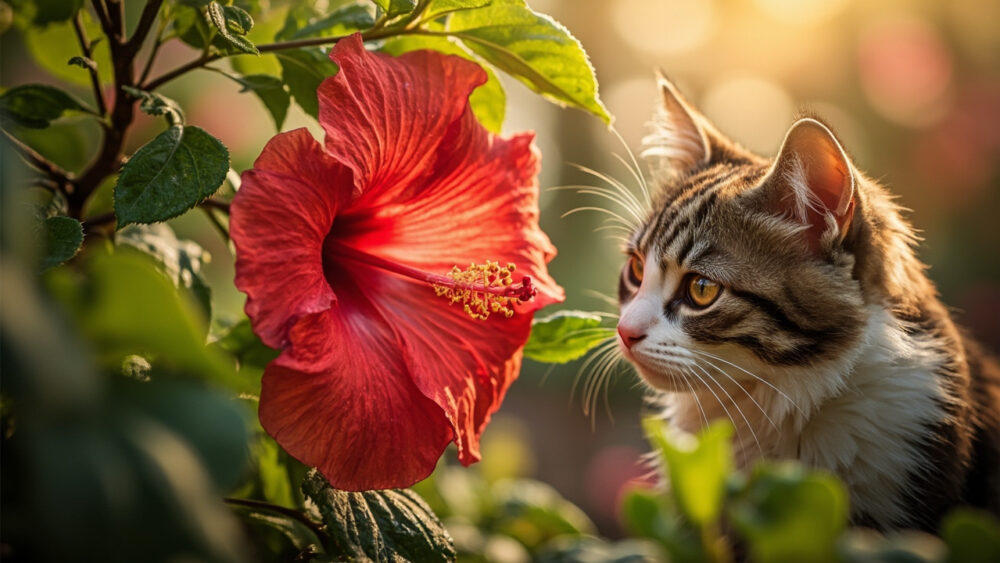
Hibiscus rosa-sinensis, the glossy tropical hibiscus with trumpet-shaped flowers, is not on the ASPCA’s toxic plant list for cats. Neither are most hardy perennial hibiscus varieties grown outdoors in temperate gardens. Cats can nibble a leaf or bat around a fallen flower without being poisoned.
That does not mean unlimited plant-eating is a good idea. Any non-toxic plant material can still cause mild stomach upset, vomiting, or diarrhea if a cat eats a large quantity, simply from irritation or an unfamiliar amount of fiber.
So the honest answer is “not toxic” plus “still not a chew toy.”
The Look-Alike That Actually Worries Vets
Here’s the loop worth opening: if you assumed all “hibiscus” is the same plant, that guess is exactly the mix-up that sends people searching in a panic. Rose of Sharon (Hibiscus syriacus) is genuinely hibiscus and is also non-toxic, so that one is fine too.
The real culprit is a plant with a similar common name and similar flower shape: the “Rose of China” or ornamental hibiscus sold under confusing regional nicknames sometimes gets mixed up with plants like Lantana or certain ornamental mallows, which carry their own separate warnings.
If you are not 100% sure what species is in your pot, check the plant tag or ask the nursery, because the common name “hibiscus” gets applied loosely at garden centers.
Knowing the exact species matters more than knowing the common name, and that changes how you should read your own plant.
Which Parts, and How Much, Actually Matters
With true hibiscus, no single part is more concerning than another. Leaves, flowers, and stems are all considered low-risk for cats.
Quantity matters more than location on the plant. A cat that takes one curious bite off a leaf is in a completely different situation than a cat that has spent an afternoon shredding an entire hibiscus bush.
The bigger risk usually isn’t the plant itself. It’s whatever you sprayed on it: systemic insecticides, fungicides, or fertilizer granules can be genuinely toxic even when the plant they’re on is not.
That’s the honest twist: the flower is the least of your worries if you’ve been treating it with chemicals.
Signs to Watch For After Any Plant Exposure
Even with a non-toxic plant, watch for the general signs that suggest a cat’s stomach didn’t agree with what it ate. These include vomiting, diarrhea, drooling, reduced appetite, or lethargy in the hours after eating plant material.
- Vomiting or repeated retching
- Soft stool or diarrhea
- Excess drooling
- Pawing at the mouth
- Unusual quietness or hiding
Most of these, if they appear at all with hibiscus, are mild and resolve on their own within a day.
Still, mild is not the same as “ignore it,” especially if your cat also had access to fertilizer, pesticide, or a plant you can’t positively identify.
If Your Cat Ate Hibiscus (or You’re Not Sure What They Ate)
Call your veterinarian or an animal poison control line any time you suspect your cat ate a significant amount of any plant, or any amount of a plant you can’t confidently identify. This holds even for plants considered non-toxic, because identification mistakes happen and because underlying health conditions can change how an individual animal reacts.
Before you call, gather what you can. A photo of the plant, the amount you think is missing, and how long ago it happened all help the vet assess the situation quickly.
Do not give home remedies, induce vomiting, or wait to “see how it goes” on your own judgment. That call is the entire job here, not a fallback plan.
Getting the identification right the first time is what makes that phone call short instead of stressful.
Cat-Safe Plants That Give You a Similar Look
If you love the tropical, big-flowered look of hibiscus but want extra peace of mind with a plant-eating cat, you have real options that scratch the same itch.
- Bird of paradise (Strelitzia reginae): bold tropical shape, non-toxic to cats, though the true Caesalpinia “bird of paradise” shrub is a different plant and is toxic, so check the botanical name
- African violet: smaller flowers but reliably non-toxic and easy indoors
- Calathea varieties: big, dramatic leaves, cat-safe, thrives in the same bright indirect light hibiscus likes
- Areca palm: non-toxic, gives you the same lush, tropical porch feel
Double-check the botanical name on any plant tag before you buy, since common names get reused constantly in the nursery trade.
None of that means you need to pull your hibiscus, though, since it was never the dangerous one to begin with.
Hibiscus: Quick Reference
- Toxicity: true hibiscus, Hibiscus rosa-sinensis and Hibiscus syriacus, is considered non-toxic to cats per the ASPCA
- Parts affected: leaves, flowers, and stems are all low-risk, no single part is more dangerous
- Real risk factor: large quantities eaten at once can cause mild stomach upset from fiber and irritation alone
- Hidden risk: pesticides, fungicides, or fertilizer on the plant can be genuinely toxic even when the plant is not
- Look-alike warning: confirm the botanical name, since some plants sold under similar common names are toxic
- What to do: call your veterinarian or poison control for any suspected ingestion, note the amount and timing, never treat at home
Hibiscus earns its safe reputation, but a plant tag and a five-minute phone call are what turn “probably fine” into “actually fine.”