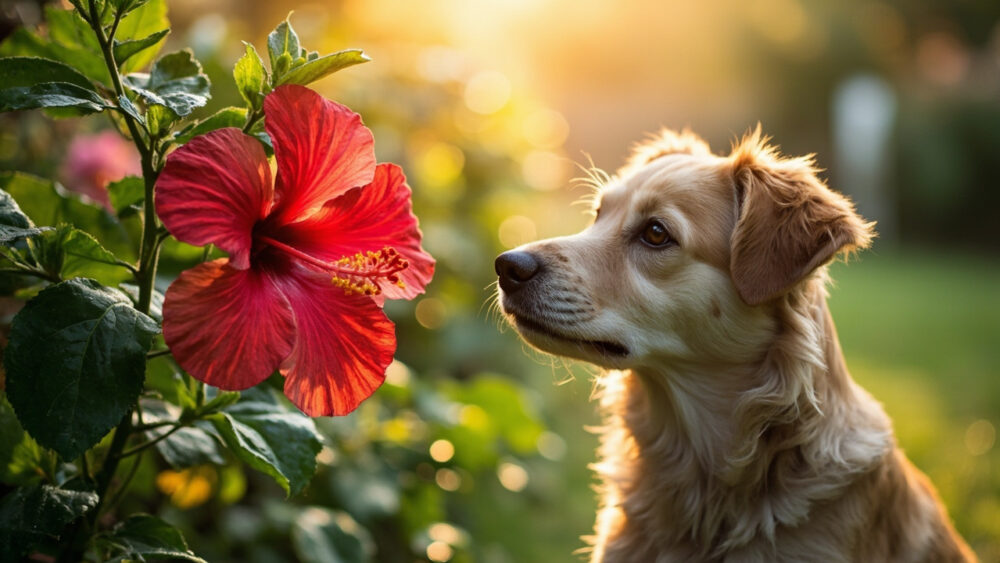
Most hibiscus plants that people grow as ornamentals, including the tropical hibiscus (Hibiscus rosa-sinensis) sold at every garden center in summer, are considered non-toxic to dogs. That is the short answer to “is hibiscus toxic to dogs,” and it holds true for the vast majority of the hibiscus your dog will ever encounter in a yard or on a patio.
But “non-toxic” is not the same as “fine to eat a whole plant of,” and there is one common look-alike that changes this answer completely for some readers. There is also a real difference between a dog nibbling one leaf and a dog stripping a shrub, and your yard may have more than one plant answering to the name “hibiscus.”
Stick with me through the next few sections and you will know exactly which plant you have, what to actually watch for, and what to do if your dog already ate some. There is a save-able quick-reference card at the very bottom once we have covered the parts that actually matter.
The Plain Answer: Is Hibiscus Toxic to Dogs?
True hibiscus, in the genus Hibiscus, is classified as non-toxic to dogs by the major veterinary toxicology references. This covers the tropical hibiscus with the big trumpet-shaped blooms, and it covers rose of Sharon (Hibiscus syriacus), the hardy shrub version common in northern gardens.
A dog that eats a leaf or a flower off either of these plants is very unlikely to have anything more than mild, short-lived stomach upset from the fiber and plant matter itself, not from any toxin.
That said, “non-toxic” is a toxicology classification, not a green light to let your dog free-feed on the shrub.
The real complication is not the hibiscus itself.
The Look-Alike That Actually Worries Vets
If you assumed the plant with the funnel-shaped flower on your porch is automatically safe hibiscus, that guess is exactly where the trouble starts. Rose of Sharon and tropical hibiscus are frequently confused with other plants that share the common name “hibiscus” in casual conversation but are not in the genus Hibiscus at all, and some of those really are dangerous.
The one to actually worry about is anything sold or labeled as “Rose Mallow” from a genus other than Hibiscus, and more importantly, do not confuse hibiscus with lilies, oleander, or azaleas growing nearby in the same bed, since mixed plantings are how mistaken ingestion happens in real yards.
If you are not sure what species is actually in your pot or border, check the plant tag, a nursery receipt, or a plant ID app against the flower shape and leaf pattern before you relax.
Once you know it is genuinely Hibiscus, the next question is how much your dog actually got into.
Which Parts, and How Much Actually Matters
With confirmed Hibiscus species, there is no specific plant part, leaf, flower, stem, or root, that carries a concentrated toxin. This is different from plants like lilies or sago palm, where a single leaf can be a genuine emergency.
Volume still matters even with a safe plant. A dog that eats one flower is in a completely different situation than a dog that has been steadily defoliating a three-foot shrub over an afternoon.
Large amounts of any plant fiber can cause a genuinely upset stomach, and hibiscus flowers in particular hold a lot of moisture and can loosen stool if a dog eats several.
Small dogs and puppies feel the effects of overeating any plant material faster than large adult dogs do, simply on a body-weight basis.
Here is what that overeating actually looks like from the outside.
Signs to Watch For
Because hibiscus is not toxic in the classic sense, you are watching for **digestive irritation from volume**, not organ damage or neurological signs.
- Vomiting, especially soon after eating plant material
- Loose stool or diarrhea, sometimes with visible bits of leaf or petal
- Mild lethargy or a dog that seems uncomfortable or bloated
- Drooling or lip-licking right after chewing, more a texture reaction than a poisoning sign
- Reduced appetite for the rest of that day
What you should not see, if this really is true hibiscus, is anything severe: no seizures, no collapse, no irregular heartbeat, no swollen throat. Those symptoms point to a different plant entirely and need urgent care regardless of what you think your dog ate.
Mild symptoms usually resolve within a day, but that does not mean you skip the phone call.
What to Do If Your Dog Ate Hibiscus
Call your veterinarian or an animal poison control line for any suspected ingestion, even with a plant you believe is safe. You want a professional confirming the plant ID and symptom picture, not a guess made under stress in the yard.
Before you call, take thirty seconds to gather what actually helps them help you:
- A photo of the plant, close up on the leaf and flower
- A rough estimate of how much was eaten and when
- Your dog’s weight and any symptoms already showing
- The plant tag or nursery name if you have it
Do not give your dog anything at home to induce vomiting or settle their stomach on your own. Let the vet direct any treatment based on your dog’s actual weight and symptoms, not a generic home remedy.
If the plant turns out to be true hibiscus and the amount was small, most vets will simply have you monitor at home.
If you would rather not have this conversation again next season, the fix is upstream, in what you plant.
Safer, Similar-Looking Plants to Grow Instead
If you want that same big tropical flower without any ambiguity, you have good options that are also considered non-toxic to dogs.
- Nasturtium, for a similarly bright, edible-flower feel in a bed dogs can access
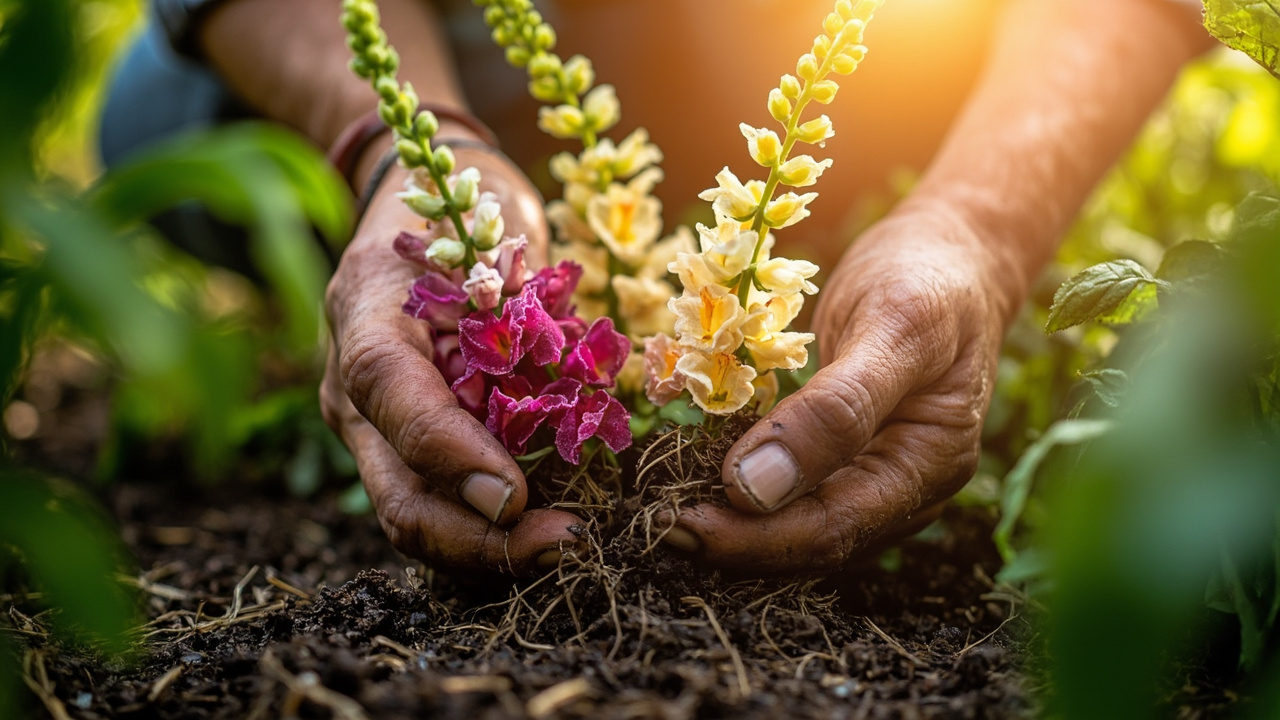
- Snapdragon, for height and color in a border a dog might brush against
- Marigold, tough, sun-loving, and safe if nibbled
- Zinnia, for the same cutting-garden punch of color with no toxicity concern
None of these fully replicate the tropical, oversized bloom of a hibiscus, and that is fine. The goal is a yard where you are not memorizing which corner is dangerous.
Keep the card below where you can find it fast, especially if you already have hibiscus growing where your dog spends time.
Hibiscus: Quick Reference
- Core answer: true Hibiscus species, including tropical hibiscus and rose of Sharon, are classified as non-toxic to dogs.
- Biggest risk: mistaking a different plant with “hibiscus” or “mallow” in its common name for the real thing.
- Typical reaction: mild vomiting or loose stool from eating a large volume of any plant fiber, not from a toxin.
- Red flag signs: seizures, collapse, irregular heartbeat, or swelling point to a different plant and need urgent veterinary care.
- What to do: call your veterinarian or animal poison control for any suspected ingestion, and bring a photo and estimated amount eaten.
- Never do: induce vomiting or give home remedies without veterinary direction.
- Safer swaps: nasturtium, snapdragon, marigold, and zinnia for similar color without the identification risk.
Hibiscus earns its reputation as one of the safer showy bloomers you can grow around dogs.
Just make sure the plant in your yard is actually the one you think it is.