Lupines want full sun, cool roots, and soil that drains fast but never dries out completely. Get those three things right and the rest of lupine care is mostly staying out of the plant’s way. Get them wrong and you’ll spend a season wondering why a plant famous for towering flower spikes is sitting there sulking at six inches tall.
Most of learning how to care for lupines is learning what NOT to do to them. There’s one common feeding habit that quietly stops bloom spikes before they start, a root quirk that makes transplanting far riskier than it looks, and a “problem” most people panic over that’s actually the plant behaving normally.
I’ll walk through all of it: light and placement, watering by feel instead of by schedule, soil and feeding, the pruning and deadheading routine, the pests and diseases that actually show up, and the signs of a lupine that’s genuinely happy. Save the “Lupines at a Glance” card at the bottom for the fridge or your phone, it’s the fast version of everything below.
Light, Placement, and Temperature
Lupines are cool-climate plants at heart. They want full sun, six or more hours a day, but they do best where summer afternoons aren’t brutally hot. In zones 7 and warmer, give them morning sun and afternoon shade or they’ll fade fast once temperatures climb past the mid 80s F.
They’re happiest in USDA zones 4 through 7. Gardeners in zones 8 and up often grow lupines as cool-season annuals, since the plant simply doesn’t like a hot winter.
Air circulation matters more than people expect. Cramped, humid corners invite the mildew problems covered further down.
Where you place a lupine on day one matters more than usual, and here’s why.
Watering: The Mistake That Costs Most People Their Plant
Lupines have a long taproot, and that root rots fast in soggy, compacted soil. This is the mistake that ends more lupine attempts than anything else: people either drown them in heavy clay or let them dry to a crisp thinking they’re drought-tough because the foliage looks silvery and rugged.
Water deeply but infrequently. Check the soil two inches down. If it’s dry there, water until it runs from the base of the pot or soaks eight inches into garden soil. Then leave it alone.
New transplants need consistent moisture for the first four to six weeks while that taproot establishes. Established plants tolerate short dry spells better than wet feet, ever.
Overwatering and underwatering look almost identical at first: droopy leaves. Here’s the real tell.
Telling the Difference
Underwatered lupines droop but perk back up within an hour or two of a good soak. Overwatered ones stay limp, and the lower leaves often yellow and feel soft, not crisp.
If the soil is wet AND the plant is drooping, that’s root rot starting, not thirst.
Knowing which one you’re looking at saves the plant, guessing wrong kills it.
Soil, Feeding, and the Habit That Stops Flowers Cold
Lupines want soil that’s loose, well-draining, and on the lean side. Sandy or gritty loam with a slightly acidic to neutral pH, around 6.0 to 7.0, is ideal. Heavy clay needs compost and grit worked in before you plant, not after.
Here’s the follow-up question everyone has next: don’t they need feeding to bloom big? The honest answer, and it surprises most people, is no. Lupines are legumes and fix their own nitrogen through root nodules.
Feed them high-nitrogen fertilizer and you’ll get lush green leaves and few, if any, flower spikes. That’s the quiet mistake mentioned earlier.
If you feed at all, use a low-nitrogen, phosphorus-leaning fertilizer once in early spring, and that’s plenty. Most established lupines in decent soil need no feeding.
Get the soil right once at planting time and you’ve done most of the work for the plant’s whole life.
Pruning, Deadheading, and Other Routine Jobs
Deadhead spent flower spikes by cutting them back to just above a healthy leaf as soon as the lower third of the spike browns. This is the step almost everyone gets slightly wrong: they wait too long, let seed pods form, and the plant stops producing new spikes for the season.
Cut promptly and you often get a second, smaller flush of blooms in six to eight weeks.
In late summer, foliage can go ragged and mildew-prone. Cut the whole plant back to four to six inches once flowering is truly done for the year. It regrows fresh basal foliage and handles winter better for it.
Lupines resent being moved. Established plants have that long taproot and rarely survive transplanting or division well, so choose the spot carefully the first time.
Divide that expectation now, because the next section explains why a struggling lupine often can’t just be relocated to fix it.
Problems That Actually Show Up
Powdery mildew is the most common issue, a gray-white dusty coating on leaves, usually from crowding, humidity, or overhead watering late in the day. Water at the soil line in the morning and space plants 12 to 18 inches apart to keep air moving.
Aphids cluster on new growth and flower spikes. A strong water spray or insecticidal soap applied per the label handles light infestations.
Lupine aphids specifically can build up fast in some regions and are harder to knock back once established; if soap isn’t working after a couple of applications, a labeled insecticide may be necessary, follow the product instructions exactly.
Slugs and snails shred young leaves overnight, especially in damp spring weather. Handpicking at dusk or a label-approved bait works.
Root rot from wet soil is the one real plant-killer here, and there’s no fixing it once it’s advanced, only prevention through drainage.
Lupines are toxic to pets and livestock if eaten in quantity, particularly the seeds. If you suspect a pet has eaten lupine seeds or pods, call your veterinarian rather than waiting to see what happens.
Most of these problems are manageable once you know what you’re looking at, which brings up the sign everyone misreads next.
The Sign Everyone Misreads (and What Real Thriving Looks Like)
Lower leaves yellowing and dropping on an otherwise upright, blooming lupine is normal aging, not a crisis. People see it and assume disease or nutrient trouble and start intervening when the plant is fine.
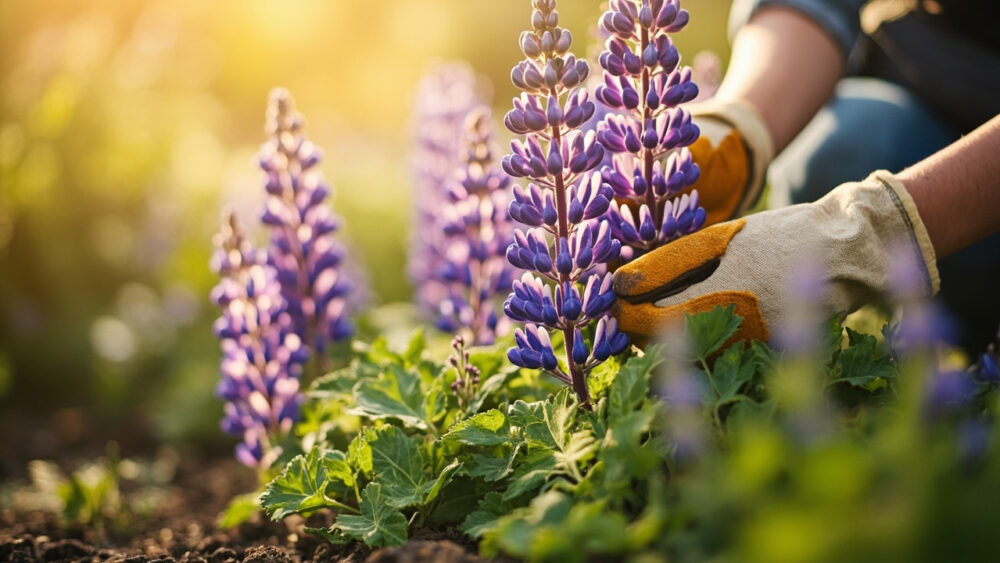
A genuinely thriving lupine has upright, dense flower spikes in true color rather than faded, palmate leaves that are deep green and firm, and it sends up new basal shoots at the base each spring.
It should self-seed modestly if you let a few spikes go to pod, a good sign the plant is settled into its spot.
If yours is doing that, you’ve already done the hard part. The quick-reference card below covers everything you need next season.
Lupines at a Glance
- Light: full sun, six or more hours a day, afternoon shade in hot zones.
- Best zones: USDA 4 through 7, grown as an annual in hotter zones.
- Watering: deep and infrequent, check two inches down, water when dry there, never let it sit wet.
- Soil: loose, well-draining, sandy to loamy, pH 6.0 to 7.0, lean rather than rich.
- Feeding: little to none, skip high-nitrogen fertilizer entirely, it suppresses blooms.
- Spacing: 12 to 18 inches apart for airflow and mildew prevention.
- Deadheading: cut spent spikes when the lower third browns, don’t let seed pods form if you want repeat blooms.
The whole plant hinges on drainage and restraint: water deeply, feed rarely, and let that taproot settle where it lands.
Do those two things and the tall, colorful spikes lupines are known for take care of themselves.