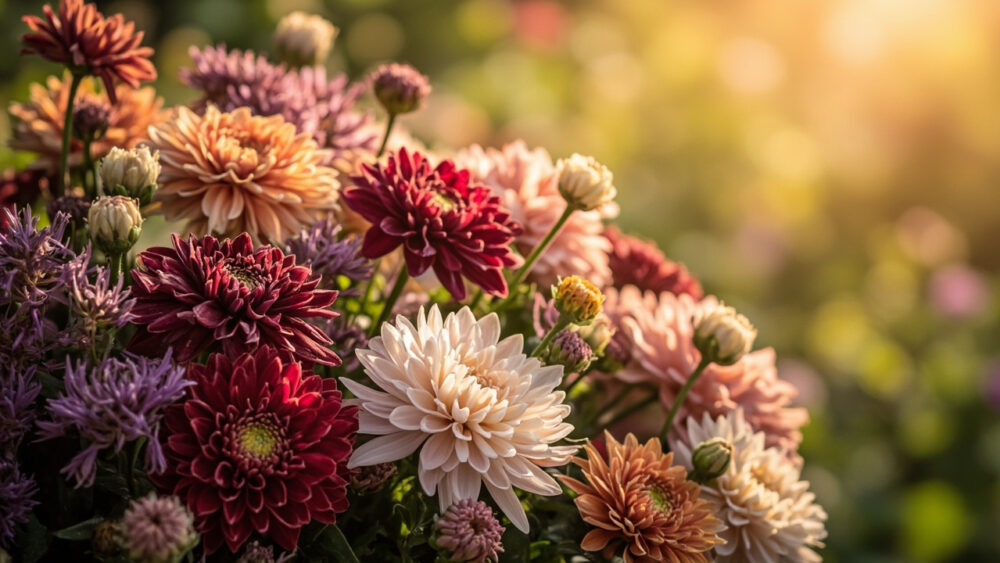
The fastest way to narrow down chrysanthemum varieties is by flower form, not color. Once you know whether you want a tight button mum, a shaggy spider mum, or a dinner-plate football mum, half the catalog falls away on its own. That one distinction sorts these 15 into groups that actually mean something in the garden, not just on a plant tag.
Most people grab whatever mum is stacked outside the grocery store in September and pick it purely on color, which is the wrong reason. Those are almost always the same handful of hardy garden mums bred for a six-week retail window, not for coming back next year. Meanwhile there are exhibition types that serious growers protect like heirlooms, and a couple of quietly tough spreaders that outperform the popular stuff for years with barely any fuss.
Number 13 on this list is the one gardeners misjudge almost every time, usually written off as too fussy when it is actually one of the easier exhibition types to grow well. The last few entries and a straight method for choosing between all of them, based on your space, climate, and how much fuss you actually want to deal with, are waiting at the bottom.
Hardy Garden Mums (The Ones Sold Everywhere in Fall)
These are bred for reliable fall color and, in the right zones, for coming back year after year instead of dying with the first hard freeze.
1. Igloo Series
Compact, cushion-shaped mounds that stay 12 to 16 inches tall and hold their shape without staking. They are among the more reliably perennial garden mums in zones 5 through 9 if planted in spring rather than fall, giving roots a full season to establish before winter.
2. Prophet Series
The type most big-box retailers actually sell under other brand names, bred hard for uniform bloom timing and shelf appeal. Gorgeous the day you buy it, but treat it as an annual unless you get it in the ground by midsummer with real root development ahead of frost.
3. Morden Series
Bred in Canada for genuine cold hardiness, reliable down into zone 3 with decent snow cover. If you have watched garden mums die every winter no matter what you tried, this series is the fix, not more mulch.
4. Sheffield Pink
An old cottage-garden mum with single, daisy-like pink to apricot blooms instead of the dense pompon look. It blooms later than most hardy mums, often into the first light frosts, and self-sows a little if you let spent flowers stand.
Those four cover the mums everyone recognizes, but the shapes get far more interesting once you leave the garden center behind.
Exhibition and Show Types (Grown for the Flower, Not the Bed)
These are the mums serious growers stake, pinch, and sometimes disbud for a single spectacular bloom, and they need real commitment to look their best.
5. Football Mums
Enormous, dense, globe-shaped blooms that can reach 6 to 8 inches across, the classic homecoming corsage mum. They demand disbudding, meaning you pinch off side buds so all the plant’s energy goes into one giant flower, and they need staking without exception.
6. Spider Mums
Long, thin, curling petals that look almost like fireworks frozen mid-burst. Spectacular in a vase, but the thin florets flop without support and the plant needs a long, cool finish to develop properly, which makes them tricky outside a greenhouse in short-season climates.
7. Quill Mums
Straight, tubular petals radiating out like a pincushion, a cleaner and more architectural look than spiders. They hold their shape better than spider types in wind and rain, which makes them a more forgiving entry point into exhibition mums for a first attempt.
8. Anemone Mums
A raised, cushiony center disc surrounded by a single ring of flat petals, giving a two-tier look unlike any other type on this list. They read as more delicate and old-fashioned in a border, and they hold up well as cut flowers with a decent vase life.
If those sound like too much fuss for a Tuesday afternoon, the next group asks for almost none.
Spoon and Pompon Types (Reliable Bloomers, Low Drama)
This is where most home gardeners actually end up, because these deliver a strong show without the staking and pinching routine of exhibition types.
9. Spoon Mums
Petals that flatten into little spoon shapes at the tip, giving the bloom a playful, almost whimsical texture. They are a genuine middle ground: more interesting than a plain pompon, far less demanding than a spider or football type.
10. Button Pompons
Small, perfectly round, dense flowers rarely bigger than a golf ball, produced in huge numbers on a single plant. This is the workhorse type for mass color in a border or for cutting by the armful, and it asks almost nothing beyond sun and average soil.
11. Decorative Mums
Fully double blooms with layered, overlapping petals and no visible center, the shape most people picture when they hear the word chrysanthemum. Sturdy, weather-resistant, and a safe first choice if you want classic mum flowers without learning a specialized technique.
12. Single and Semi-Double Mums
Open, daisy-form flowers with a visible yellow or green center disc, closer in look to an aster than to a typical mum. Pollinators actually work these flowers, unlike the fully double types where the center is buried under petals, which makes them the better choice if you want mums that feed bees late into the season.
One more type in this group gets dismissed by people who have never actually grown it.
The Underrated Picks Worth Seeking Out
These are the varieties experienced growers reach for quietly, without much fanfare, because they simply perform.
13. Korean Mums (Chrysanthemum rubellum types)
The variety most people misjudge on sight, assuming a looser, more casual flower means a fussier plant. The opposite is true: Korean mums are some of the toughest, most weather-tolerant, and genuinely perennial mums you can grow, with single or semi-double flowers on plants that shrug off wind, rain, and early frost far better than dense double types.
14. Rubellum Hybrids (‘Clara Curtis’)
A vigorous, spreading groundcover mum with clear pink daisy flowers, tough enough to naturalize along a border edge. It will run further than you expect in loose soil, so give it room or a neighbor it can’t smother, and expect it to outlive most of the fussier mums you plant near it.
15. Sheffield-Type Late Bloomers
Bred to flower after a light frost has already ended everything else, stretching color into a part of the season most gardens have already given up on. These are the ones to plant if your goal is a garden that is still blooming when everyone else’s has gone to seed.
That is the full list, and now here is the part worth saving: how to actually pick among them.
How to Choose the Right One
- Start with space: button pompons and decoratives fit a small bed or container, spreading rubellum types need a few feet of room, and football or spider mums need dedicated staked space of their own.
- Check your zone before you fall for a color: if you want a mum to return next year, not just this fall, confirm true perennial hardiness for your zone, since most retail garden mums are grown as one-season annuals no matter how the tag reads.
- Decide if you’re growing for the bed or the vase: spoon, spider, and quill types shine as cut flowers, while button pompons and Korean mums earn their keep in the border.
- Be honest about your care appetite: exhibition types (football, spider, quill, anemone) need pinching, disbudding, and staking; everything else mostly needs sun, decent drainage, and a pinch back in early summer to keep it bushy.
- Plant timing matters as much as variety: get hardy types in the ground in spring rather than fall if you want them to survive winter, giving roots a full season to establish before the ground freezes.
- Match bloom time to your goal: Sheffield types and Korean mums stretch color past first frost, while Prophet and Igloo series peak earlier and fade sooner.
Pick the shape first, match it to your climate and patience, and the color choice takes care of itself. Every one of these fifteen will reward you, as long as you picked the right kind of demanding for the time you actually have.